How Many More Cortisone Shots Before You Need The Knee Replacement?
A 2017 JAMA-published trial found that quarterly cortisone injections caused significantly more cartilage loss than placebo over 2 years. A 2025 follow-up showed even a single shot accelerated knee joint damage. If you've been scheduling these every 3–4 months, you deserve to know what the research actually says — and what the alternative looks like.

Cortisone shots reduce pain. They also reduce cartilage.
You walk into the orthopedist. Your knee gets injected with triamcinolone (a corticosteroid). Within 48 hours, your pain is 80% better. You walk out grateful. You schedule the next one for 3 months out.
That's the routine. Millions of people are on it. And almost none of them have been told what happens between those visits — to the cartilage, the joint structure, the long-term integrity of the knee.
Until 2017.
That year, a randomized, double-blind, placebo-controlled trial led by Dr. Timothy McAlindon at Tufts Medical Center was published in JAMA. 140 patients with knee osteoarthritis received either cortisone or saline injections every 12 weeks for 2 years. MRI scans tracked what was happening structurally.
"Among patients with knee osteoarthritis, an injection of a corticosteroid every three months over two years resulted in significantly greater cartilage volume loss and no significant difference in knee pain compared to patients who received a placebo injection."
— McAlindon et al., JAMA, 2017 · Read the study
Read that twice. The cortisone group lost more cartilage than the saline group. And the pain difference? Statistically insignificant.
That was 2017. The research has only gotten more concerning since.
In 2019, a Radiology journal review by Kompel and colleagues asked the question directly in its title: "Intra-articular Corticosteroid Injections in the Hip and Knee — Perhaps Not as Safe as We Thought?" The paper documented four adverse outcomes from cortisone injections including accelerated osteoarthritis progression, subchondral insufficiency fractures, osteonecrosis, and rapid joint destruction.
Then, in 2025, a study presented at the Radiological Society of North America (RSNA) looked at MRI data from the NIH's Osteoarthritis Initiative. The finding was even more direct.
"A single corticosteroid injection led to significantly greater structural damage in the knee joint over two years, especially in cartilage… Corticosteroids are known to reduce inflammation but also impair the repair mechanisms of cartilage and can inhibit matrix synthesis."
— Bharadwaj et al., presented at RSNA 2025 · RSNA press release
Not three shots. Not a year of shots. One shot — measurably accelerating damage over 2 years.
The mechanism, in plain language: cortisone is brilliant at blocking inflammation. The problem is that the same biological process your body uses to manage inflammation is the one it uses to repair cartilage. Block one, you block the other.
Each shot buys you 6–12 weeks of pain relief. And buys time on the knee replacement schedule it's quietly accelerating.
This page is not medical advice and is not telling you to stop your cortisone shots. That's a decision between you and your orthopedist. What we are saying: the research above is publicly available, peer-reviewed, and worth bringing to your next appointment. There's also a different approach worth understanding — one focused on giving your cartilage what it needs to repair, instead of suppressing the process that does the repairing.
What if instead of blocking the repair, you fueled it?
If cortisone works by shutting down the inflammation-and-repair cycle, the opposite approach is to give your body the raw materials it needs to do that repair properly. The minerals and compounds it's missing. The whole-food nutrition your modern diet stopped providing.
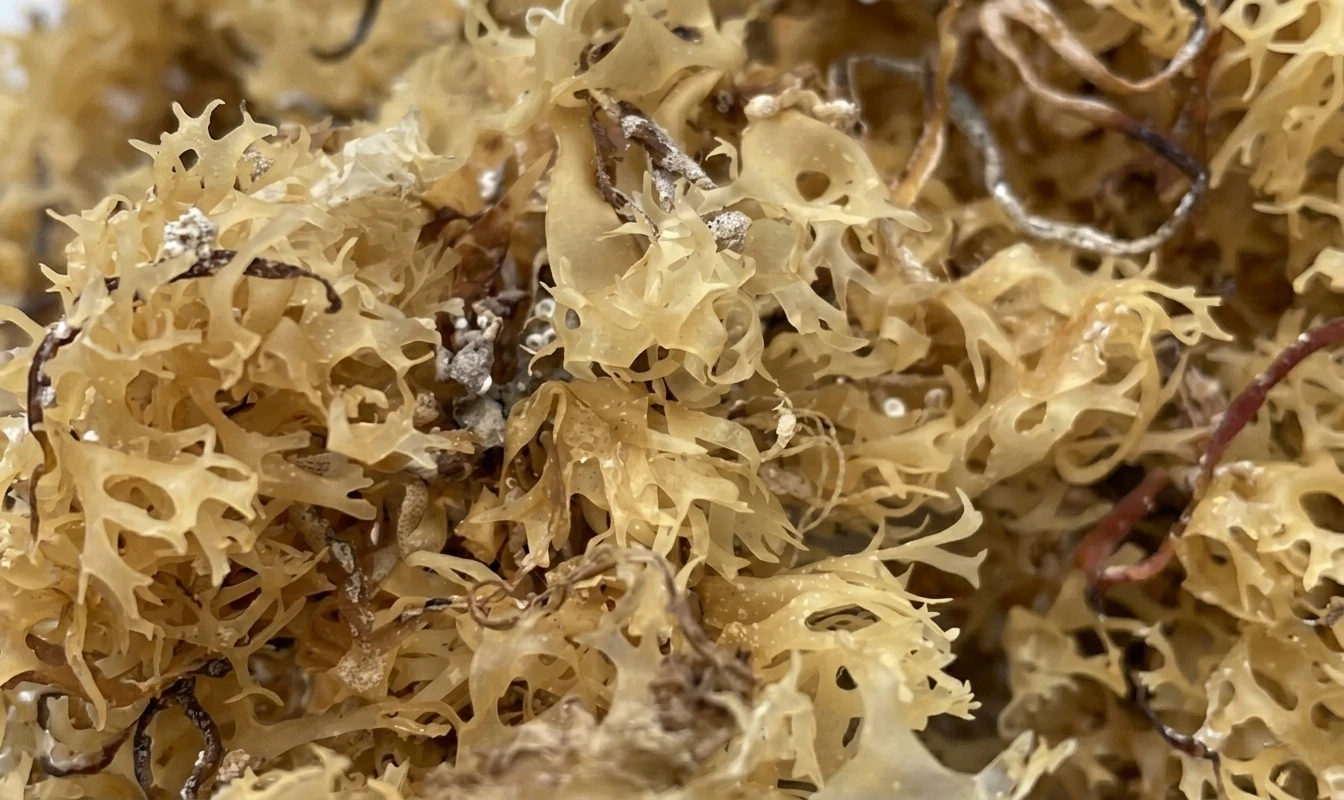
That's not a new idea. The minerals in question — sulfur, magnesium, calcium, manganese, plus the anti-inflammatory polysaccharides found in red algae — have been studied for joint support for decades. The cleanest, most bioavailable source? Wildcrafted Irish sea moss.
A direct comparison.
Not "this is better than that" — both have their place. But you should see the trade-offs side by side.
| Cortisone Shot | Oceanic 92 | |
|---|---|---|
| How fast it works | 24–48 hours | Weeks (cumulative) |
| Mechanism | Blocks inflammation chemically | Provides cartilage building blocks |
| Effect on cartilage (long-term) | Accelerates loss1,2 | Supports repair pathways |
| Effect on cartilage repair process | Inhibits matrix synthesis2 | Provides sulfur for collagen |
| Risk of accelerating need for replacement | Documented in research | Not associated |
| Frequency limits | 3–4 max per year per joint | Daily, indefinitely |
| Cost (12 months) | $300–$2,000+ (incl. visits) | ~$480 (3-jar bundle) |
| Doctor visit required | Yes, every shot | No |
| Best used for | Acute pain crises | Daily long-term support |
1,2 Per McAlindon et al. (JAMA, 2017) and Bharadwaj et al. (RSNA, 2025). See sources at the bottom of the page.
You probably already know these four feelings.
Not because someone told you. Because you've been living it.
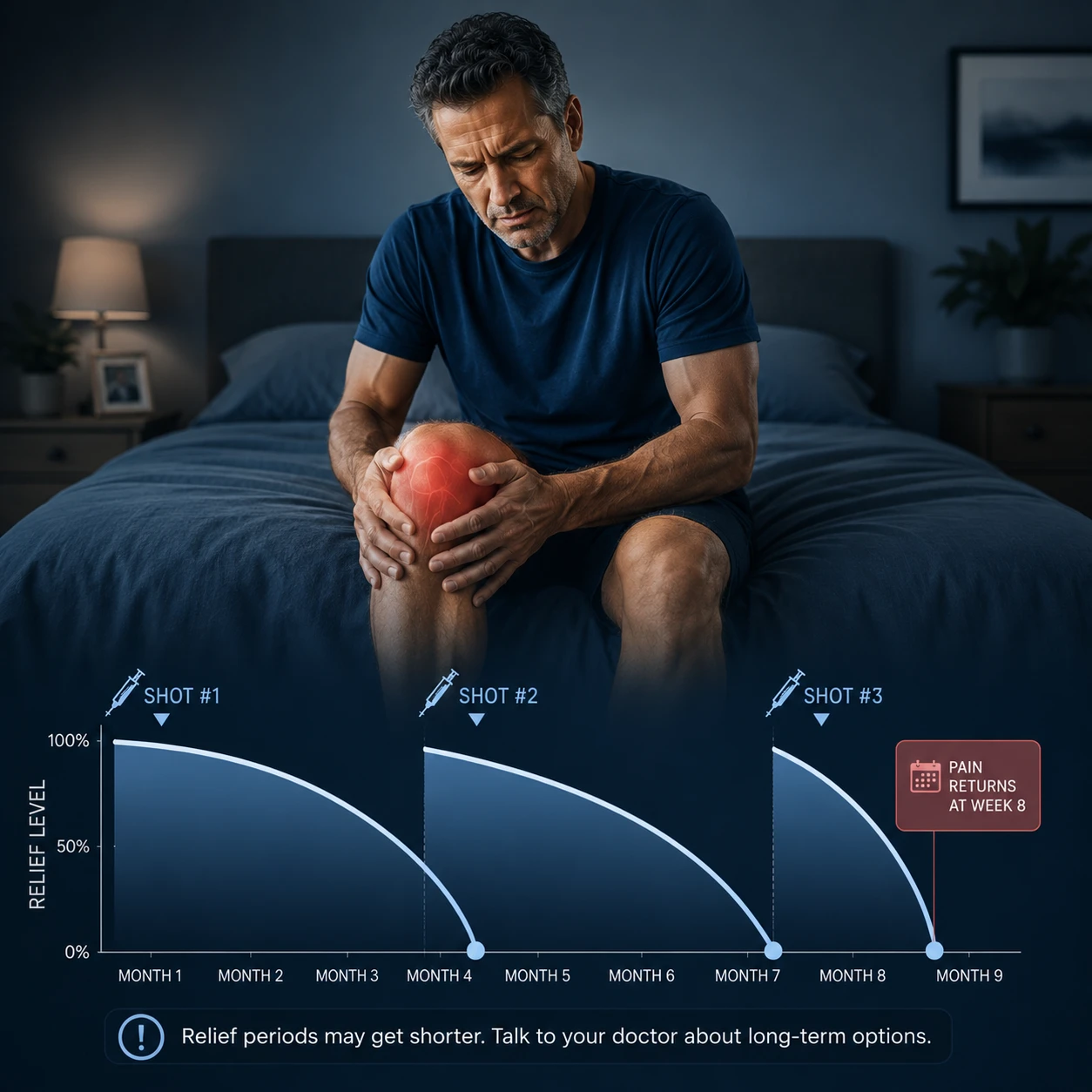
The Diminishing Return
Each shot doesn't last as long as the last one.
The first shot got you 4 months of relief. The second got you 3. Now you're feeling it back at week 8. You're starting to wonder if you'll need them every 6 weeks at this rate.

The "Eventually" Conversation
Your orthopedist mentioned the knee replacement.
Maybe not as a hard recommendation. Maybe just "eventually we should think about it." You filed it away. But it's been in the back of your mind ever since — that the shots are buying time, not fixing anything.

The In-Between
You're worried about what's happening between shots.
The relief is real. But you've started reading. You've seen the studies. You're not paranoid — you're paying attention. And nobody at the orthopedist's office has had a real conversation with you about long-term cartilage health.

The Search
You've started looking for something else.
Maybe a supplement. Maybe a diet change. Maybe PRP injections. Maybe something natural. You've been quietly researching alternatives because part of you knows there has to be a better long-game than another shot every 90 days for the rest of your life.
An honest timeline. No hype.
Sea moss is not a cortisone shot. It will not give you 80% pain relief in 48 hours. What it does is steadier — and the trade-off is that it works with your body's repair process instead of against it. Here's what most users on a cortisone cycle report when they add Oceanic 92 to their daily routine.
Body Starts Absorbing
You probably won't feel much yet. The minerals and sulfated polysaccharides are starting to get into circulation. Some users notice better sleep within the first week — the magnesium quietly working.
The Stiffness Window Shortens
Morning lock-up shrinks from 30 minutes to 10. The dull background ache between shots starts to feel quieter. You stop reaching for ibuprofen quite as often.
The Question Starts To Form
Most cortisone users hit the "do I really need the next shot?" moment somewhere in this window. Stairs feel doable. Kneeling is back on the table. The before-shot dread isn't there.
Many Users Skip The Next Appointment
Not all. Some still want their shot. But a significant portion of cortisone-cycle customers tell us they cancelled or postponed their next scheduled injection — not because we told them to, but because they didn't feel they needed it.

No hidden blends. No "92 minerals" mystery claim.
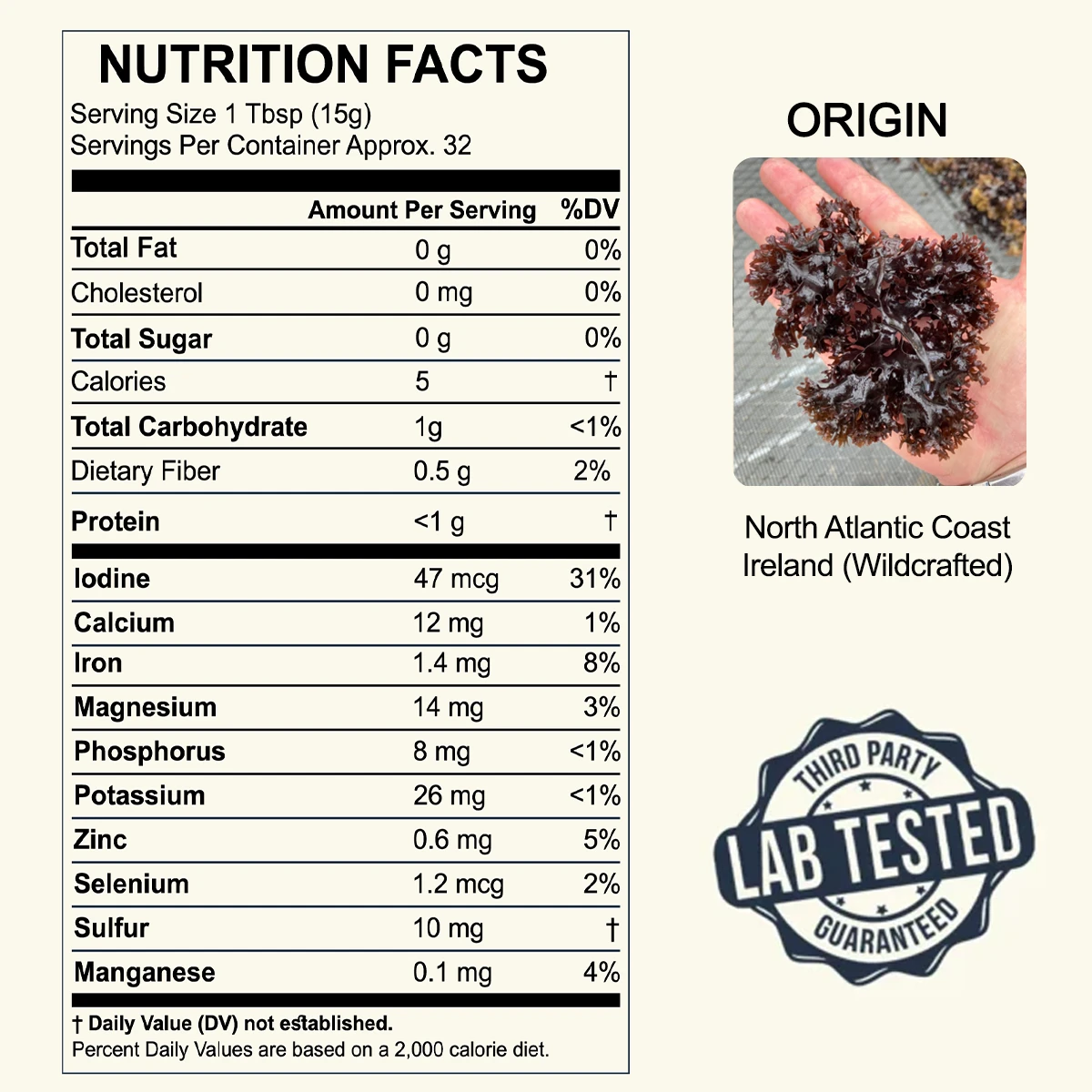
Every ingredient disclosed. The exact mineral content per serving — published right on the label. Tap to zoom in.
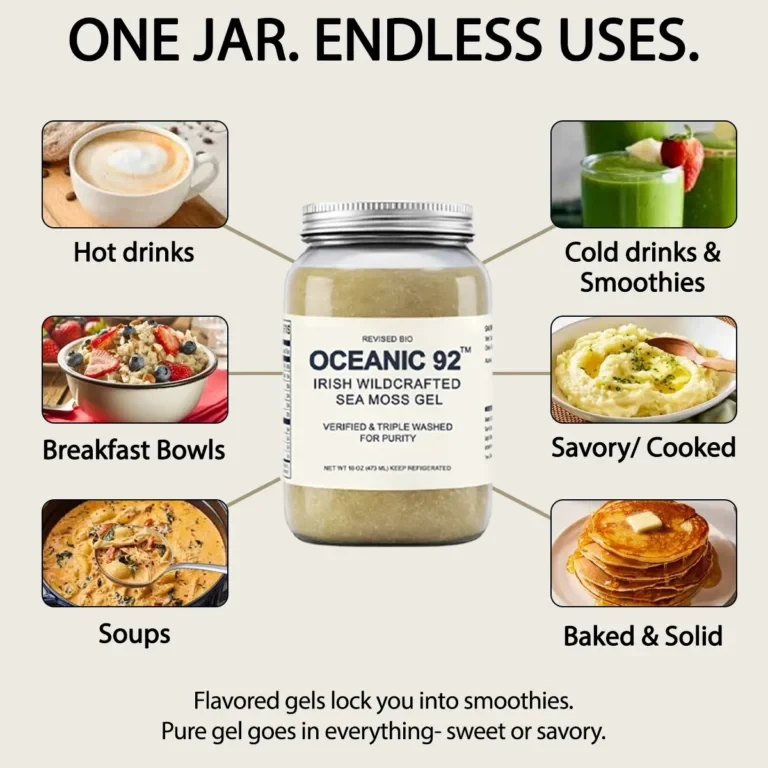
One spoonful. Stir into anything. No pill regimen.
The reason most people quit sea moss isn't that it doesn't work — it's that it tastes like ocean water. Not Oceanic 92. Our gel is processed to be 100% neutral. No fishy aftertaste. No salt. You stir one tablespoon into whatever you're already eating or drinking, and it disappears into the recipe.
That's the whole protocol. One tablespoon, once a day, for at least 60 days. No appointments. No copays. No needles.
From people who were on the cortisone cycle.
These are real customers who came to Oceanic 92 already familiar with cortisone shots.
A different long-game for your knees.
One spoonful a day. Tasteless. Stir into anything. Free U.S. shipping. 30-day money-back guarantee.
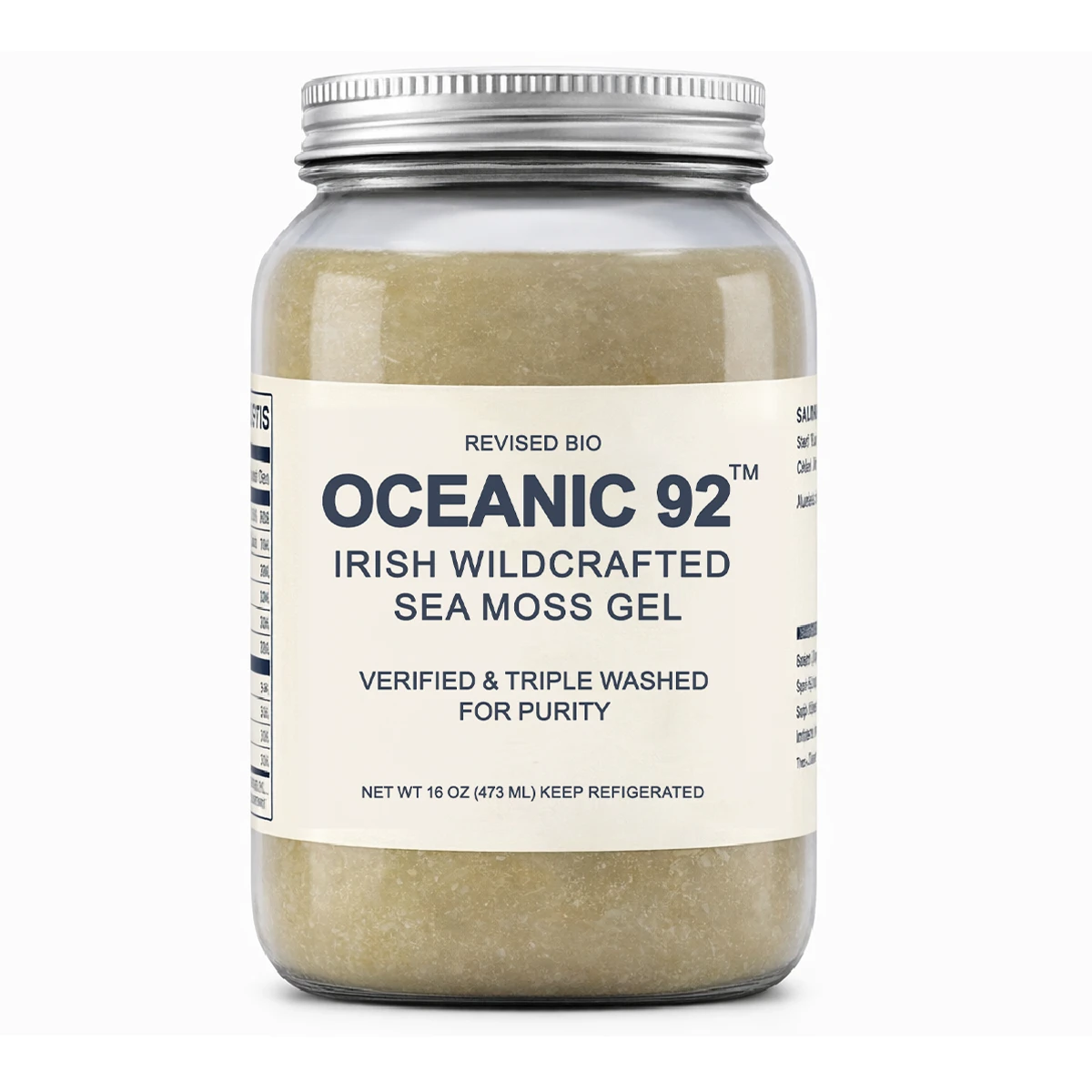
- 16 oz wildcrafted gel
- 30-day supply
- Free U.S. shipping
- 30-day money-back guarantee
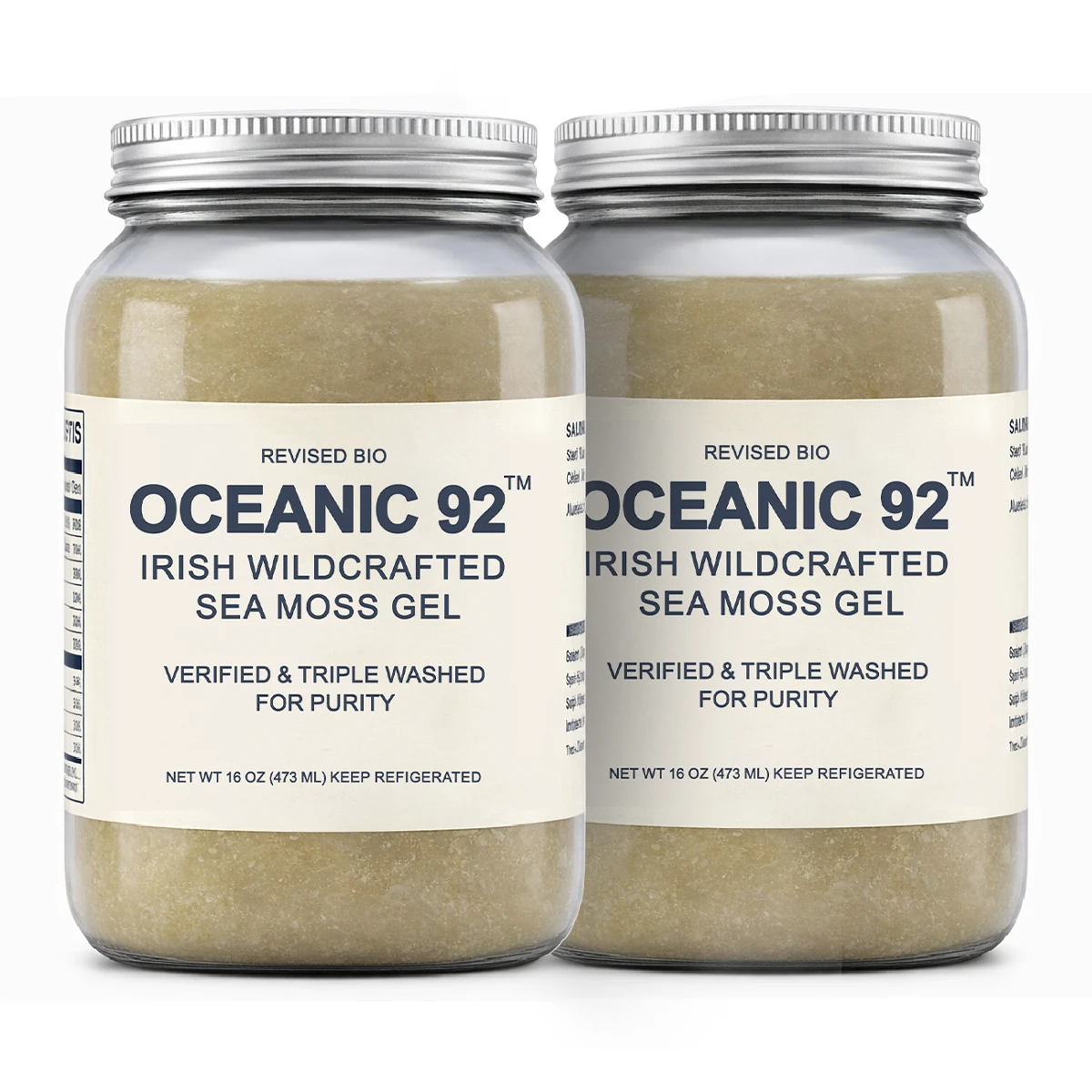
- 2 × 16 oz wildcrafted gel
- 60-day supply (matches one cortisone cycle)
- Free U.S. shipping
- 30-day money-back guarantee
- Most chosen by cortisone-cycle customers
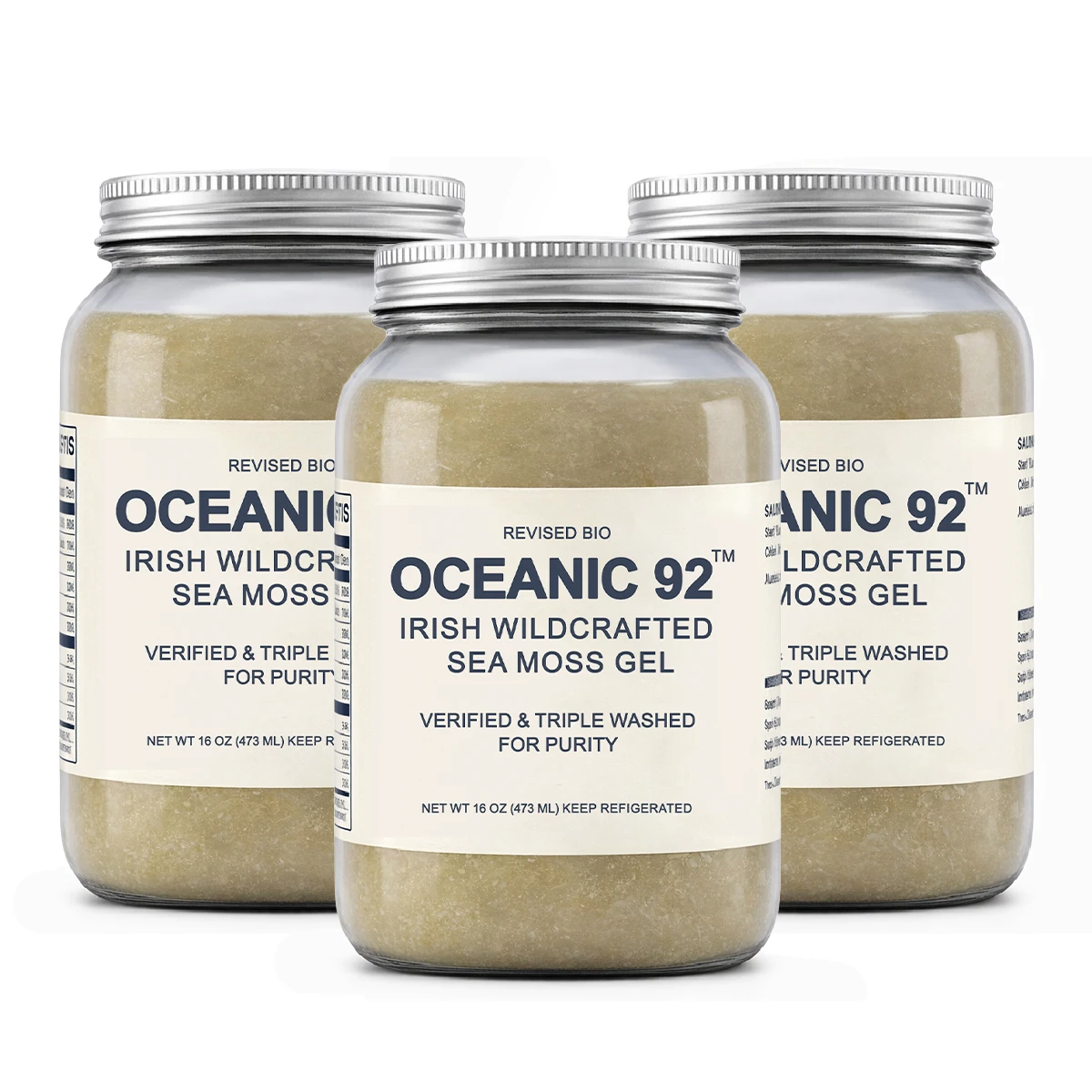
- 3 × 16 oz wildcrafted gel
- Full 90-day mineral protocol
- Free U.S. shipping
- 30-day money-back guarantee
- Lowest price per day
Honest answers, especially for cortisone patients.
Should I stop my cortisone shots if I start this?
Is the JAMA cartilage research really that strong?
How fast will this work compared to a cortisone shot?
How is this different from glucosamine, MSM, or turmeric?
Is this safe with my prescription medication?
What if it doesn't work for me?
How long should I commit to it?
Stop scheduling. Start rebuilding.
Wildcrafted Atlantic sea moss. Sulfur, sulfated polysaccharides, 90+ trace minerals. One spoonful, daily, for the long haul.
Try Oceanic 92 TodayResearch Sources Cited On This Page