The Real Reason Your Skin Changed In Your 50s — And What No Cream Can Do About It
It's not "just aging." Dermatology research has documented what most women feel but rarely hear named: women lose roughly 30% of their skin's collagen in the first 5 years after menopause, then another 2% every year after. That's not a cream problem. It's a structural problem — and it has to be addressed from the inside.
See The 8 Reasons →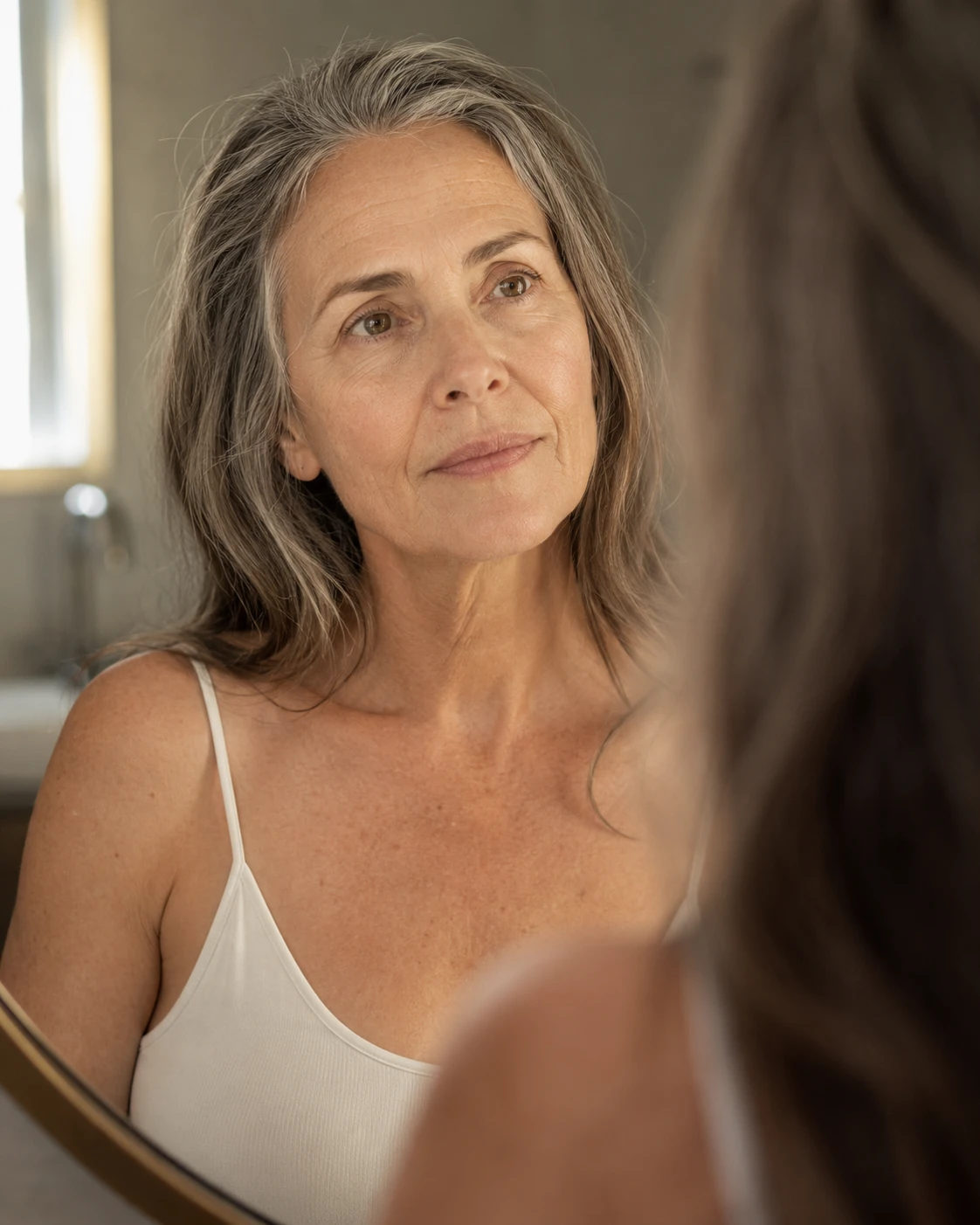
You Didn't Imagine It. Your Skin Really Did Change Overnight.
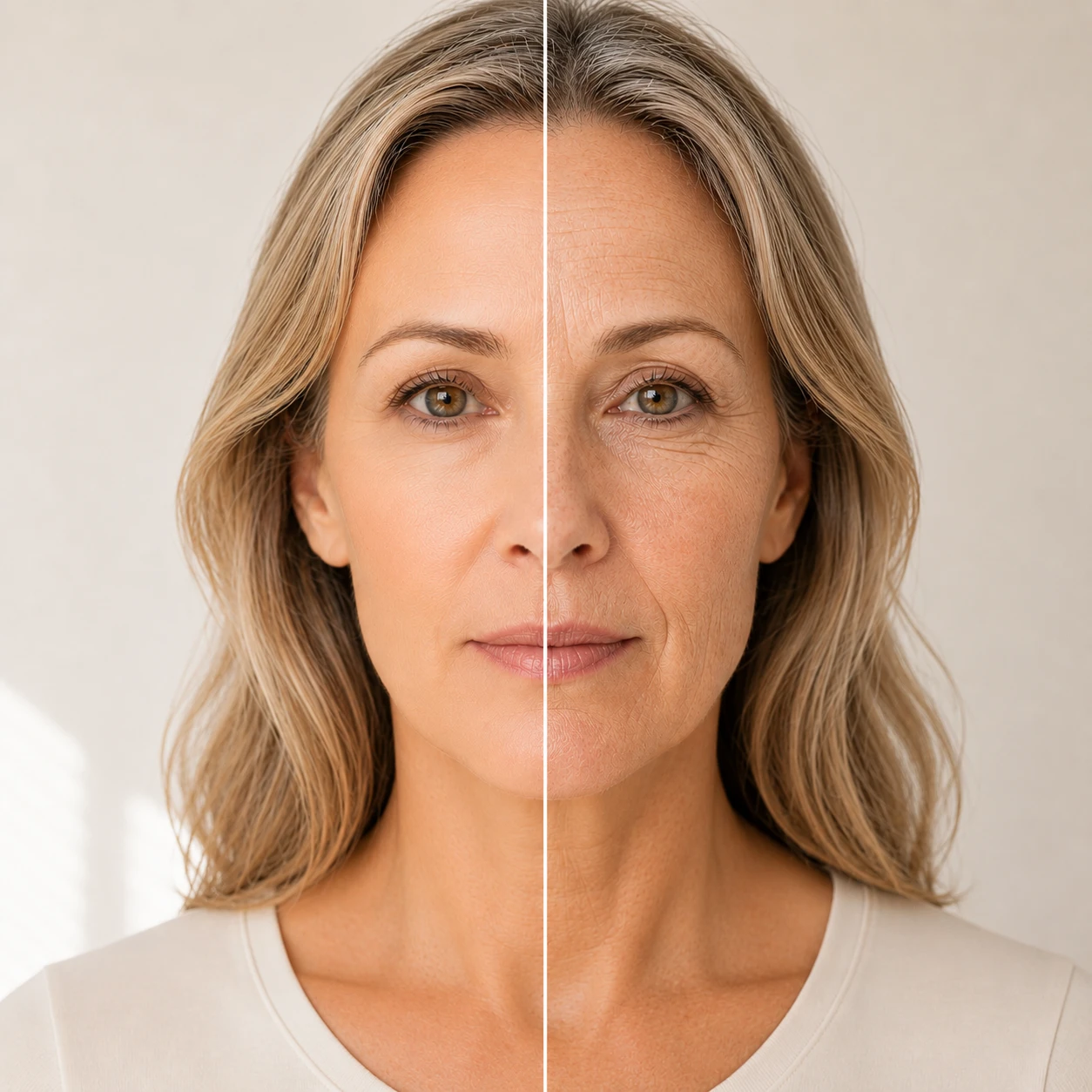
One morning, you looked in the mirror and the face looking back wasn't quite the one you remembered. Skin that used to bounce back from a pillow crease now held the mark for an hour. The fine lines around your eyes deepened. Your neck started to look like fabric. Your hands started giving away your age.
It wasn't gradual. It wasn't your imagination. It wasn't "just getting older." Something measurable, biological, and well-documented in dermatology research happened — and almost nobody warned you it was coming.
Estrogen — the hormone that quietly kept your skin's collagen production running for 30+ years — dropped. And when it dropped, your skin stopped getting the signal it had been getting your whole adult life.
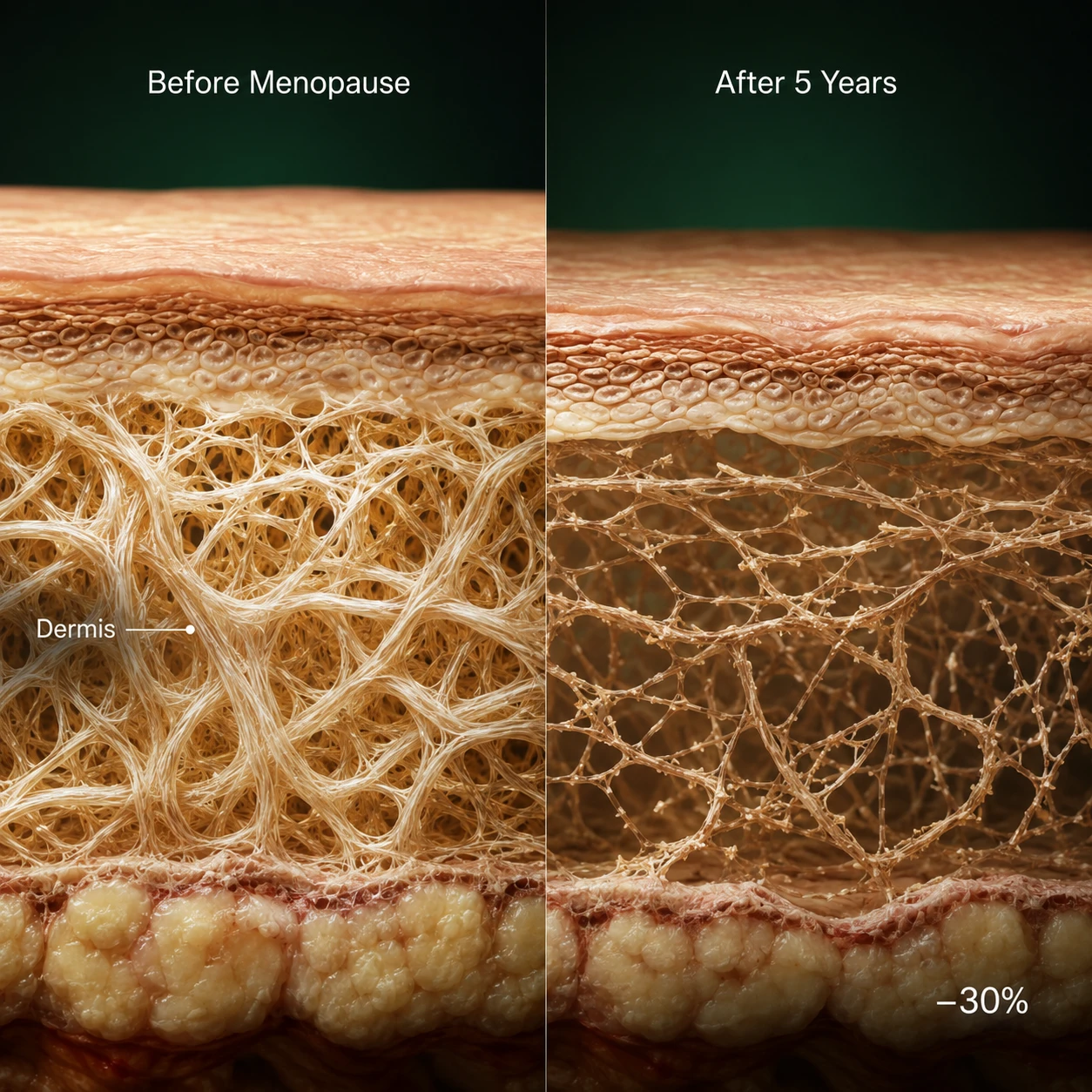
30% Of Your Skin's Collagen Is Gone In The First 5 Years.
This isn't marketing language. It's foundational dermatology research, published and replicated over 40 years.
"The skin collagen content, skin thickness, metacarpal index, and forearm bone mineral content in postmenopausal women showed a similar decline of between 1–2% per year after the menopause."
— Brincat et al., Obstetrics & Gynecology, 1987 · Read the study
The numbers stack up faster than most women realize. Roughly 30% of dermal collagen is lost in the first 5 post-menopausal years, then approximately 2% per year for the next 15. By the time a woman is 10 years past menopause, her skin may have lost 40% of the structural protein that gave it firmness, plumpness, and bounce.
That's why creams stop working the way they used to. They were never reaching the dermis where collagen lives. They were never the answer for what's missing.
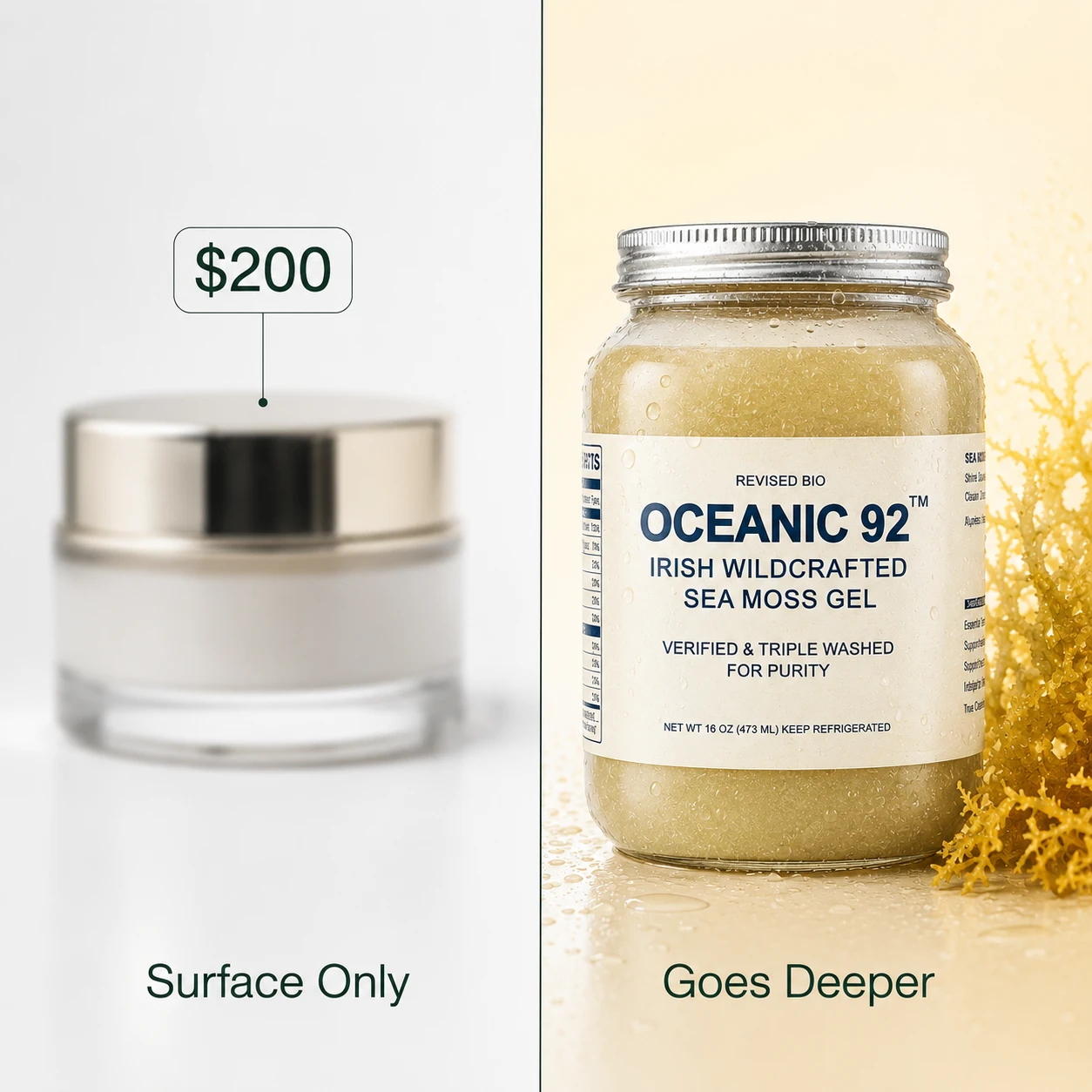
Why Your $200 Cream Never Reaches Where The Problem Is.
If you've spent the last decade on retinols, peptides, hyaluronic acid serums, vitamin C, and luxury moisturizers — and still watched your skin change anyway — here's the reason that's not your fault.
Creams act on the epidermis: the top 0.1mm of your skin. That layer is roughly the thickness of a sheet of paper. The collagen you've lost is in the dermis — the layer underneath, where fibroblast cells manufacture collagen using sulfur, vitamin C, zinc, and amino acids carried in via your bloodstream.
Topical products can hydrate the surface, smooth fine lines, and refract light beautifully. But they cannot supply the raw materials your fibroblasts need to manufacture new collagen. That has to come from inside.
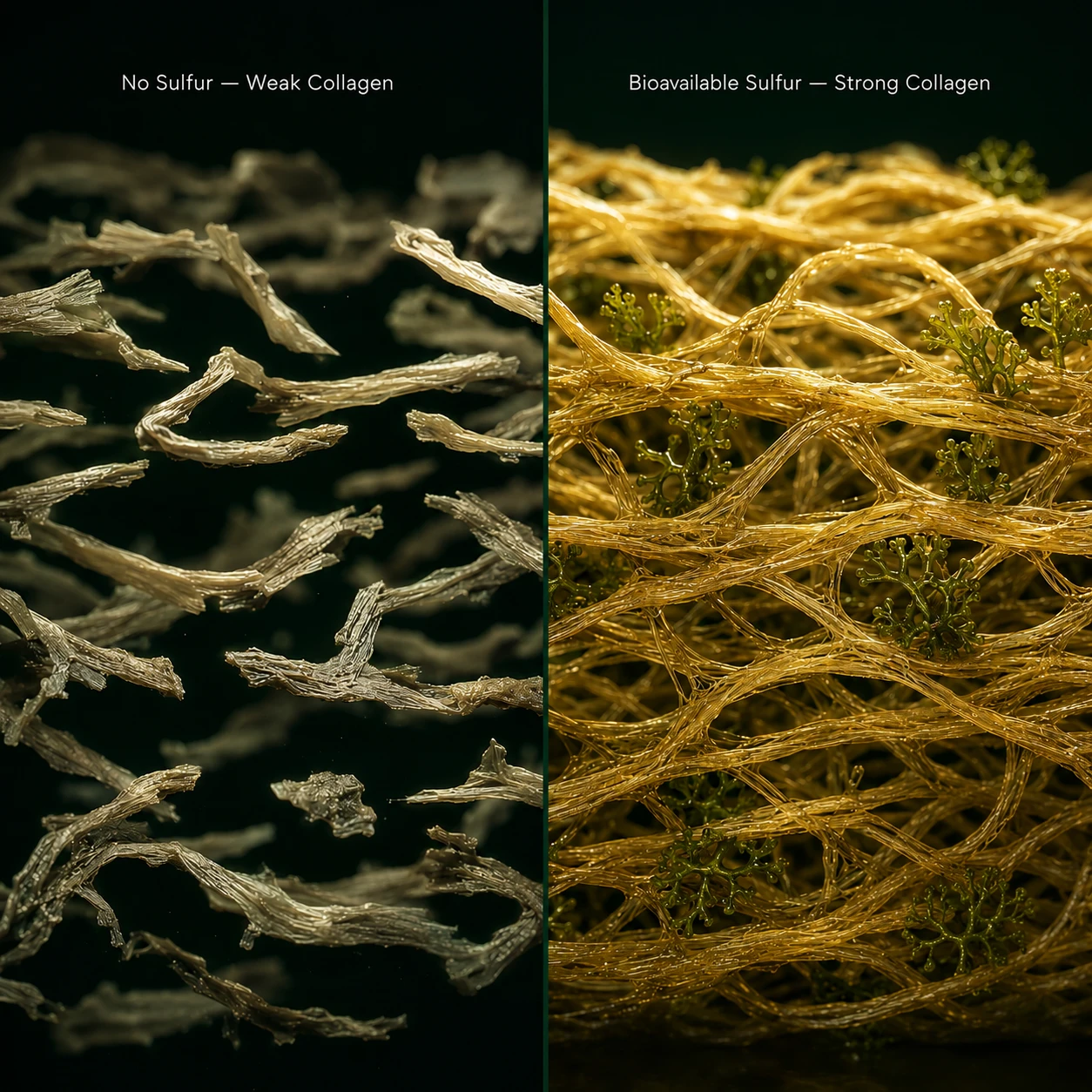
Sulfur Is The Glue That Holds Collagen Together. Most Women Are Deficient.
This is the part of the collagen story that almost no skincare brand explains.
Every strand of collagen in your dermis is built from amino acids — and crosslinked by sulfur-containing molecules (specifically, the amino acids methionine and cysteine). Those sulfur bridges are what hold collagen fibers together as stable tissue.
Without enough dietary sulfur, your body can still produce collagen molecules — but it cannot crosslink them properly into strong, supportive collagen tissue. It's like having all the bricks for a wall but no mortar.
Most adults today are sulfur-deficient. Modern soil is depleted, and the foods richest in sulfur (sea vegetables, certain root crops, organ meats) have largely fallen out of Western diets. The deficiency shows up first in the tissues that need sulfur the most: skin, hair, nails, and connective tissue.

Sulfated Polysaccharides Bind Water In Skin Tissue. From The Inside.
You already know about hyaluronic acid — the molecule beauty brands have built billion-dollar product lines around, because of its ability to hold up to 1,000 times its weight in water.
Here's what they don't tell you: red algae (sea moss) naturally contains a different class of compounds — sulfated polysaccharides — that do something very similar in skin tissue. Peer-reviewed research has documented their moisture-binding, anti-inflammatory properties in skin models.
When you apply hyaluronic acid to your face, it works on the surface. When you ingest sulfated polysaccharides from sea moss, they support hydration at the dermal level — the same layer where collagen lives, where creams can't reach.
This is the internal version of the moisture your skincare routine has been trying to imitate. From food. From inside.
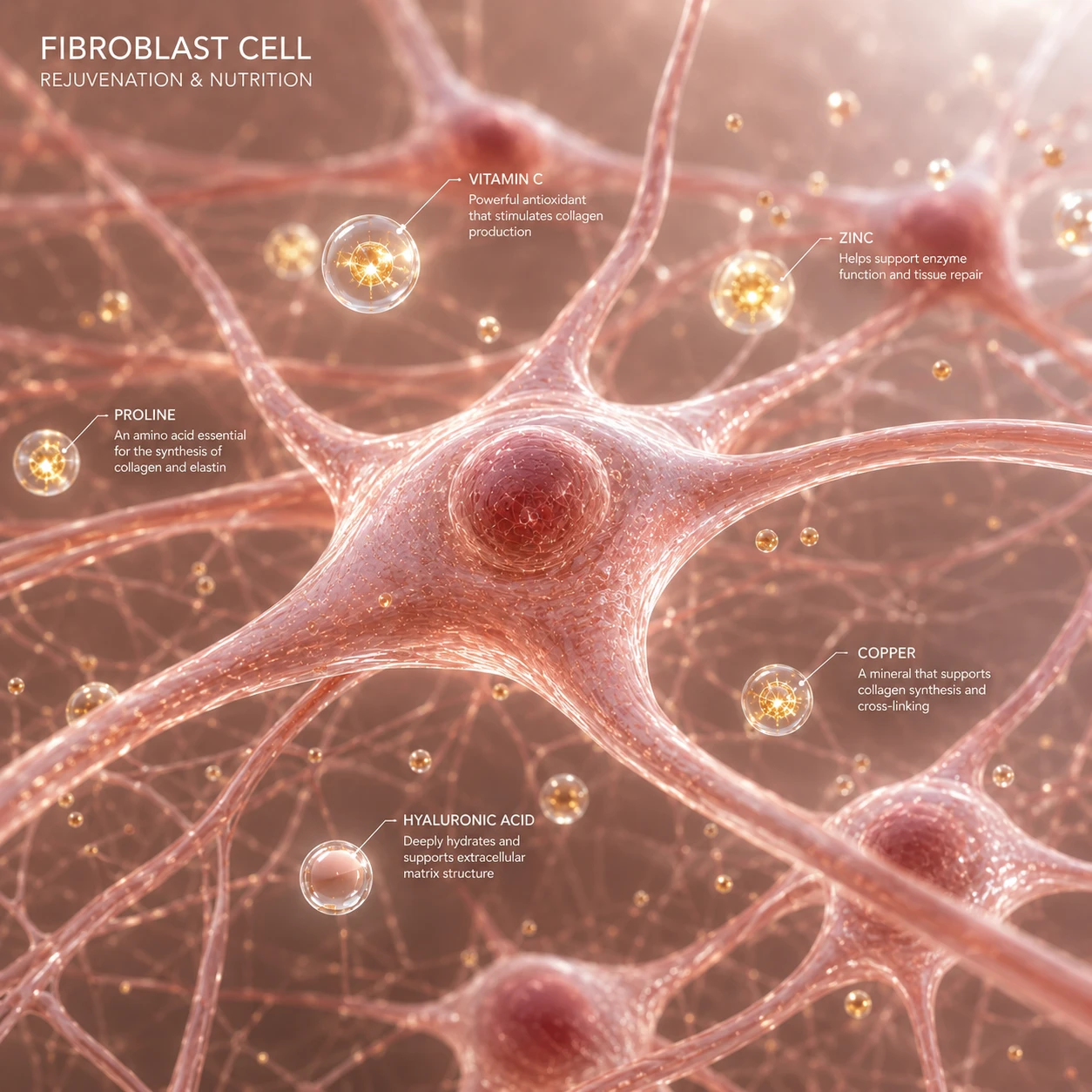
Your Fibroblasts Need Minerals — Not Just A Better Serum.
Fibroblasts are the cells in your dermis that actually manufacture collagen. They're tiny, busy, and dependent on a specific list of nutritional inputs to do their job: amino acids (from protein), vitamin C, zinc, copper, sulfur, and magnesium.
Most menopausal women are quietly deficient in several of these. Estrogen drop changes how the body absorbs and uses minerals. Modern food provides less than it did fifty years ago. Stress and sleep changes around menopause compound the issue.
Sea moss delivers a broad-spectrum mineral profile in a bioavailable, whole-food matrix. Not high doses of one isolated mineral — but the synergistic mineral picture your fibroblasts were designed to work with. Magnesium, calcium, manganese, zinc, sulfur, potassium, iron, plus 80+ trace minerals.

This Isn't About Reversing Aging. It's About Aging With What Your Skin Needs.
Let's be honest about what Oceanic 92 is — and isn't.
It's not estrogen. It's not HRT. It will not reverse menopause or make you look 30 again. We're not interested in selling that lie, and you're too sophisticated to buy it.
What it does is supply your fibroblasts with the raw materials they need to make collagen as efficiently as possible despite the estrogen drop. Sulfur for crosslinking. Sulfated polysaccharides for internal hydration. The mineral matrix for cellular renewal.
The result isn't a face-lift. It's your skin, looking like the best version of itself for your age. Firmer than it would have been without internal support. More hydrated. More resilient. The way aging skin looks when it has what it needs — not the way it looks when it's quietly mineral-starved.
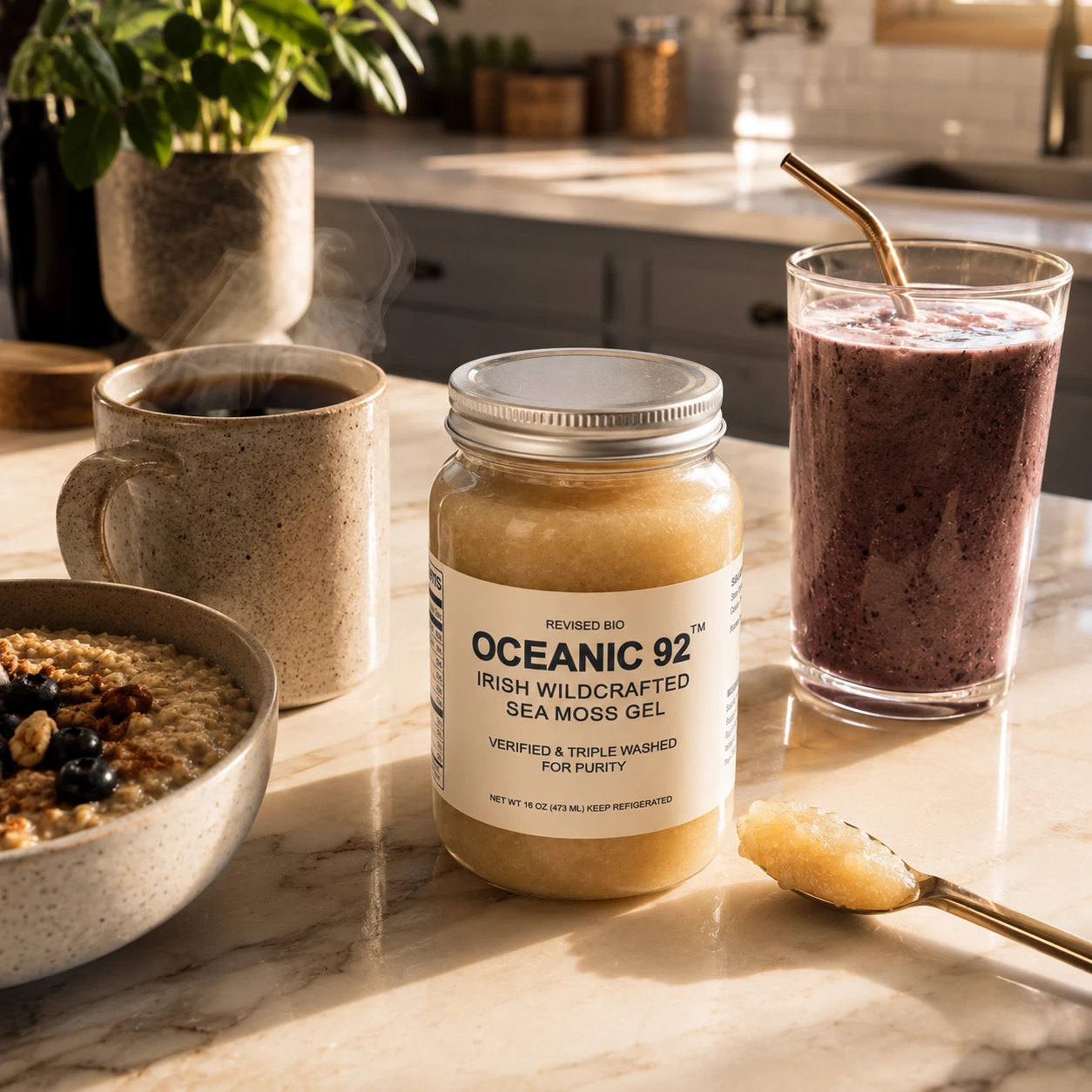
Tasteless — Which Means You'll Still Be Taking It At Day 90.
Collagen rebuilds slowly. Sulfur incorporates into new tissue over weeks. Your skin renewal cycle is 28 days at 25, closer to 60 days at 55. Whatever you take to support your skin from the inside has to be something you'll actually take every single day, for two to three months minimum, before you start to see results.
Most sea moss tastes like the ocean. Briny. Fishy. Most women quit within three weeks. That's not the supplement's fault — it's compliance failure.
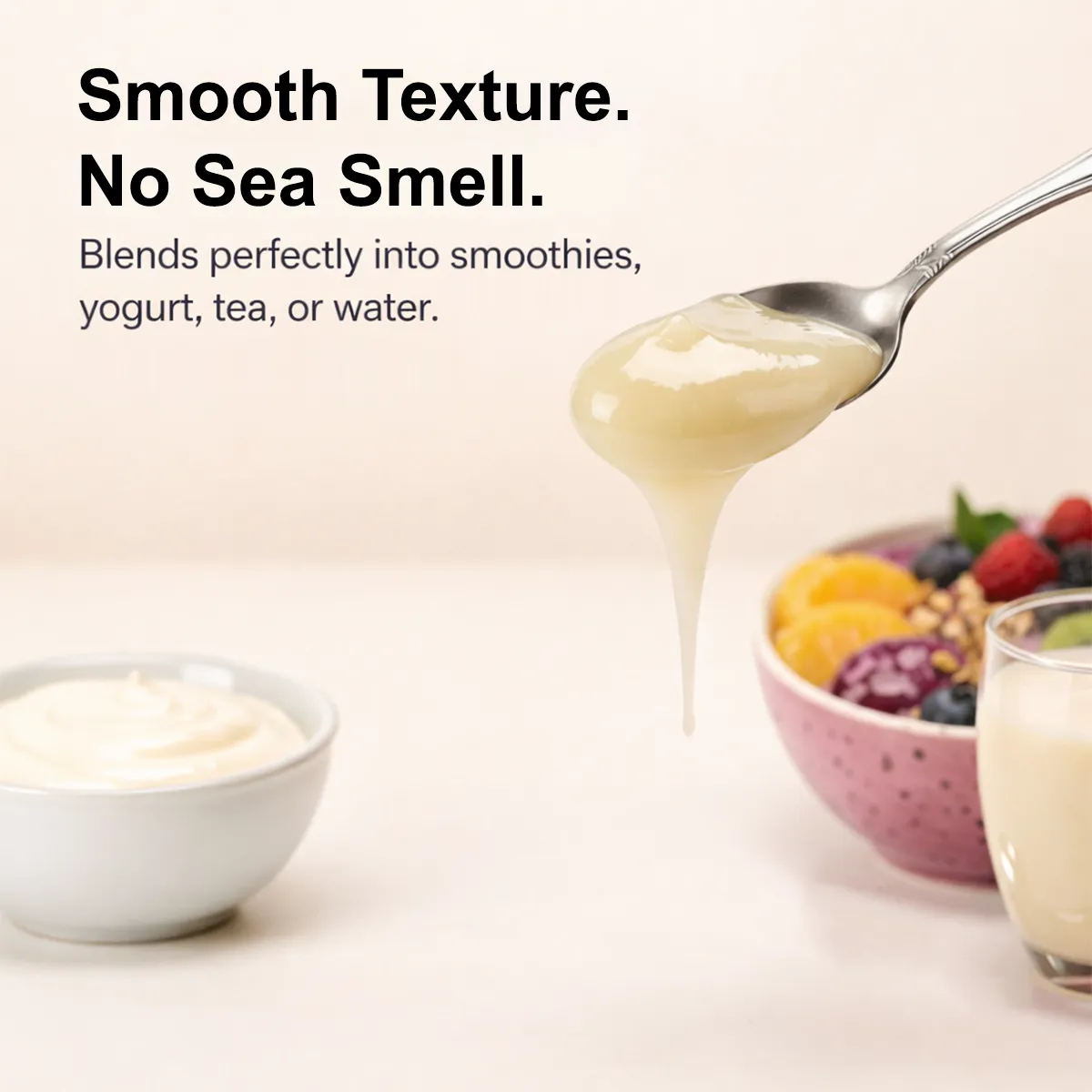
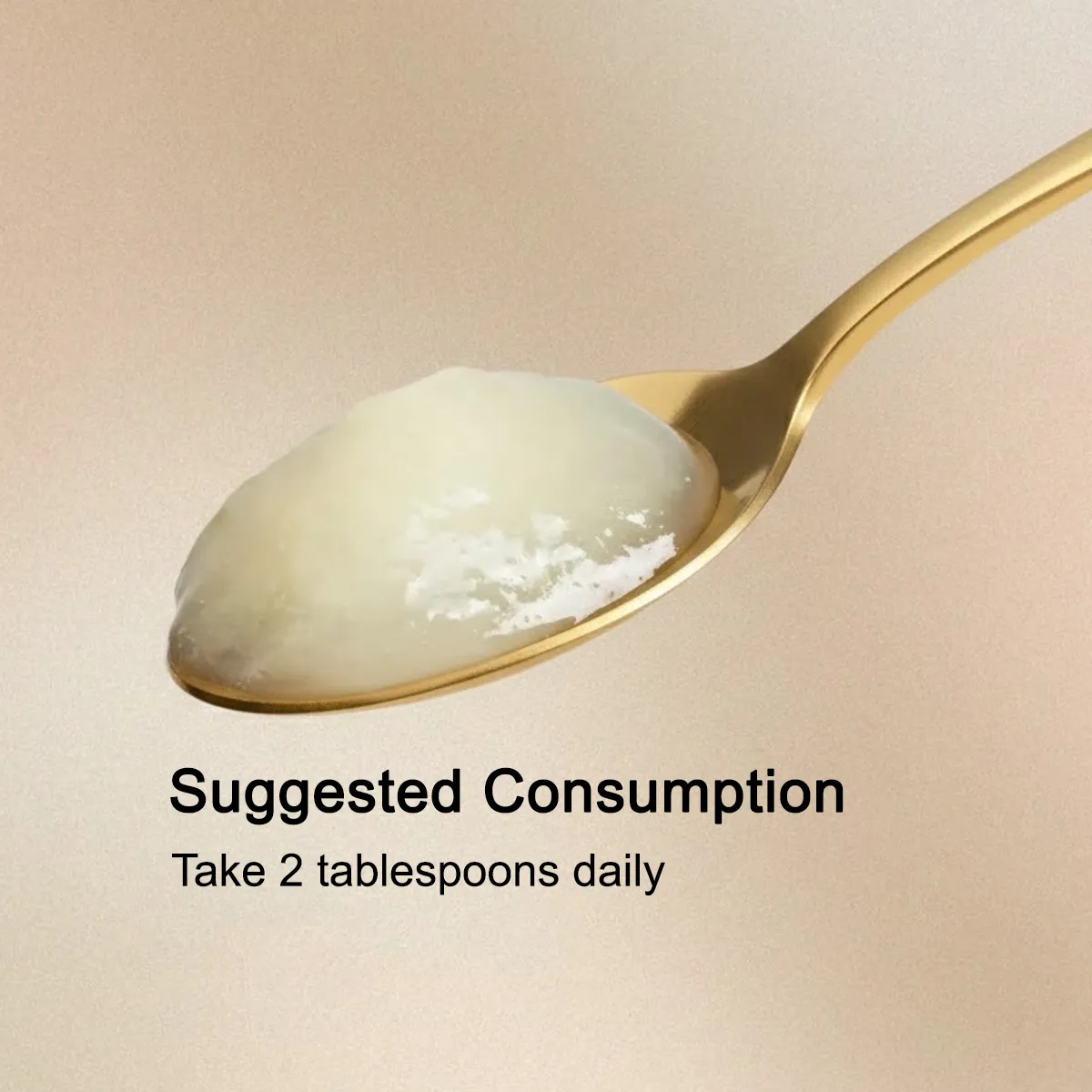
Oceanic 92 is triple-washed and processed to be 100% neutral. No fishy taste. No ocean aftertaste. You stir one tablespoon into your morning coffee, smoothie, oatmeal, or yogurt — and it disappears. Your existing routine doesn't change. The internal nutrition just shows up inside it.
Real Women, Real Skin Stories
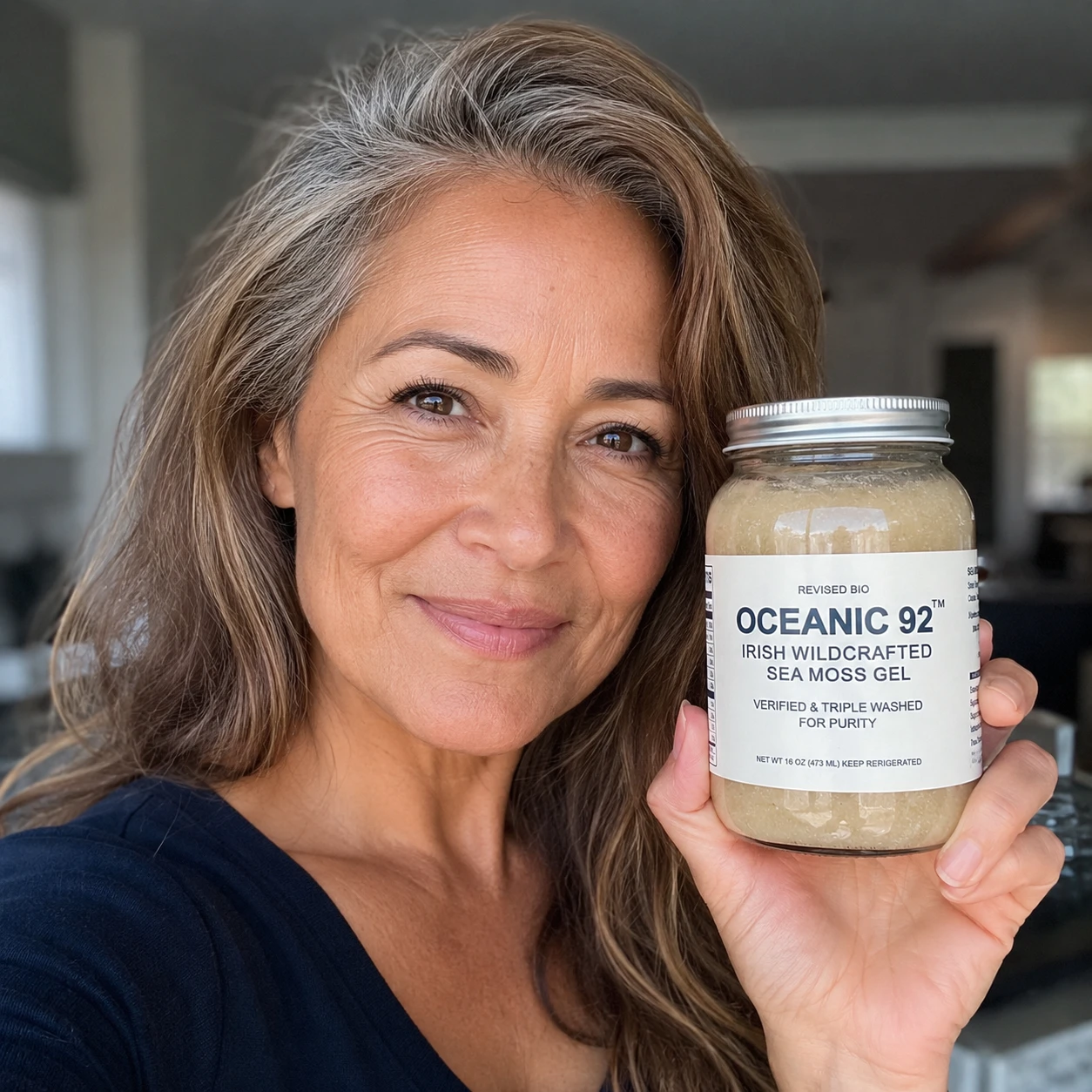

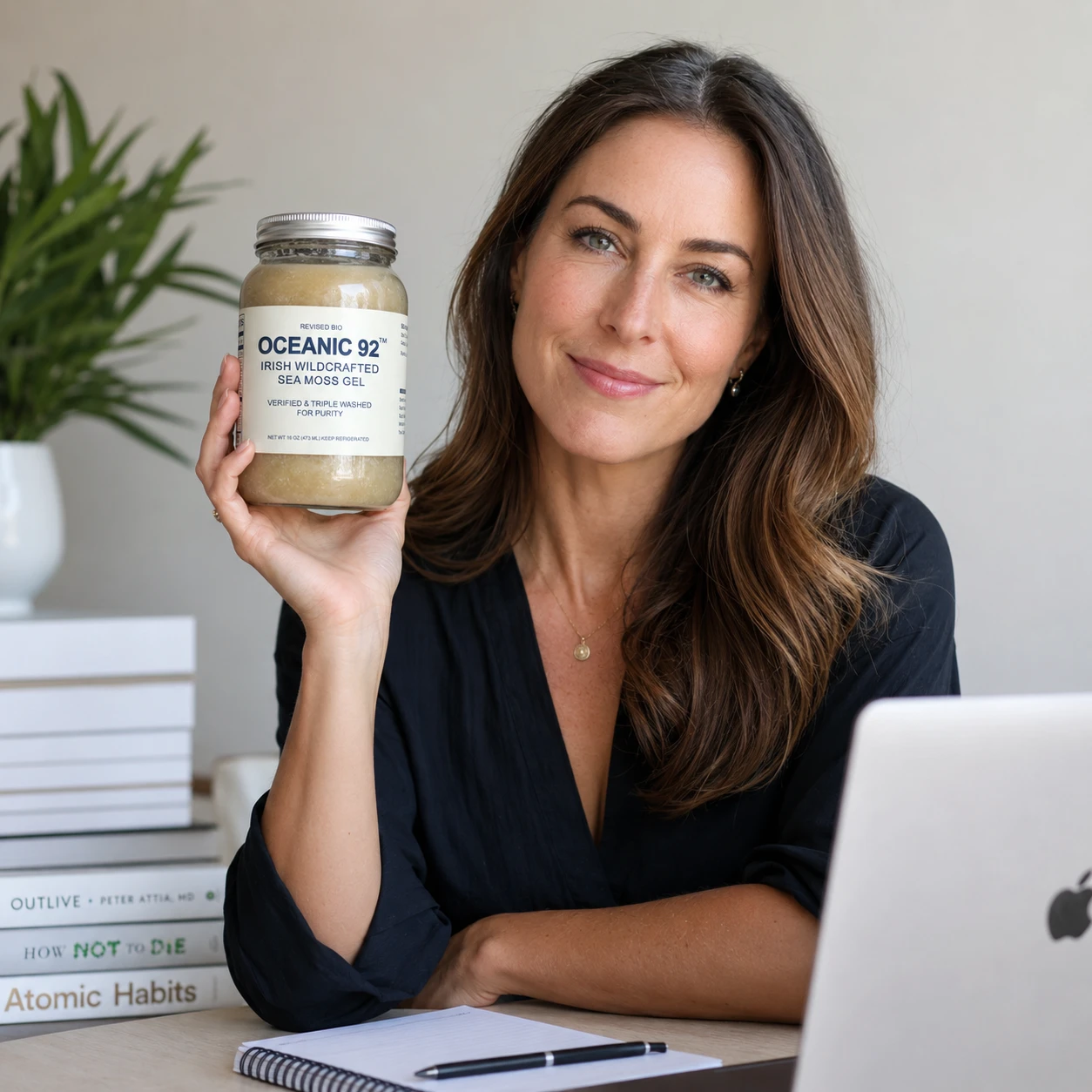
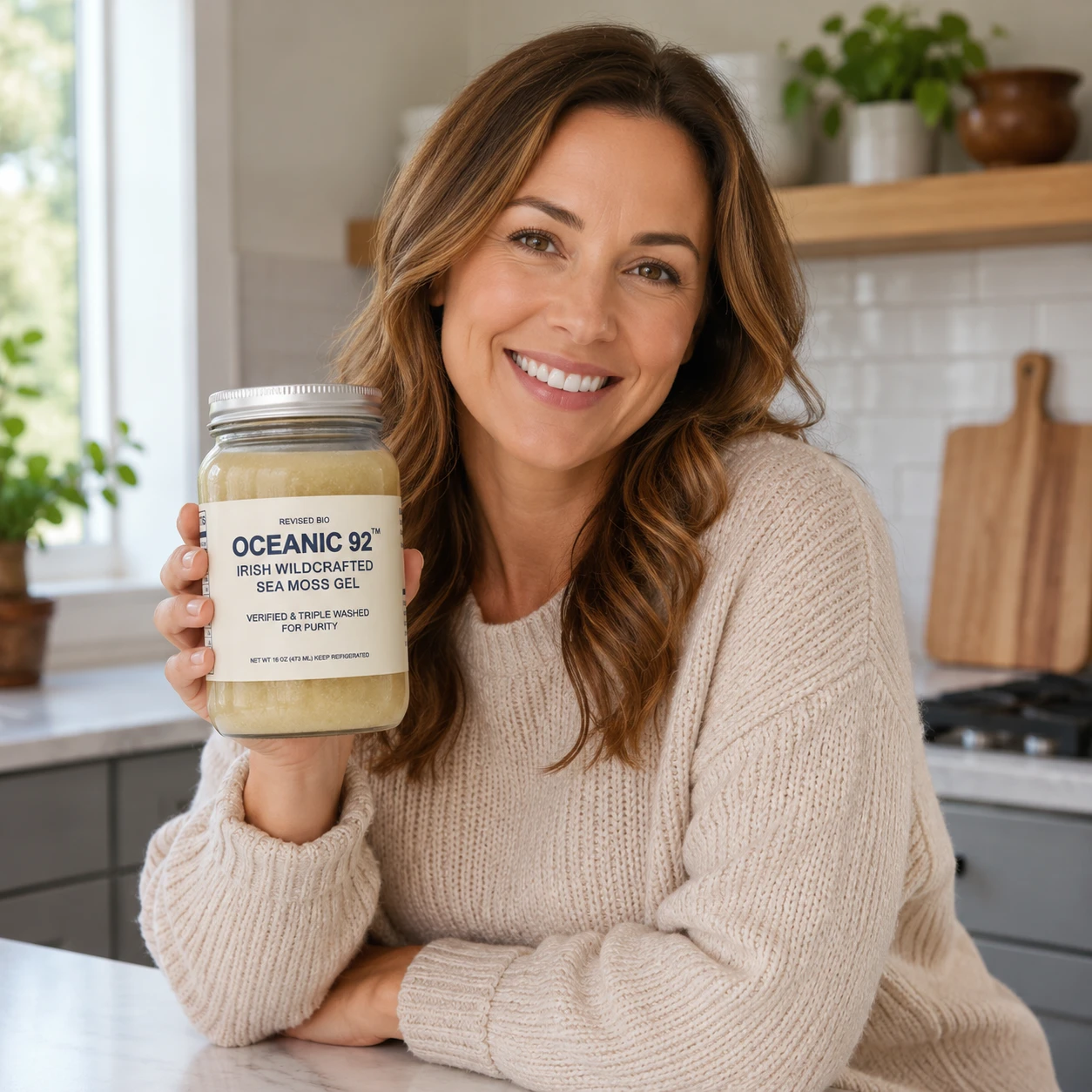
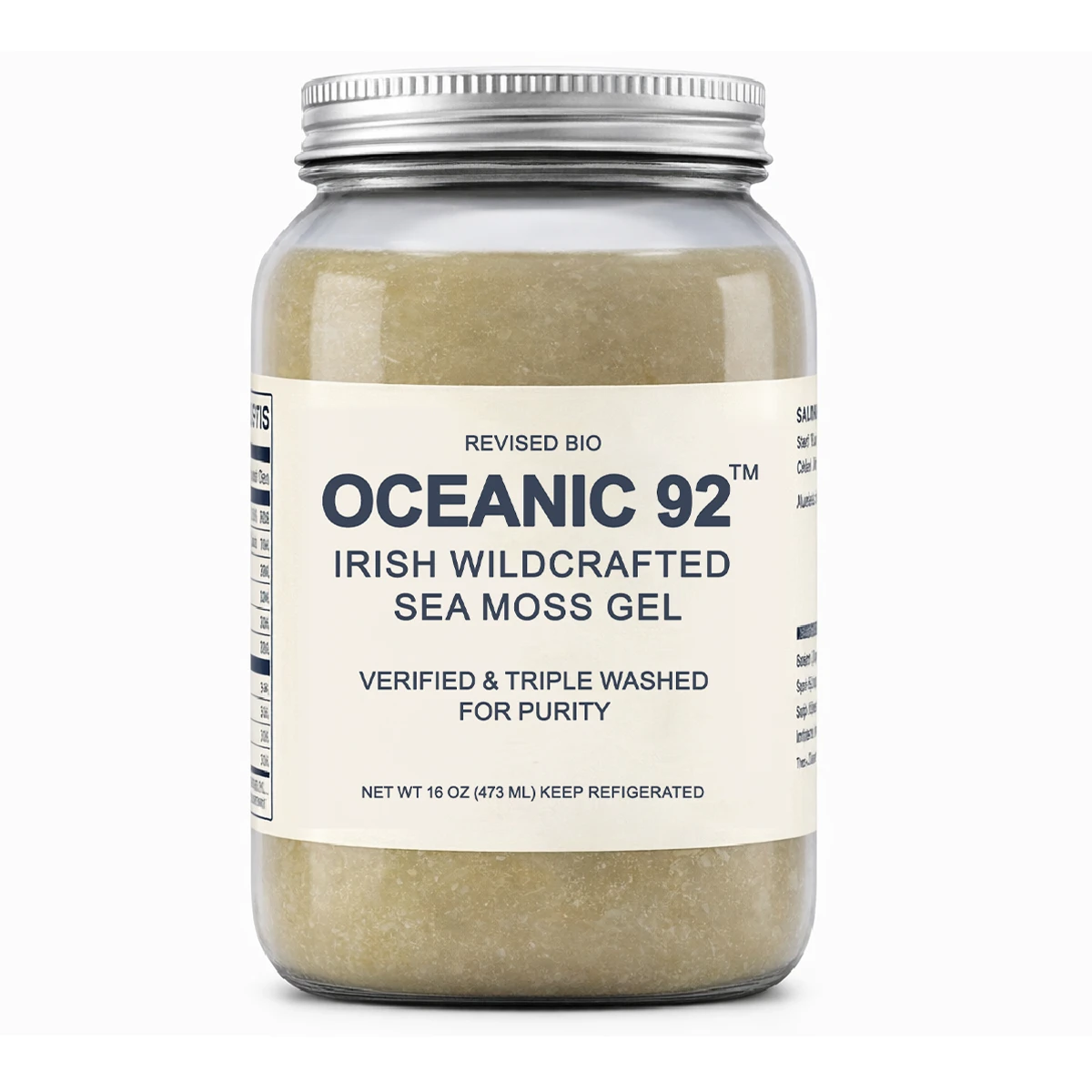
Oceanic 92™
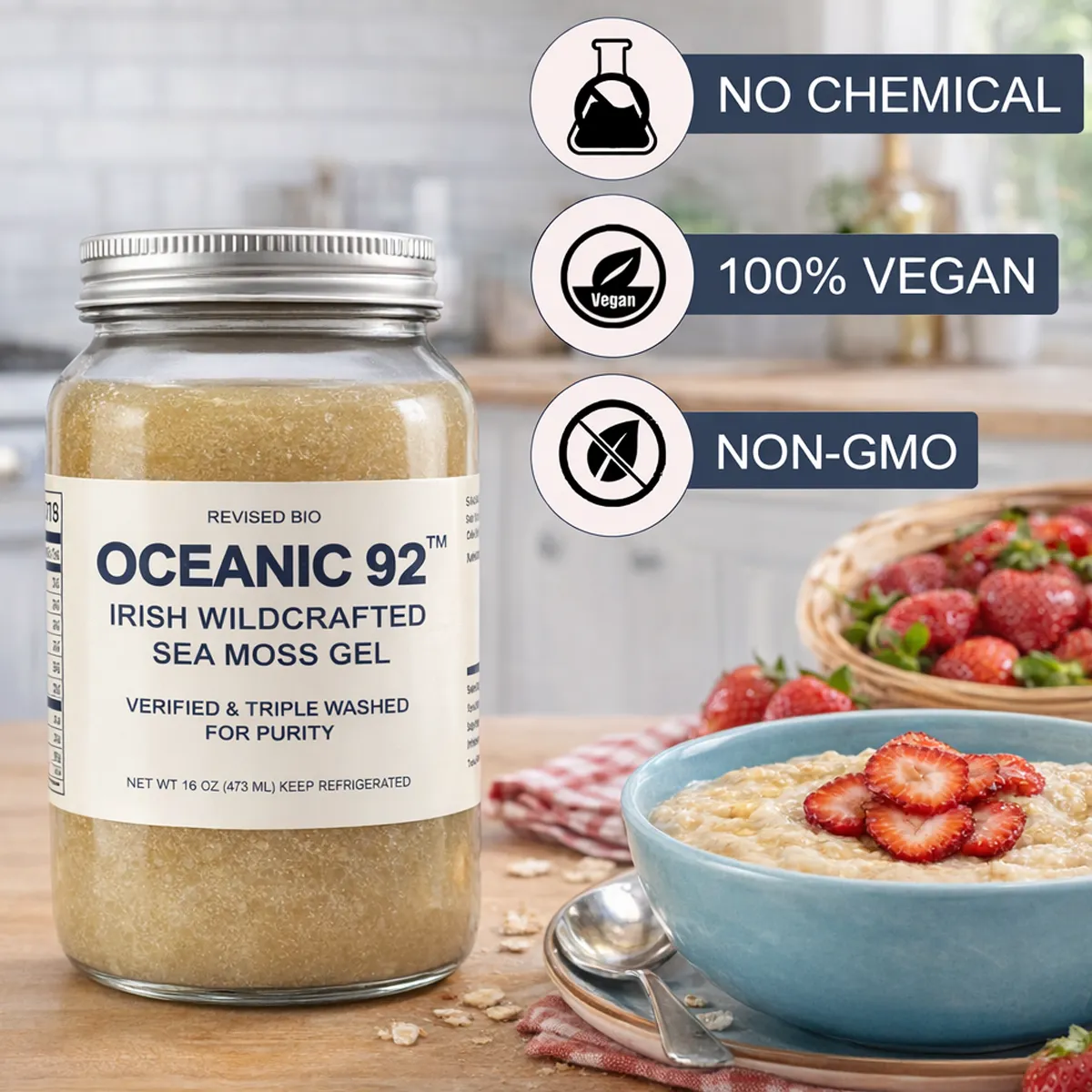
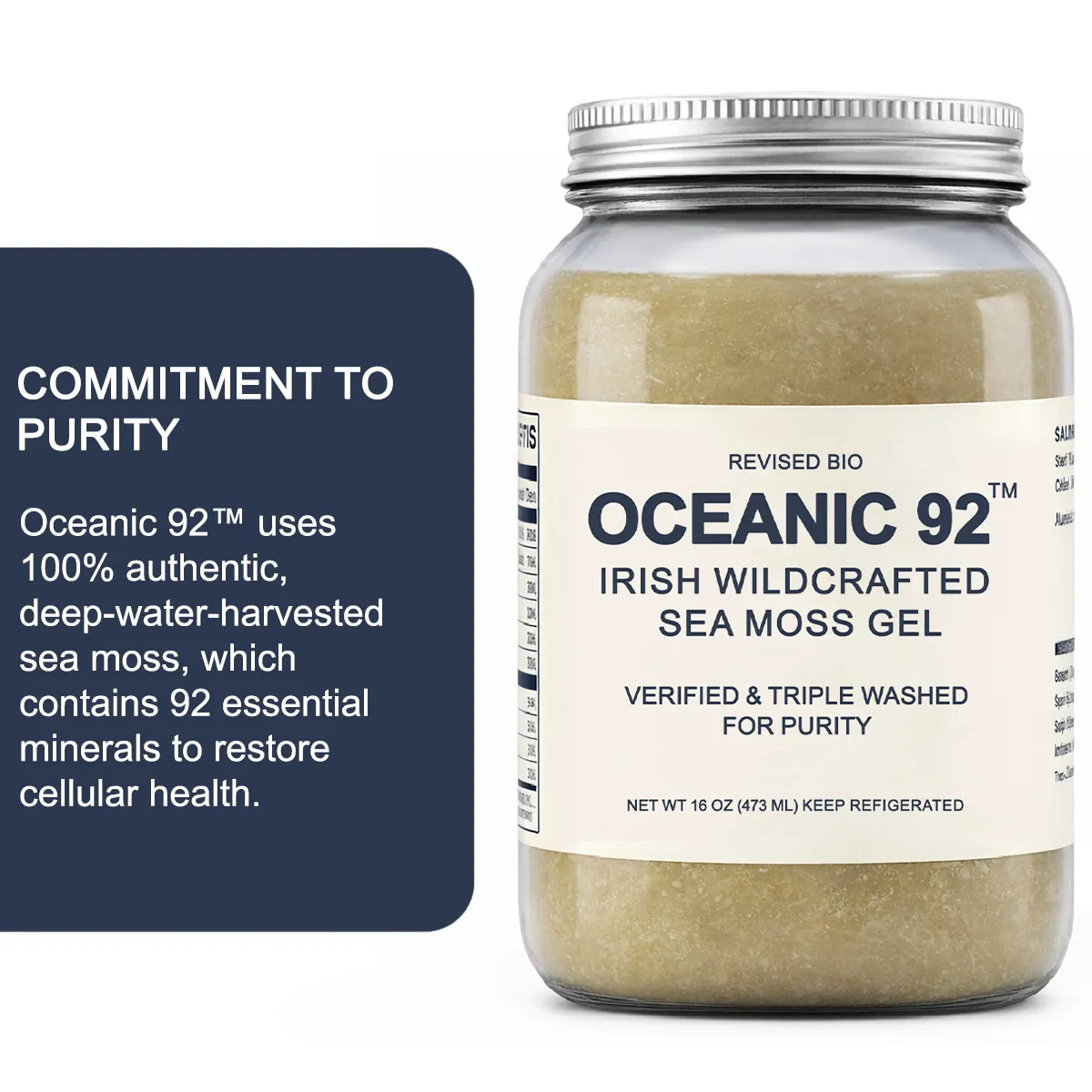
Wildcrafted Irish Sea Moss Gel. Internal nutrition for the menopausal skin no cream can reach.
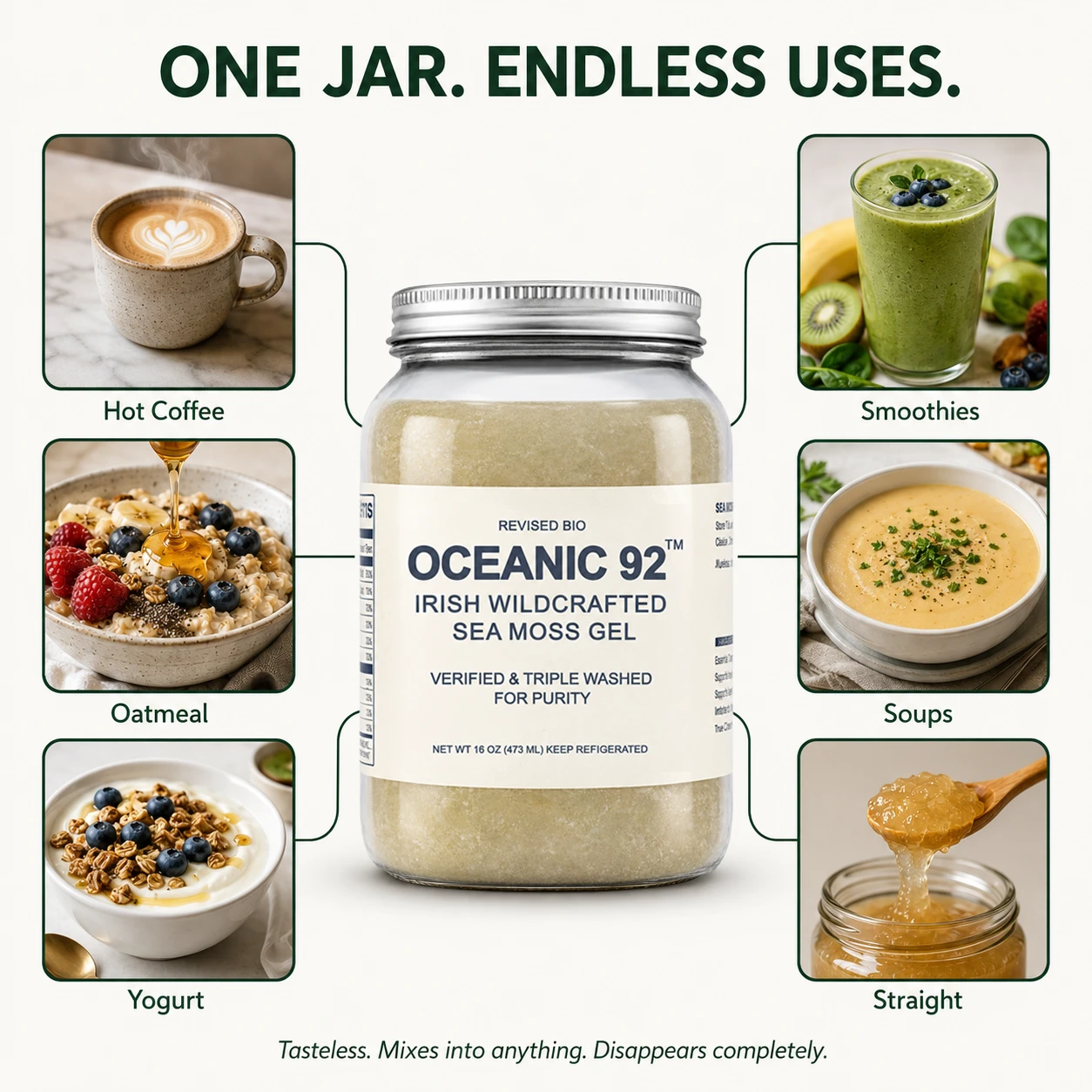
One spoonful. Stir into anything. Done.
The biggest reason women quit sea moss isn't that it doesn't work. It's that it tastes like ocean water. Not Oceanic 92. Our gel is processed to be 100% neutral — no fishy aftertaste, no salt, no funk. You stir one tablespoon into whatever you're already eating or drinking, and it disappears into the recipe.
The Internal Layer Your Skincare Has Been Missing
See why your existing collagen powder, retinol, and serum still can't address what menopause changed.
Frequently Asked Questions
Can Oceanic 92 actually reverse menopausal skin changes?
How long until I see visible changes in my skin?
Can I take this alongside HRT?
How is this different from the marine collagen powder I'm already taking?
Why pure gel and not capsules or gummies?
I have a thyroid condition. Is the iodine in sea moss safe for me?
Does it really taste like nothing?
How do I use the REV15 coupon code?
What if it doesn't work for me?
Your skin didn't fail you. It just stopped getting what it needs.
One tablespoon. Stir it into your morning coffee. Stop trying to fix from the outside what changed from the inside. Start supplying your fibroblasts with the sulfur, polysaccharides, and minerals collagen needs to rebuild.
Try Oceanic 92 Today →