What a Proprietary Blend Actually Is
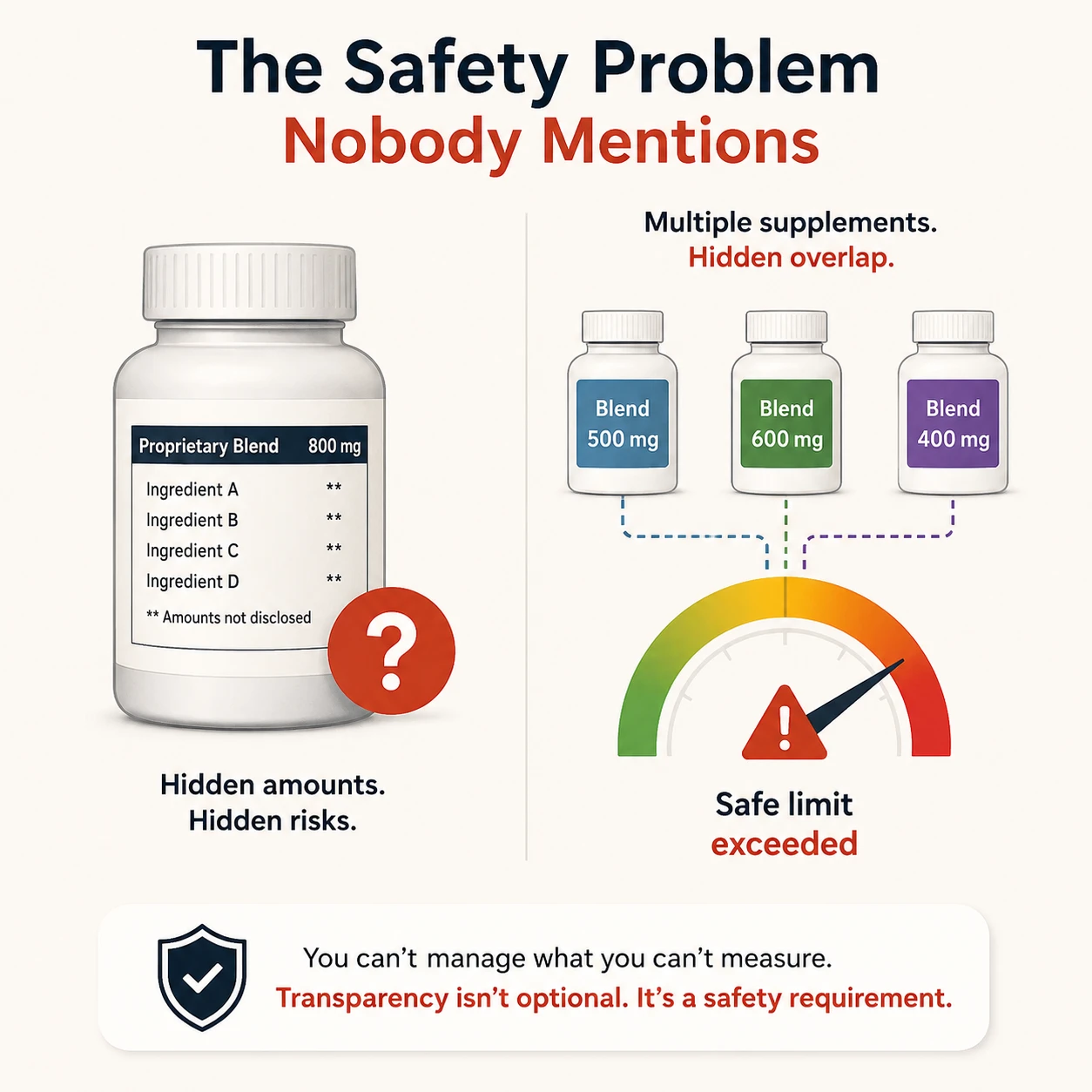
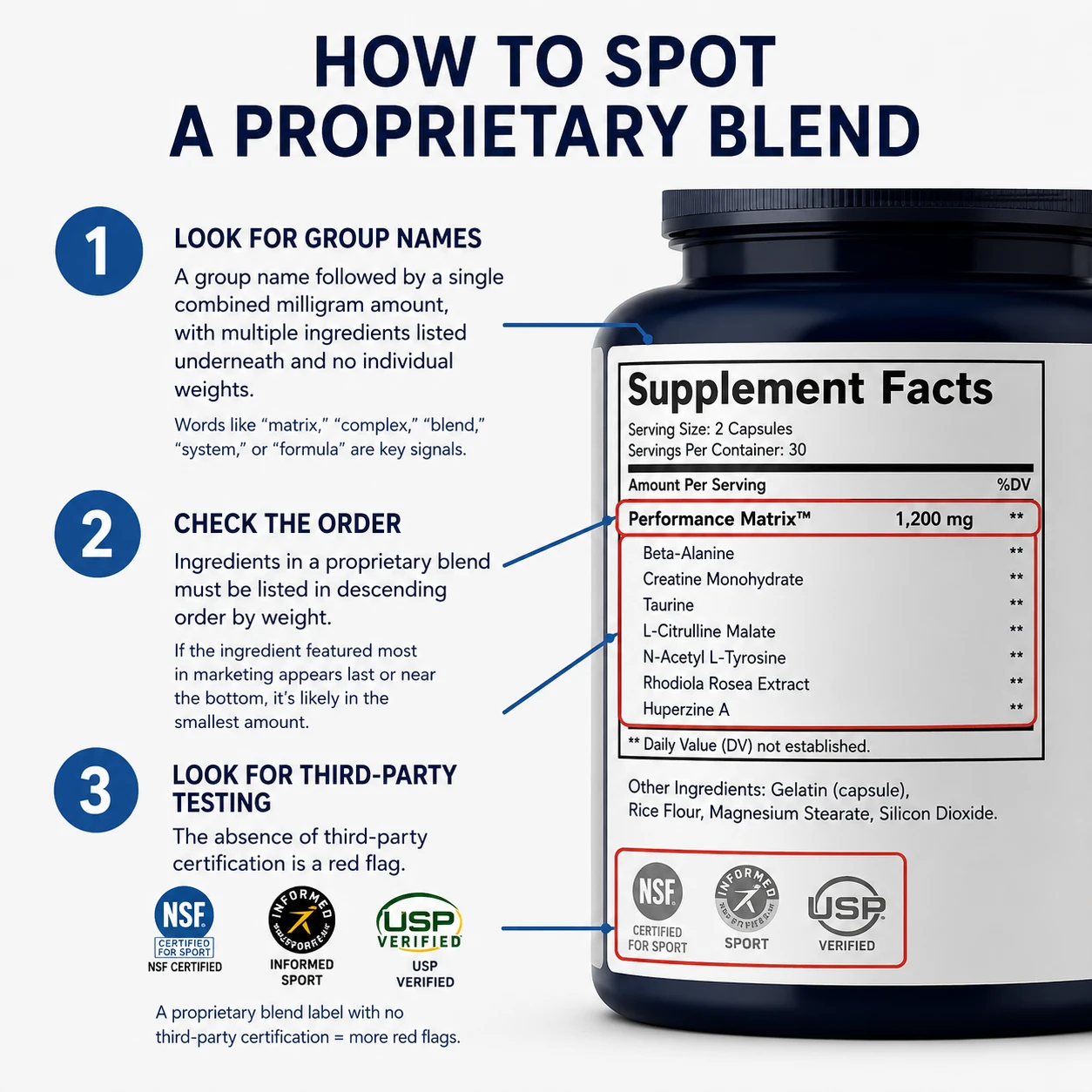
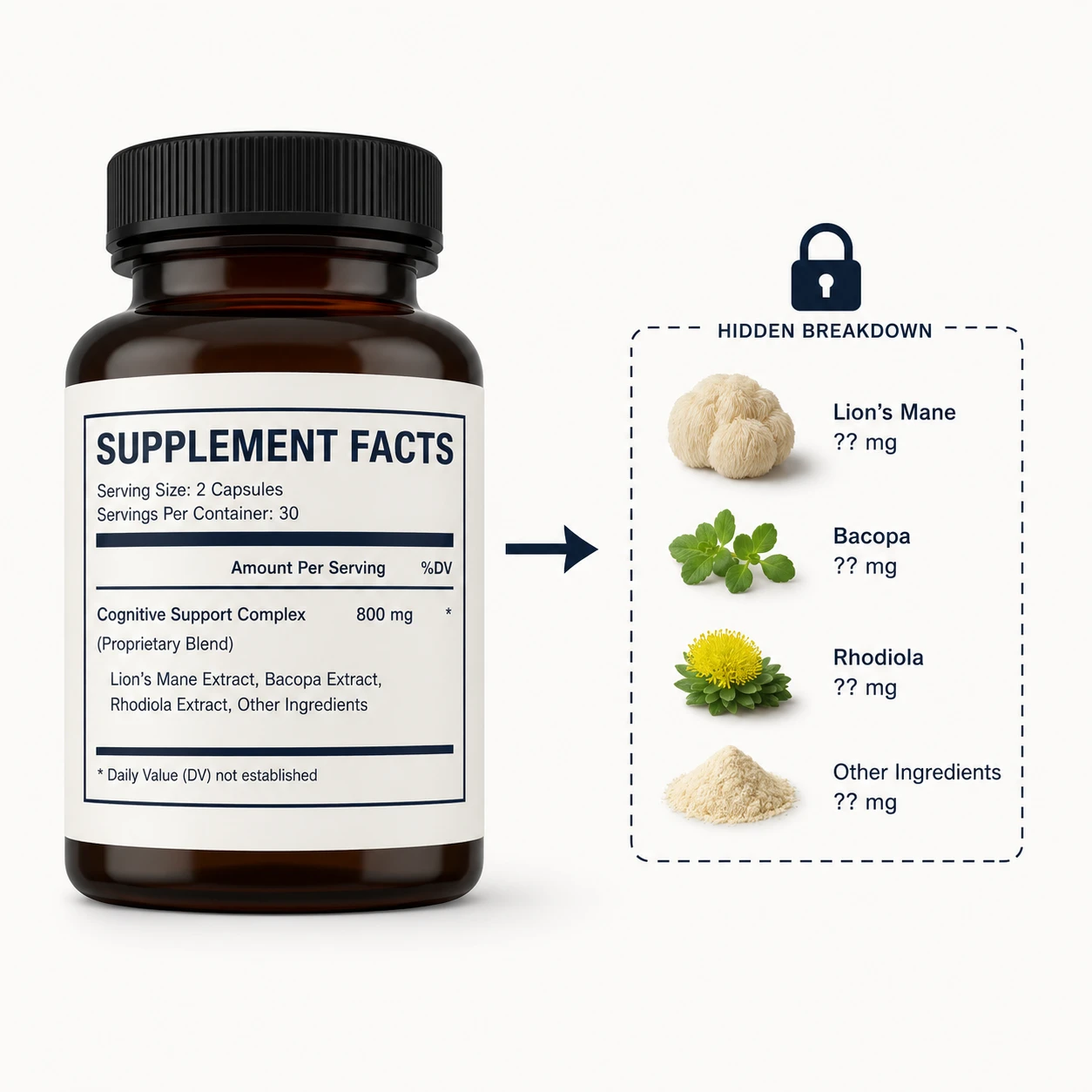
A proprietary blend is a group of ingredients listed together under one combined dose, with no disclosure of how much of each individual ingredient is actually present.
The manufacturer gives you the total weight of the blend. They list what is inside it. But the individual breakdown? Hidden. Completely.
That distinction is everything. And the label, by design, will never tell you.
The Real Reason Brands Use Them
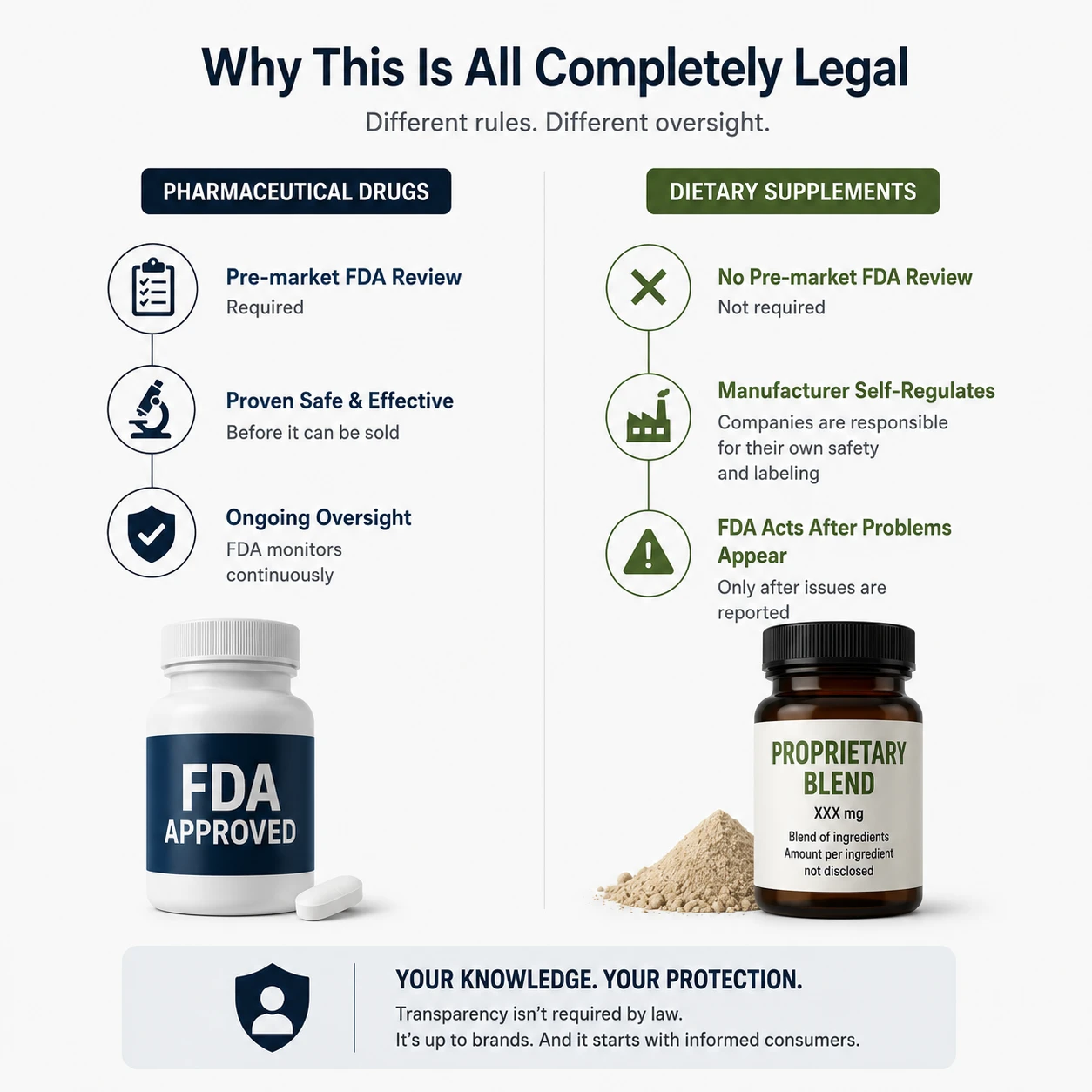
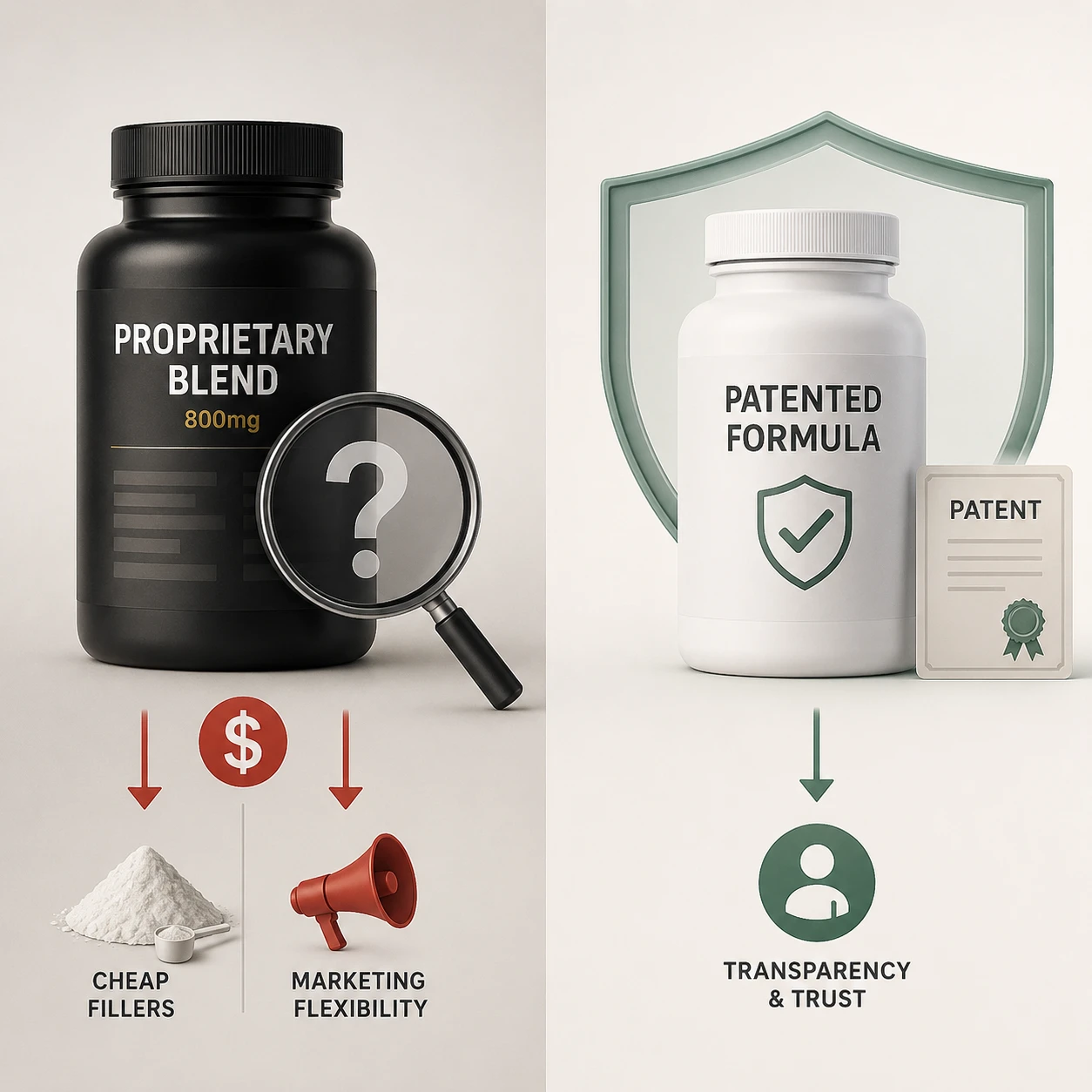
The industry justification sounds reasonable enough. Brands claim proprietary blends protect their formulas from being copied by competitors. It does not hold up.
Formulation patents exist for exactly this purpose. Any brand with a genuinely innovative formula has full legal protection available without hiding a single milligram from the consumer.
It is a legal loophole. And a significant portion of the supplement industry has quietly built its profit margins around it.
Fairy Dusting: The Industry Term You Need to Know
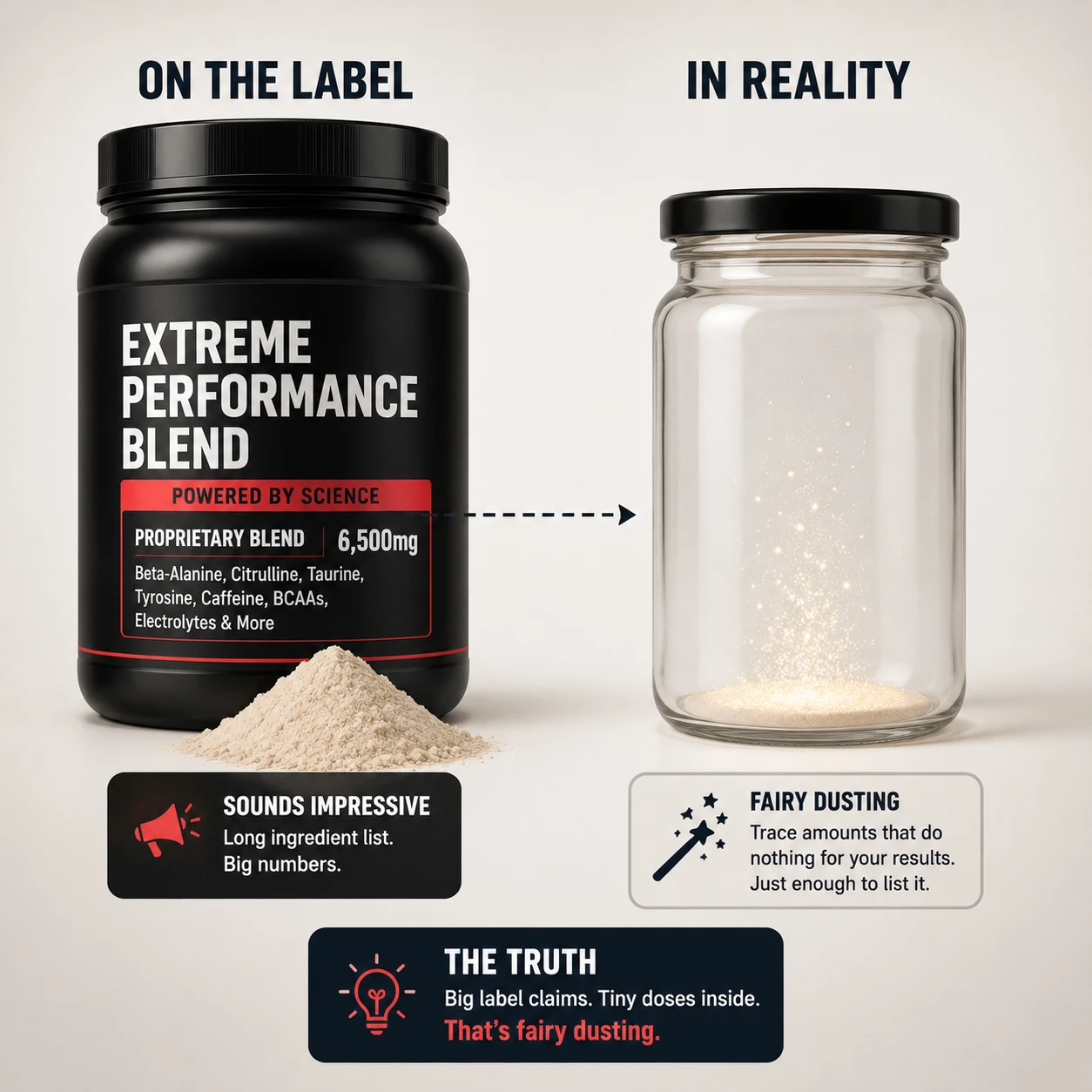
People inside the supplement industry have a name for this practice. They call it fairy dusting — including an ingredient at a dose so low it produces no measurable effect in the body, while still listing it on the label as though it is a meaningful component of the formula.
The ingredient was listed prominently. The dose was physiologically irrelevant. Apply this pattern across dozens of ingredient categories and the scale of what consumers are not getting becomes very clear.