Special report for women over 40
7 Quiet Signs Menopause Joint Pain Is Starting to Take Your Independence
Most women dismiss #4 as “just stiffness”—until they are trapped in the bathroom, unable to stand, calling their daughter for help.
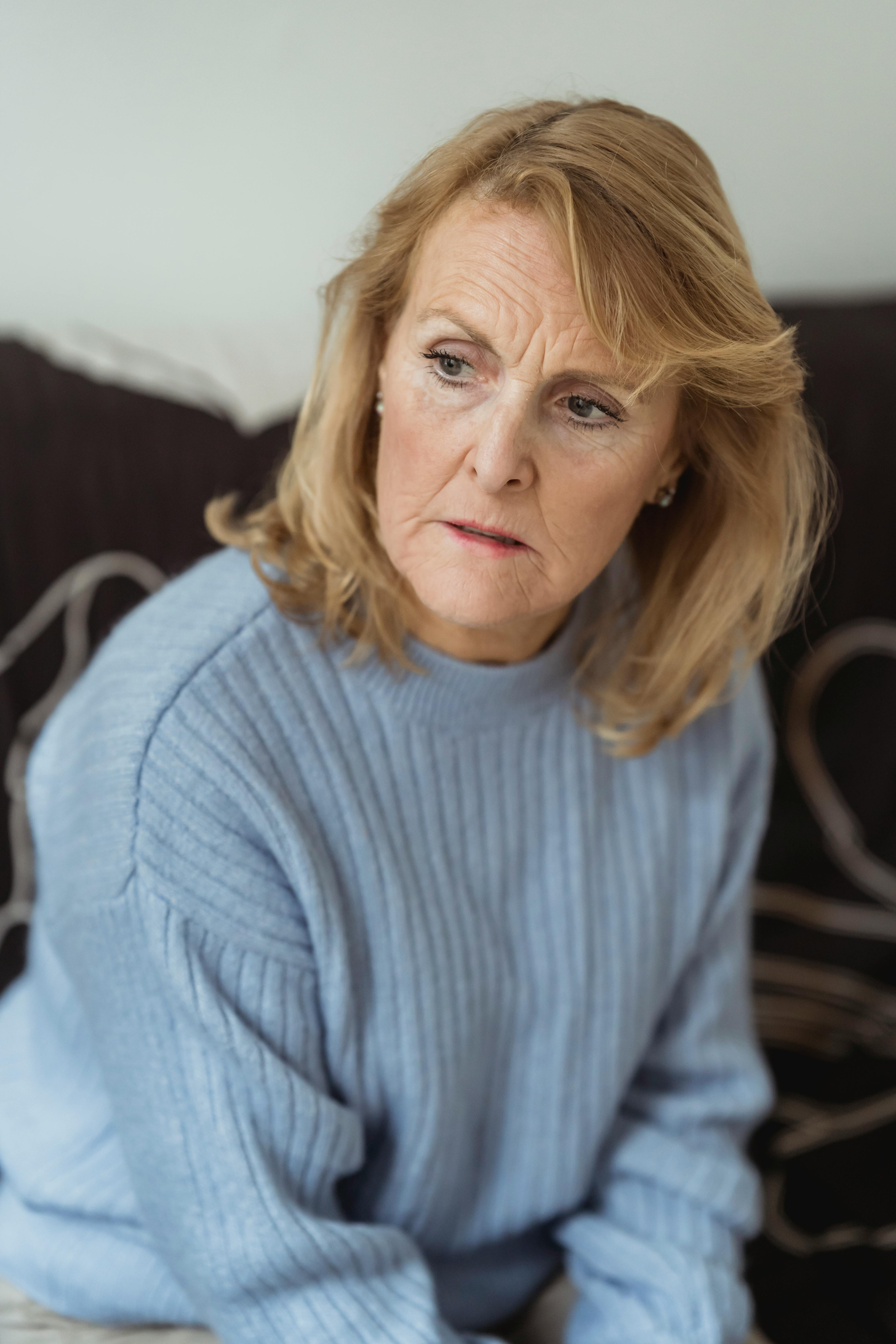
It does not begin with a wheelchair. It begins with a pause.
The pause before your first step in the morning.
The pause at the top of a staircase while you wait for everyone else to go first.
The pause when your grandchild reaches up to be carried—and you smile while looking for someone younger to pick them up.
The discomfort is real. But the frightening part is what it slowly teaches you to stop doing.
You stop sitting on the floor.
You stop wearing the shoes you love.
You stop taking the stairs when anyone is watching.
You stop saying yes before you know how far you will have to walk, where you will have to sit, and whether there will be a railing nearby.
You no longer get out of bed. You test the floor first.
Your eyes open. You sit up. Then you place one foot on the floor and wait.
Not because you are sleepy.
Because you need to know what kind of morning your knees, feet, hips, and back have decided to give you.
Some mornings, the first few steps feel rusty. You shuffle toward the bathroom with one hand against the wall, hoping everything will loosen before anyone sees you.
By breakfast, you may look normal again. That makes the experience easy to hide—and easy for other people to underestimate.
“I am only 49. Why do I walk like I aged twenty years while I was asleep?”
That private thought can be more upsetting than the stiffness itself.
You scan every room for the chair you can get out of.
Other people see an empty seat.
You see height, armrests, distance from the table, and whether there will be something solid to push against when it is time to stand.
You avoid low sofas. You hesitate before sitting on a soft bed. At restaurants, you quietly choose the chair rather than the booth.
If someone offers you a seat without arms, you say, “No, I’m comfortable standing.”
But standing is not comfortable.
You are simply trying to avoid the more embarrassing moment later—rocking forward, pressing both hands into your thighs, and pretending not to notice that everyone has stopped talking while you struggle to rise.
You let everyone go ahead of you on the stairs.
You say you are checking your phone.
You say you forgot something.
You say, “Go ahead. I’ll catch up.”
The truth is that stairs feel different when people are behind you.
Every slow step feels observed. Every grip on the railing feels obvious. And the possibility of your knee suddenly refusing to cooperate becomes much more frightening when a line of strangers is waiting.
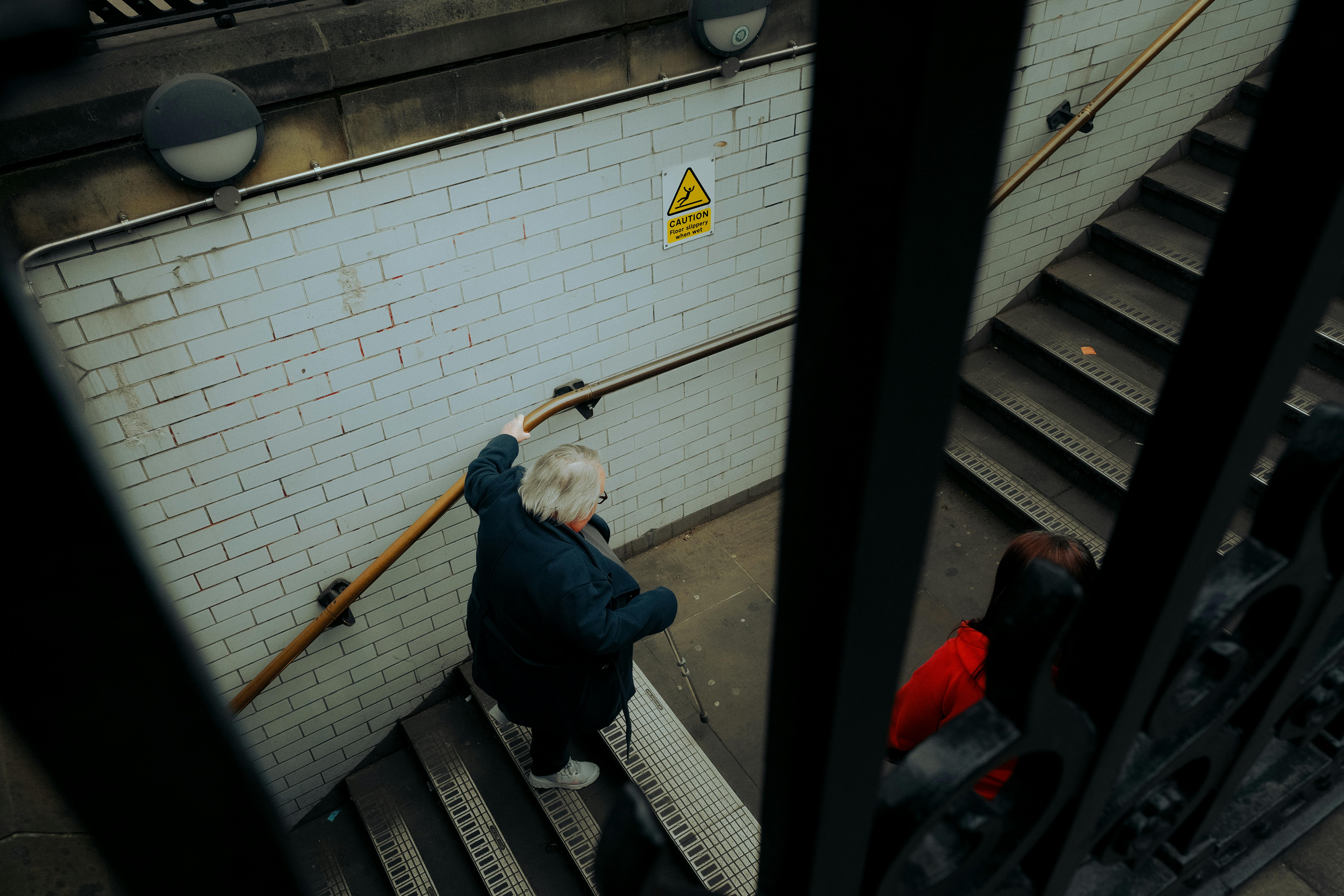
A staircase can become a public test: keep moving, do not show fear, and do not make everyone wait. Template image: replace with your native auditorium creative.
Perhaps you have already experienced the moment.
You stop halfway down. One hand locks around the rail. Someone behind you sighs. Another person asks whether you need help.
You know they may be trying to be kind.
But kindness can still feel humiliating when you remember being the woman who once carried children, luggage, groceries, and everyone else’s problems down those same steps.
You have started planning how you will get back up before you sit down.
This is the sign many women never say out loud.
Before using the bathtub, you look for something to hold.
Before sitting on the floor, you decide which piece of furniture you can use to pull yourself up.
Before lowering yourself onto the toilet, you place one hand on the sink.
Then one day, the plan fails.
Your knees will not lift you. You try again. You lean forward. You press against the wall. Your leg trembles, but your body does not rise.
You are not seriously injured.
You are simply stuck.

The first time you need help with something this private, the emotional shock can remain long after you are standing again. Template image: replace with your bathroom creative.
You call your daughter.
When she enters, you see a look on her face that she tries to hide.
You make a joke because you do not want her to worry. She helps you stand because she does not want you to feel ashamed.
Later, when the bathroom door is closed, you both understand that something changed.
The fear is not only, “What if this happens again?” It is, “What if this becomes normal?”
You hesitate when a child reaches up to be held.
Your grandchild does not understand joint stiffness.
They only know that they want you.
They lift both arms. You begin to bend, then stop.
What if your knee gives way?
What if your fingers cannot hold securely?
What if you lose your balance while carrying the most precious person in the room?
So you redirect them toward the couch. You say, “Come sit beside Grandma.”
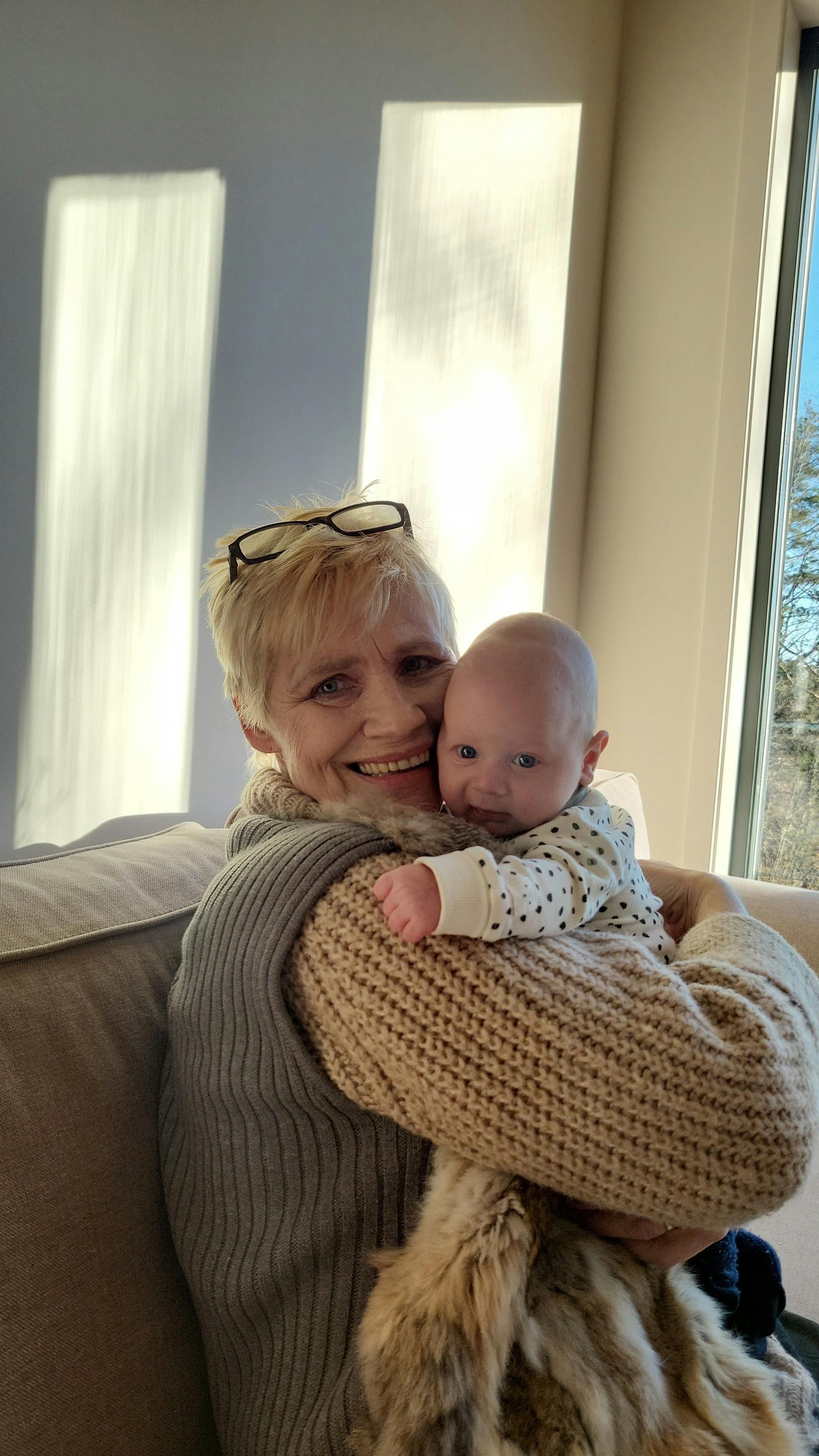
What women miss is not exercise. It is the ordinary physical closeness they once took for granted. Template image: replace with your reaching-child creative.
No one else may notice what just happened.
But you do.
You remember when your arms were the safest place in the world. Now you are questioning whether your own body can be trusted with the people you love.
You have become very good at inventing believable excuses.
You do not say, “I am worried I will not make it from the parking lot.”
You say, “I’m tired.”
You do not say, “I cannot face another room where everyone watches me stand.”
You say, “I’m not feeling social.”
You do not say, “I am afraid the venue has stairs.”
You say, “You all go. I’ll come next time.”
Next time becomes next month.
Then someone stops asking because they assume you prefer staying home.
That is how a physical problem begins becoming a social one. Your world does not disappear in one dramatic moment. It gets smaller one polite refusal at a time.
You catch yourself staring at wheelchairs, walkers, and grab rails.
You are not shopping for one.
You are only looking.
But for a few uncomfortable seconds, you imagine the future:
A chair kept in the car “for longer outings.”
A bedroom moved downstairs.
A daughter who begins saying, “Mom, I don’t think you should be alone.”
A key to the home you love being handed to someone else.
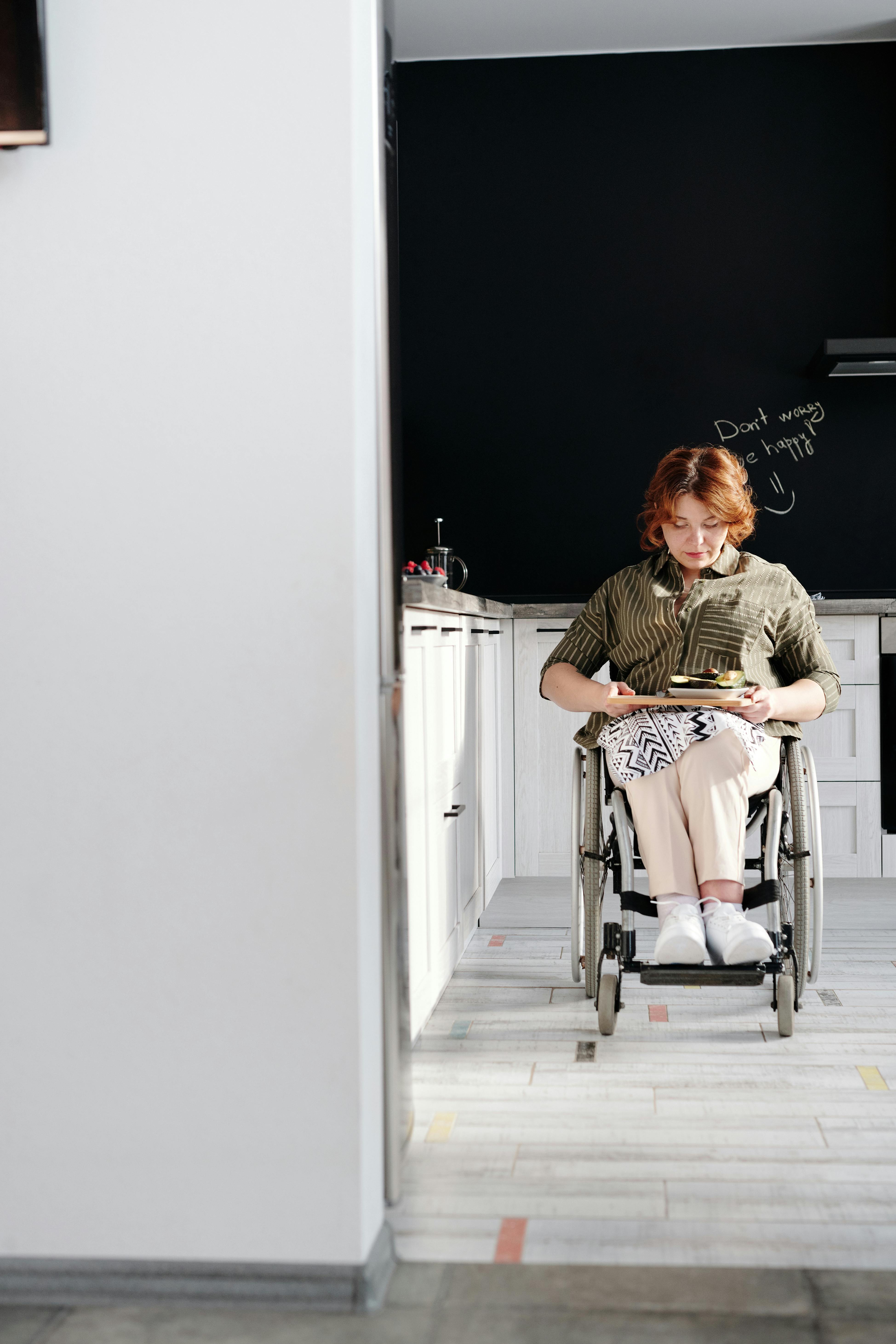
The wheelchair is not always the present. Sometimes it is the future a woman is frightened she can already see. Template image: replace with your pharmacy-aisle creative.
You look away quickly.
But the thought follows you home:
“Am I doing anything now to support the joints I will depend on later?”
Why can this feel as though it arrived almost overnight?
Women are warned about hot flashes. They are rarely warned that the menopause transition may also arrive with joint and muscle discomfort.
The National Institute on Aging includes joint and muscle discomfort among symptoms that can occur during the menopausal transition. A recent systematic review involving more than 93,000 women also concluded that women transitioning through menopause appear to have an increased risk of muscle or joint pain.
That helps explain why so many women say the same thing:
“I expected menopause to change my temperature. I did not expect it to change the way I walked.”
The important point is not that every uncomfortable joint has one identical cause. It is that women should not automatically dismiss a sudden midlife change as laziness, weakness, or simply “getting old.”
Why the things you tried may have helped one moment—but not changed the pattern
The brace supports you from the outside.
It may help you feel more secure while moving, but it can also become something you are frightened to leave home without. It does not create a complete daily nutrition strategy for joint comfort, cartilage, lubrication, and bone support.
The cream changes what you feel for a while.
Warmth, cooling, or massage can make an uncomfortable area feel different temporarily. Then the sensation fades and the tube returns to your handbag.
The single-ingredient bottle addresses one piece.
Turmeric may support a healthy inflammatory response. Collagen may support joint structure. Hyaluronic acid may support lubrication. Vitamin D supports bones. The problem is that most women are buying these separately, taking them inconsistently, or expecting one ingredient to cover every part of the problem.
The cupboard becomes a graveyard of good intentions.
A half-used collagen tub. A turmeric bottle. A joint blend you forgot to reorder. A vitamin you only remember twice a week.
The routine is complicated enough to abandon—and incomplete enough to disappoint.
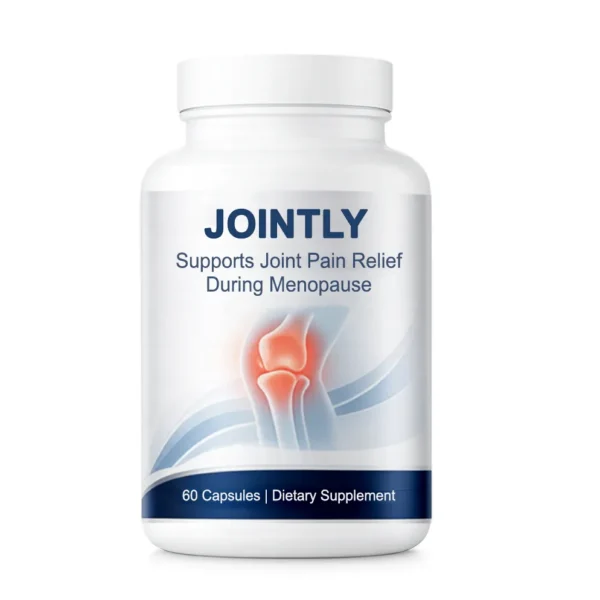
The simpler daily approach
Why women are replacing a shelf of separate products with JOINTLY
JOINTLY is a 7-in-1 menopause joint comfort and flexibility complex designed specifically for women navigating midlife joint changes.
Instead of asking one ingredient to do everything, the formula brings together complementary forms of support:
- UC-II® undenatured type II collagen to support healthy cartilage and joint cushioning.
- Curcumin, Boswellia, and ginger to support joint comfort and a healthy inflammatory response.
- Hyaluronic acid to support healthy synovial fluid and smoother joint movement.
- Vitamins D3 and K2 to support strong bones and proper calcium use.
- Enteric-coated delivery in a simple two-capsule daily routine.
No powder to mix. No complicated morning-and-night schedule. No need to keep adding another single-ingredient bottle every time a different part of the problem gets your attention.
Choose a 30-, 60-, or 90-day supply. Current product page includes a 30-day money-back guarantee.
What women are really trying to get back
It is easy to think the goal is simply “less stiffness.”
But stiffness is not what keeps you awake.
You are thinking about the next bathroom incident.
The next flight of stairs.
The next family photograph where everyone stands while you remain seated.
The next time your grandchild reaches up.
The next urgent phone call when somebody you love needs you to move quickly.
You are not trying to become twenty-five again.
You are trying to remain the woman who can live in her own home, carry her own bags, walk into the room without scanning for a chair, and arrive at the moments that matter.
Do not wait for the frightening moment to decide your independence matters.
Most women do not act after the first stiff morning.
They act after the fall.
After the missed event.
After the public embarrassment.
After someone they love begins making decisions for them.
You cannot control every change that comes with age.
But you can decide whether the joints carrying you through this stage of life receive consistent, thoughtful daily support.
Your independence is not a small thing.
Your dignity is not a small thing.
The moments you may miss are not small things.
Two capsules daily with a meal. Hormone-free joint, cartilage, lubrication, and bone support for women in menopause.
National Institute on Aging, “What Is Menopause?” — nia.nih.gov
“Musculoskeletal Manifestations of Perimenopause: A Systematic Review and Meta-Analysis of 93,021 Women” — PubMed
Current JOINTLY formula, directions, supply options, and guarantee — RevisedBio product page
Image placeholders are sourced from Pexels and should be replaced with the campaign’s native creatives before launch.