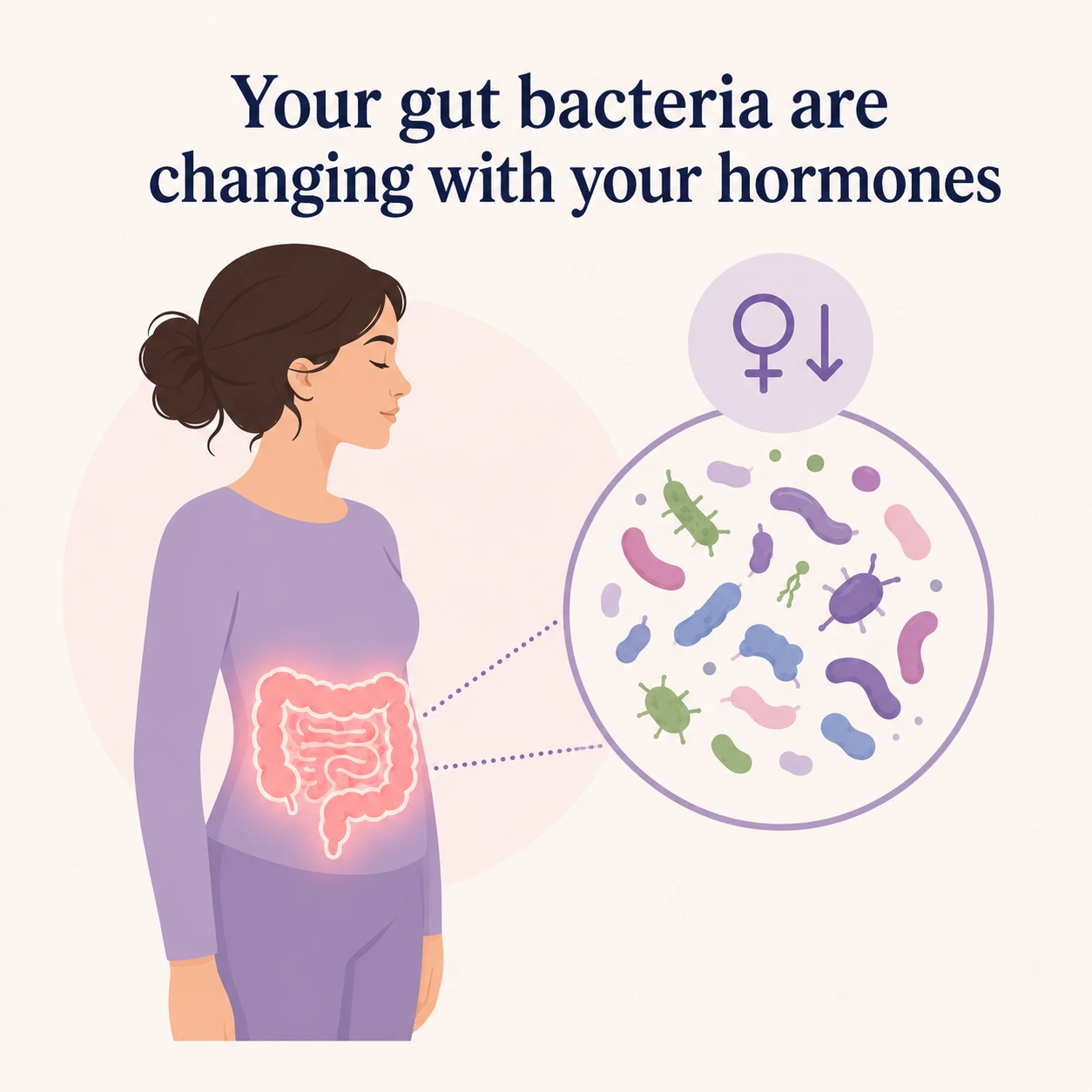
Your gut bacteria are changing with your hormones
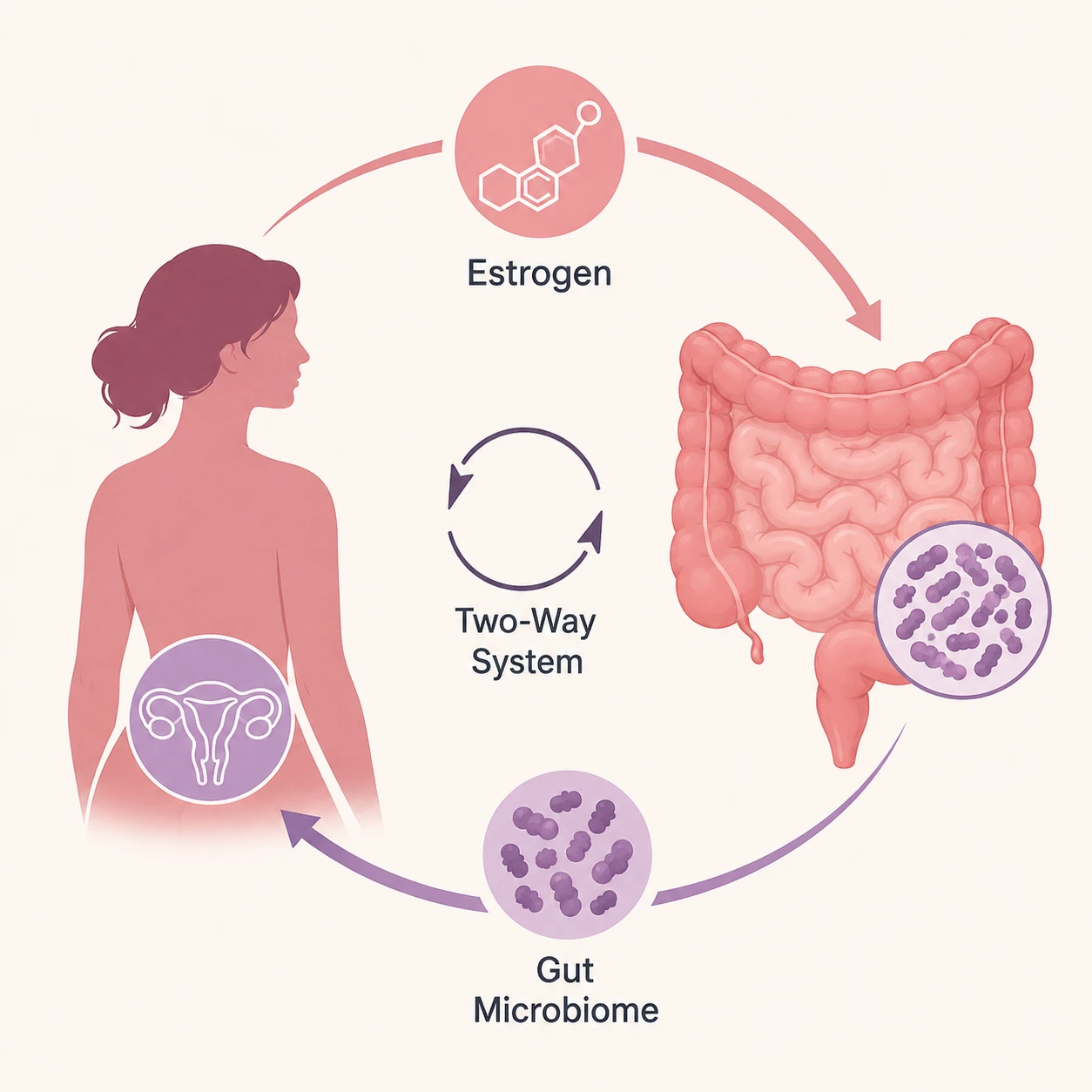
Estrogen is not just a reproductive hormone. It helps maintain a healthy gut microbiome. When estrogen fluctuates and declines, your gut bacteria shift too.
This is why foods that never bothered you now cause bloating or discomfort.
- Increase fiber slowly to feed good bacteria
- Add fermented foods like yogurt or kefir
- Consider targeted probiotics to restore balance
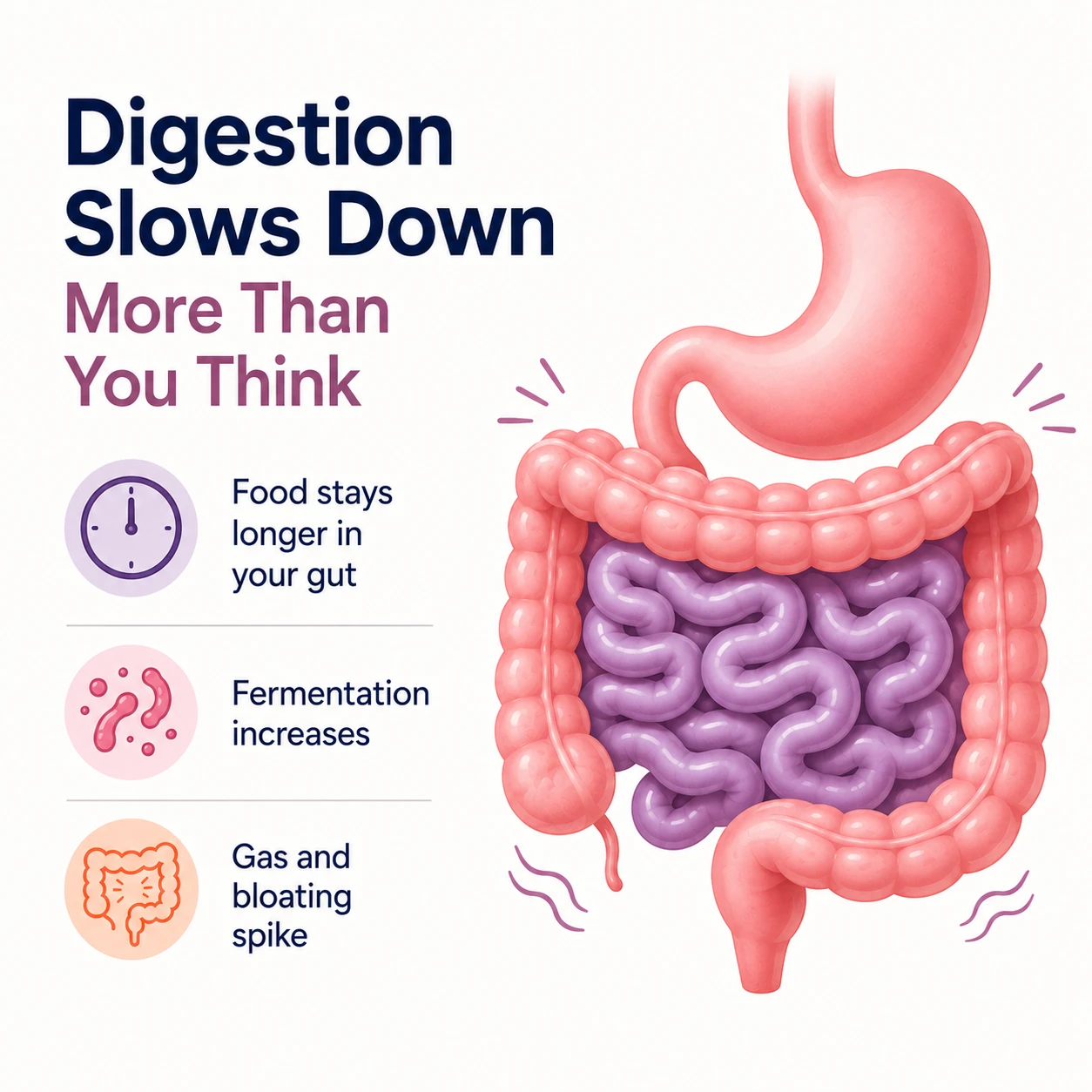
Digestion slows down more than you think
Hormones influence gut motility — how fast food moves through your system.
During perimenopause:
This slowdown is one of the biggest drivers of that "heavy, stuck" feeling.
- Eat smaller, more frequent meals
- Walk after eating to stimulate movement
- Stay hydrated to support bowel function
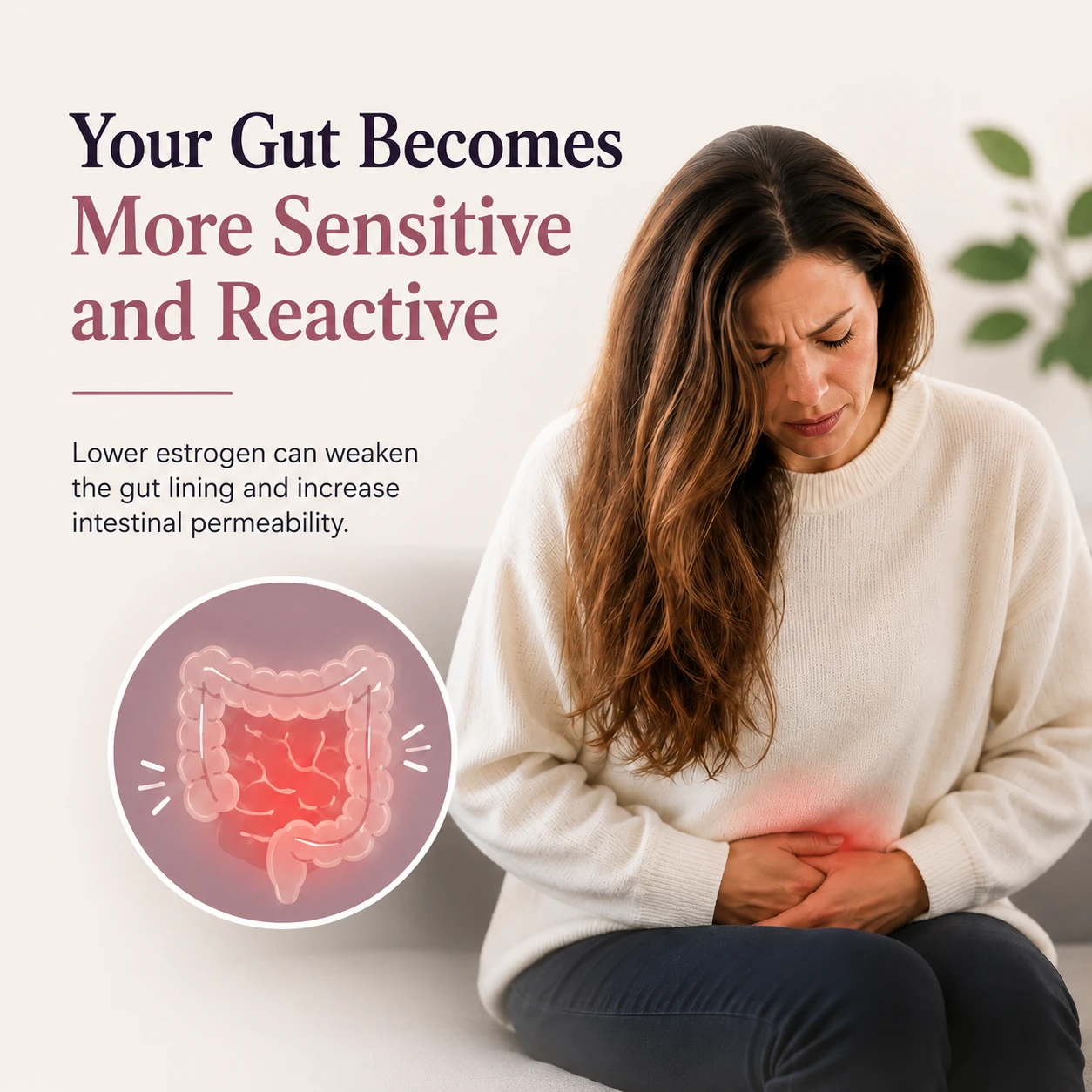
Your gut becomes more sensitive and reactive
Lower estrogen can weaken the gut lining and increase intestinal permeability.
Even healthy foods can suddenly feel "wrong."
- Identify trigger foods instead of eliminating everything
- Focus on simple, whole meals
- Reduce ultra-processed foods
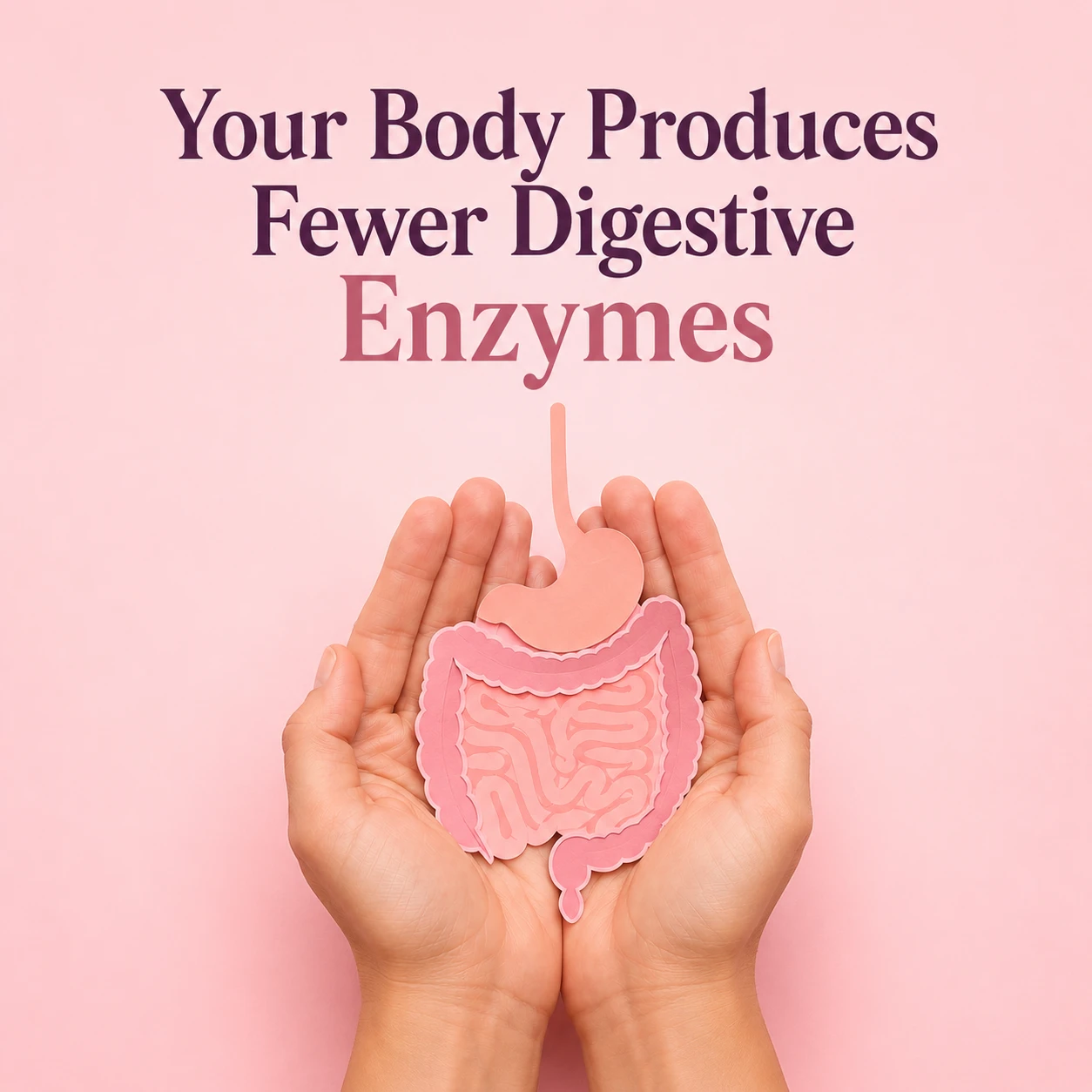
Your body produces fewer digestive enzymes
Hormonal shifts can reduce digestive secretions and enzyme activity.
- Eat slowly and chew properly
- Avoid overeating in one sitting
- Support digestion with enzyme-rich foods or supplements
Stress hits your gut harder now
Perimenopause often comes with higher stress and cortisol levels. Your gut reacts immediately:
Stress is not just mental. It is digestive.
- Prioritize sleep like it is non-negotiable
- Add low-intensity movement like walking or yoga
- Avoid eating in a rushed or anxious state

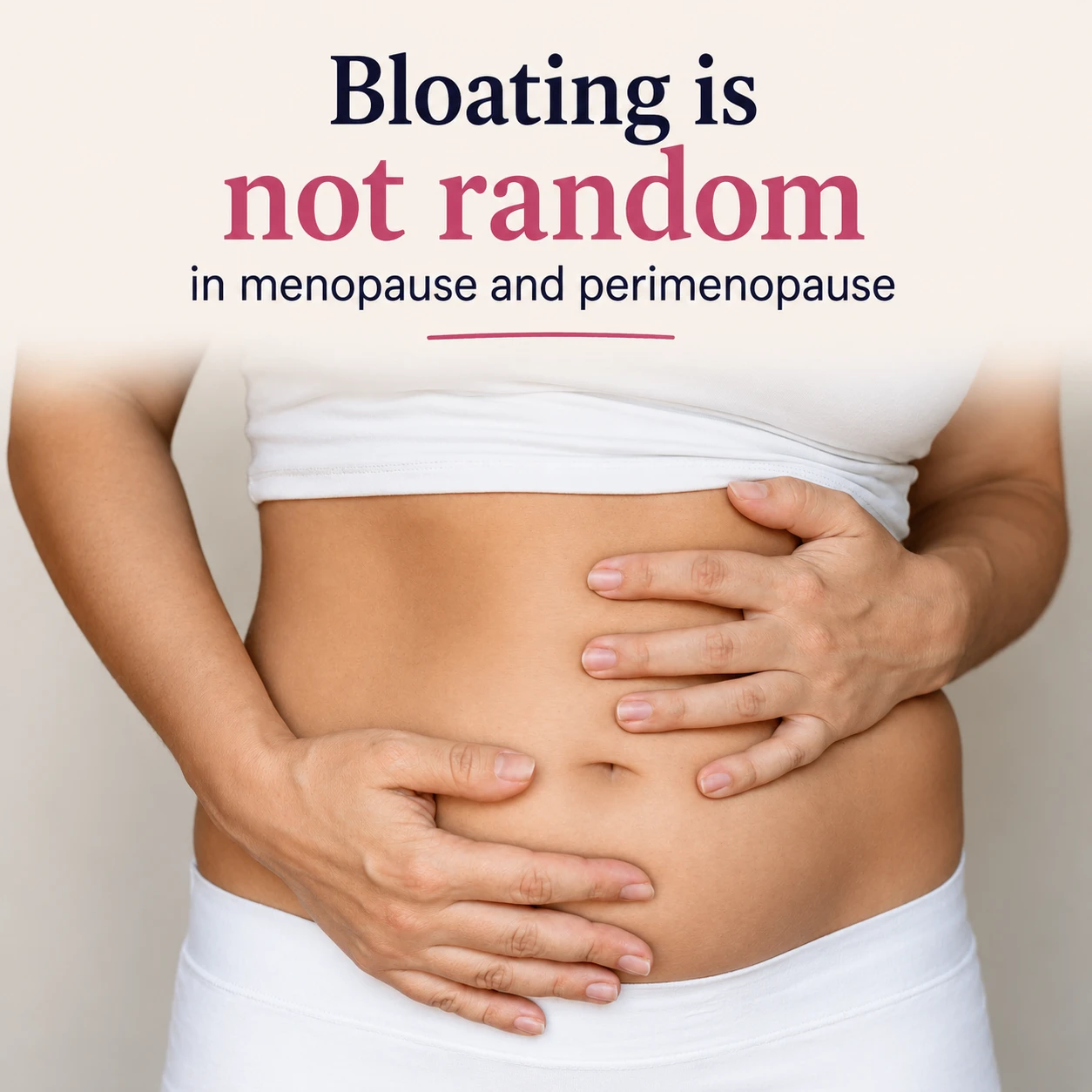
Bloating is not random — it is mechanical
When digestion slows and bacteria shift:
This creates that persistent bloated look many women describe.
- Reduce carbonated drinks and excess salt
- Use herbs like peppermint, ginger, and fennel
- Support gut motility and microbiome together
Your gut and hormones are now a two-way system
Your gut does not just respond to hormones. It also helps regulate them. The gut microbiome plays a role in estrogen metabolism through what scientists call the estrobolome.
If your gut is off:
- Treat gut health as a core part of hormone support
- Focus on consistency, not quick fixes
Where Targeted Support Actually Makes Sense
At this stage, diet alone often is not enough. You need support that works on multiple levels at once — restoring gut bacteria, improving digestion, and reducing bloating and inflammation.
This is where combining probiotics, digestive enzymes, and calming herbs becomes practical, not trendy. Formulations that include:
These combinations directly address the root causes discussed above — not as a quick fix, but as a structured support system alongside diet and lifestyle.
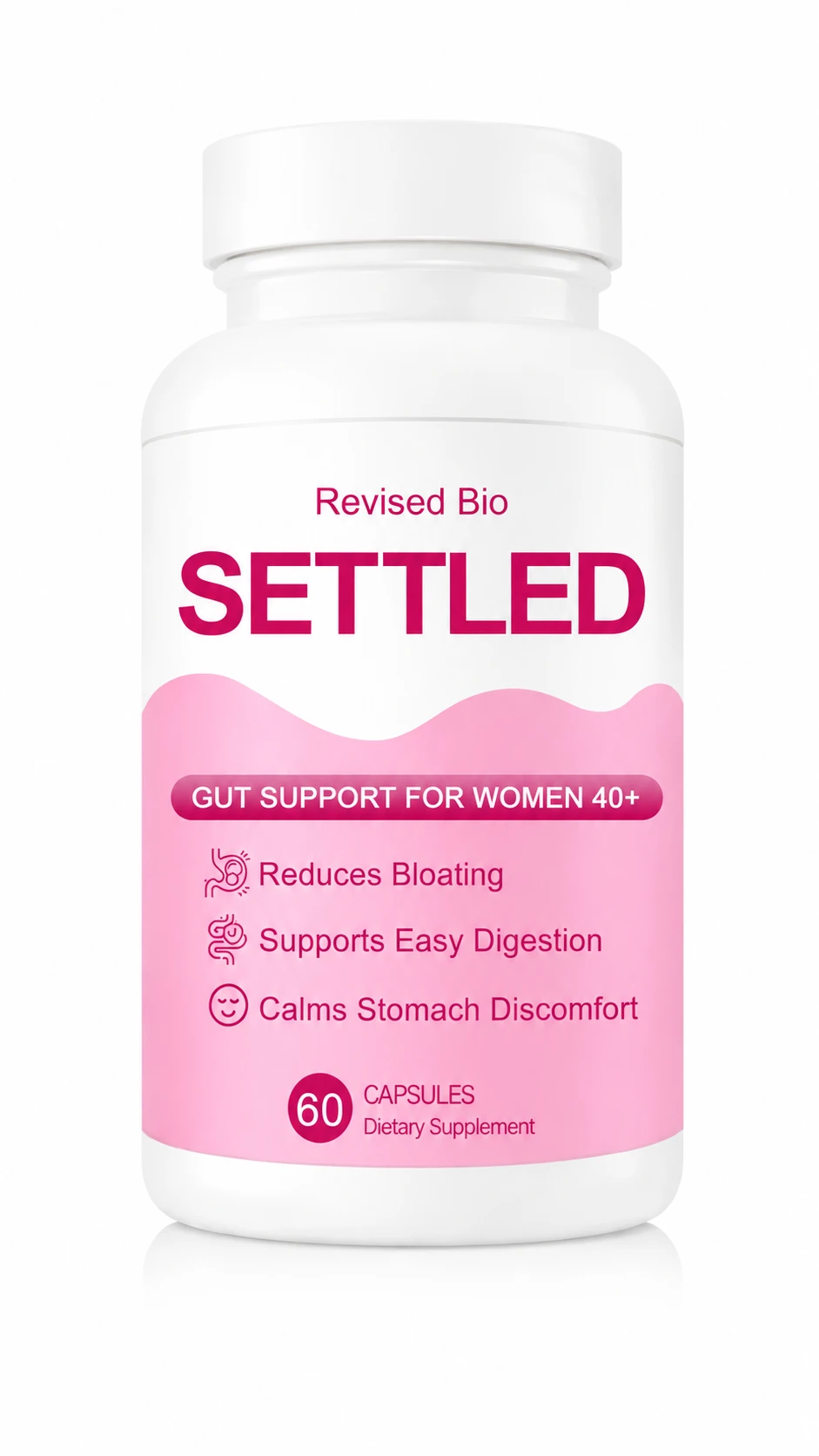
A product like SETTLED – Digestive Support for Menopause is built around this exact approach. It includes probiotics, enzyme blends, and plant-based ingredients such as peppermint, ginger, fennel, and artichoke, all targeting digestion, bloating, and gut balance in midlife.
Bottom Line
Your gut is not "failing." It is adapting to hormonal change. Perimenopause rewires your microbiome, your digestion speed, and your gut sensitivity.
If you treat it like a random digestive issue, you stay stuck. If you treat it like a hormone-driven gut shift, you can actually fix it.
Focus on:
- Feeding your microbiome
- Supporting digestion
- Reducing stress load
- Using targeted support when needed
That is how you get your gut feeling normal again.