

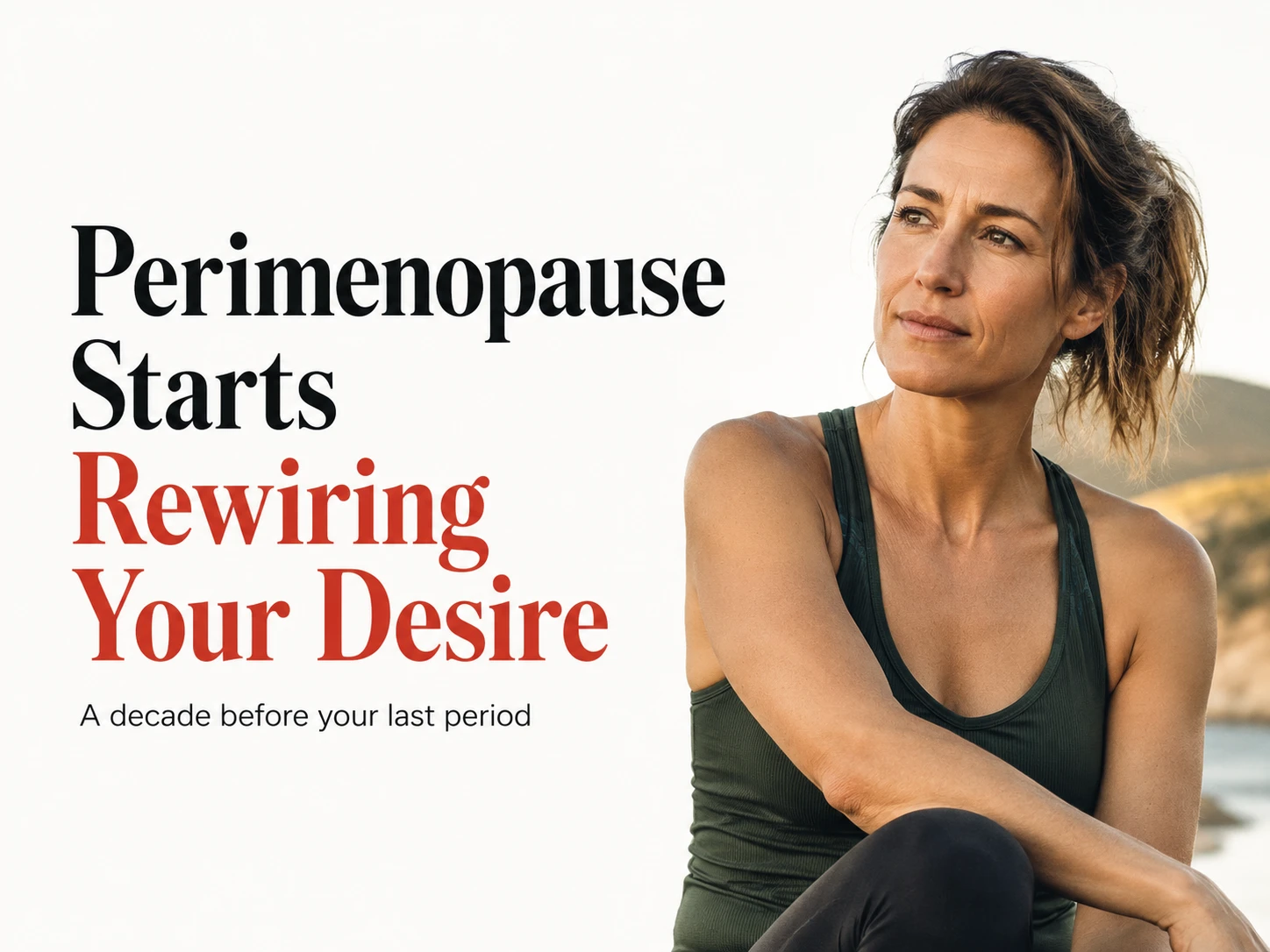
Perimenopause Can Start Rewiring Your Desire a Decade Before Your Last Period

The Silent Intimacy Shift of Menopause That Women Blame on Themselves
Why pulling away isn't a relationship problem—it's a body problem no one prepared you for
You're lying in bed next to your partner. You love them. You truly do. But when they reach for you, something inside you recoils. Not because you're angry. Not because you don't care. But because your body feels… unreliable. And you have no idea how to explain that.
The Desire That Vanished Overnight
It starts so quietly you almost don't notice. You're not initiating anymore. Then you realize you're not even thinking about intimacy. It's like someone turned off a switch inside you.
But weeks become months. And the truth settles in: You don't miss it. That terrifies you more than anything.
You search your feelings. Interrogate your marriage. Wonder if you're broken. Because if you wanted intimacy, you would… right?
"I thought I was falling out of love. The guilt was crushing."
Here's what no one tells you: Menopause rewires the biology of desire. The drop in estrogen and testosterone doesn't just lower libido—it fundamentally changes how your brain processes arousal and how your body responds to touch.
You're not choosing this. Your body chemistry shifted beneath you. But because no one talks about it, you blame yourself.
When Touch Becomes Something to Fear
Then comes the part you definitely don't talk about.
The times you do try, your body doesn't cooperate. What used to feel good now feels uncomfortable. Sometimes painful. And now every intimate moment carries this new anxiety.
But you can't relax. Because you know what's coming. The dryness. The friction. The pain your body wasn't built to handle.
"I started avoiding his touch entirely. Because any touch might lead somewhere I couldn't handle."
This is vaginal atrophy. Thinning tissue. Loss of elasticity. Reduced blood flow. Your body isn't producing lubrication like before. And the less frequently you're intimate, the worse it gets.
You're trapped in a cycle: It hurts, so you avoid it. You avoid it, so it hurts more. And the guilt compounds daily.
The Shame You Carry in Silence
The hardest part? You can't talk about this. Not really.
Your partner notices but you brush it off. "I'm just tired." Your friends have their own problems. Your doctor asks if everything's fine and you nod because where would you even start?
So you carry it alone. You internalize it as personal failure. Wonder if your partner will leave. Wonder if you deserve them anymore.
This isn't just about sex—it's about who you thought you were. You were someone confident in your body. Someone who enjoyed intimacy. And now that person feels like a stranger.
"I felt like I was grieving myself. The woman who used to feel sexy and alive. She was just… gone."
Everyone expects you to just accept this as "part of life." But you don't want to accept it. You want to feel like yourself again. You want intimacy to stop feeling like a performance you're failing.
The Distance That's Killing Your Connection
Your partner tries to understand. But there's only so much rejection they can handle before they start pulling away too.
"Did I do something wrong? Are you not attracted to me?"
You stop talking about it because talking makes it worse. You become roommates. Polite. Functional. But the intimacy—emotional and physical—is evaporating.
"I could see him giving up. Not angry—just resigned. Like he'd accepted this part of our marriage was over."
That fear keeps you awake. The idea that menopause might cost you not just your desire, but your entire relationship. That this biological shift you can't control might unravel everything you've built.
Here's What You Need to Know
None of this is your fault. And you're not powerless.
The intimacy shift of menopause is biological—not psychological, not relational, not a reflection of your worth or your love.
The Medical Reality They Don't Tell You
Menopause disrupts four interconnected systems that control intimacy. When you understand what's actually happening, you can finally address it properly.
The Hormonal Collapse
Estrogen, testosterone, and progesterone drop dramatically. These hormones regulate desire, tissue health, blood flow, and emotional connection. Without them, your body stops prioritizing intimacy.
The Physical Breakdown
Vaginal atrophy—thinning and drying tissue. Blood flow decreases. Lubrication stops. Your body isn't responding because it physically can't—not because you're not trying.
The Pain Cycle
When intimacy hurts, your nervous system associates it with threat. Your body tenses before it begins. This creates a cycle: pain causes tension, tension causes more pain.
The Emotional Withdrawal
Low desire + physical discomfort + relationship strain = psychological retreat. Your brain protects you by numbing out. Intimacy becomes stress, not pleasure.
The Real Solution
HRT works for some women. But it's not right for everyone. Side effects, contraindications, and personal preference mean many women need a different path.
That's where botanical support comes in. Certain plant compounds have been clinically researched for supporting the exact pathways menopause disrupts: blood flow, tissue health, mood, stress response, and hormonal signaling.
Not as hormone replacement—but as support for the systems that make desire and comfort physically possible again.
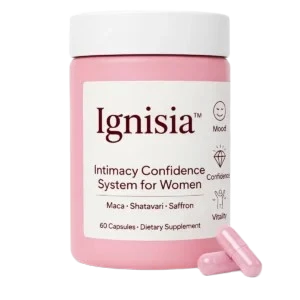
Ignisia is a botanical formulation for women experiencing the silent intimacy shift of menopause. It's not a "libido booster." It's daily support for the four systems menopause disrupts: desire, lubrication, tissue health, and emotional readiness.
Created by women's health specialists who understand intimacy isn't just about sex—it's about feeling like yourself. Feeling comfortable in your body. Feeling open to connection without fear.
Check AvailabilityLimited stock—formulated in FDA-approved facilities
How Ignisia Works Differently
Ignisia addresses the root biological disruptions through four targeted systems:
- Desire & Emotional Intimacy: Maca and Vitamin B6 support libido signaling and mood pathways. Not stimulants—they help your nervous system remember what desire feels like.
- Natural Lubrication & Arousal: Ginkgo and Saffron support blood flow to intimate tissue, helping your body produce natural moisture and respond to arousal.
- Vaginal Comfort & Elasticity: Shatavari, Zinc, and Vitamin D3 support tissue strength and resilience, helping reverse thinning that makes intimacy painful.
- Calm & Intimacy Readiness: L-Theanine supports nervous system relaxation, breaking the fear-tension-pain cycle that keeps you locked in avoidance.
This isn't about forcing performance. It's about giving your body the botanical support to function naturally again.
What Women Are Saying
"I didn't realize how much menopause had dulled my spark until I started feeling emotionally steadier. Things just feel easier—with myself and with my partner. I'm not 'fixed' overnight, but I feel like I'm coming back to myself."
"I wanted something respectful that didn't make promises it couldn't keep. This felt like real support. I noticed I felt closer and more comfortable in my relationship again. The anxiety around intimacy started lifting."
"I started feeling like myself again and that brought my spark back. Instead of pulling away out of fear, I feel open and deeply connected with my partner. This gave me the confidence I thought was gone forever."
"No weird promises. Just a simple daily routine that helped lift my mood and made me feel more like myself again. I feel calmer, lighter, and more open to connection. My husband noticed the difference before I even said anything."
You're Not Broken. Your Spark Didn't Disappear.
It changed—and with the right support, you can rediscover it. Not through force or performance, but through gentle, botanical restoration of what menopause took away.
Check Availability90-day supply recommended for optimal support | 30-day money-back guarantee
The Silent Intimacy Shift
The Silent Intimacy Shift of Menopause That Women Blame on Themselves
Why pulling away isn't a relationship problem—it's a body problem no one prepared you for
You're lying in bed next to your partner. You love them. You truly do. But when they reach for you, something inside you recoils. Not because you're angry. Not because you don't care. But because your body feels… unreliable. And you have no idea how to explain that.
The Desire That Vanished Overnight
It starts so quietly you almost don't notice. You're not initiating anymore. Then you realize you're not even thinking about intimacy. It's like someone turned off a switch inside you.
But weeks become months. And the truth settles in: You don't miss it. That terrifies you more than anything.
You search your feelings. Interrogate your marriage. Wonder if you're broken. Because if you wanted intimacy, you would… right?
"I thought I was falling out of love. The guilt was crushing."
Here's what no one tells you: Menopause rewires the biology of desire. The drop in estrogen and testosterone doesn't just lower libido—it fundamentally changes how your brain processes arousal and how your body responds to touch.
You're not choosing this. Your body chemistry shifted beneath you. But because no one talks about it, you blame yourself.
When Touch Becomes Something to Fear
Then comes the part you definitely don't talk about.
The times you do try, your body doesn't cooperate. What used to feel good now feels uncomfortable. Sometimes painful. And now every intimate moment carries this new anxiety.
But you can't relax. Because you know what's coming. The dryness. The friction. The pain your body wasn't built to handle.
"I started avoiding his touch entirely. Because any touch might lead somewhere I couldn't handle."
This is vaginal atrophy. Thinning tissue. Loss of elasticity. Reduced blood flow. Your body isn't producing lubrication like before. And the less frequently you're intimate, the worse it gets.
You're trapped in a cycle: It hurts, so you avoid it. You avoid it, so it hurts more. And the guilt compounds daily.
The Shame You Carry in Silence
The hardest part? You can't talk about this. Not really.
Your partner notices but you brush it off. "I'm just tired." Your friends have their own problems. Your doctor asks if everything's fine and you nod because where would you even start?
So you carry it alone. You internalize it as personal failure. Wonder if your partner will leave. Wonder if you deserve them anymore.
This isn't just about sex—it's about who you thought you were. You were someone confident in your body. Someone who enjoyed intimacy. And now that person feels like a stranger.
"I felt like I was grieving myself. The woman who used to feel sexy and alive. She was just… gone."
Everyone expects you to just accept this as "part of life." But you don't want to accept it. You want to feel like yourself again. You want intimacy to stop feeling like a performance you're failing.
The Distance That's Killing Your Connection
Your partner tries to understand. But there's only so much rejection they can handle before they start pulling away too.
"Did I do something wrong? Are you not attracted to me?"
You stop talking about it because talking makes it worse. You become roommates. Polite. Functional. But the intimacy—emotional and physical—is evaporating.
"I could see him giving up. Not angry—just resigned. Like he'd accepted this part of our marriage was over."
That fear keeps you awake. The idea that menopause might cost you not just your desire, but your entire relationship. That this biological shift you can't control might unravel everything you've built.
Here's What You Need to Know
None of this is your fault. And you're not powerless.
The intimacy shift of menopause is biological—not psychological, not relational, not a reflection of your worth or your love.
The Medical Reality They Don't Tell You
Menopause disrupts four interconnected systems that control intimacy. When you understand what's actually happening, you can finally address it properly.
The Hormonal Collapse
Estrogen, testosterone, and progesterone drop dramatically. These hormones regulate desire, tissue health, blood flow, and emotional connection. Without them, your body stops prioritizing intimacy.
The Physical Breakdown
Vaginal atrophy—thinning and drying tissue. Blood flow decreases. Lubrication stops. Your body isn't responding because it physically can't—not because you're not trying.
The Pain Cycle
When intimacy hurts, your nervous system associates it with threat. Your body tenses before it begins. This creates a cycle: pain causes tension, tension causes more pain.
The Emotional Withdrawal
Low desire + physical discomfort + relationship strain = psychological retreat. Your brain protects you by numbing out. Intimacy becomes stress, not pleasure.
The Real Solution
HRT works for some women. But it's not right for everyone. Side effects, contraindications, and personal preference mean many women need a different path.
That's where botanical support comes in. Certain plant compounds have been clinically researched for supporting the exact pathways menopause disrupts: blood flow, tissue health, mood, stress response, and hormonal signaling.
Not as hormone replacement—but as support for the systems that make desire and comfort physically possible again.
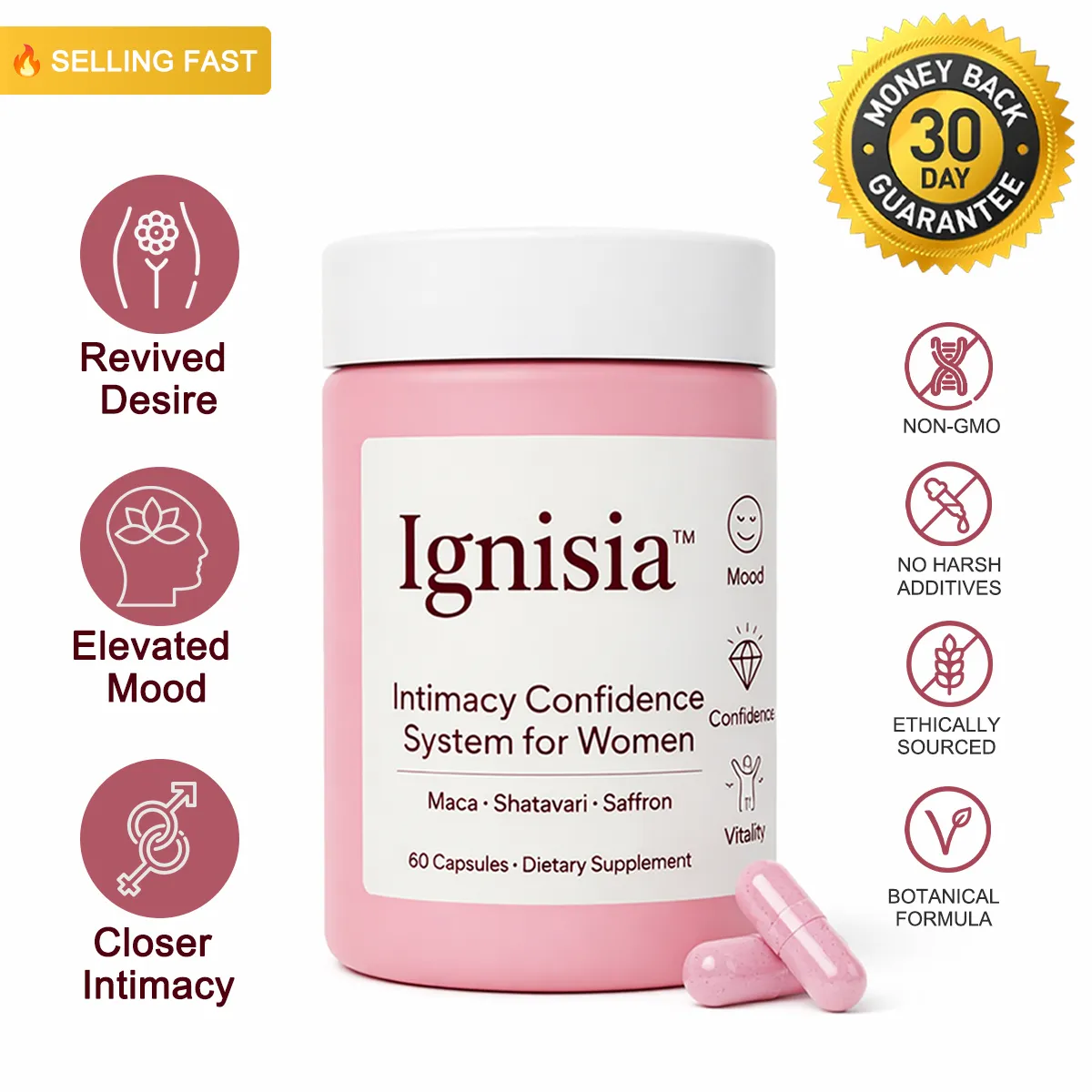
Ignisia is a botanical formulation for women experiencing the silent intimacy shift of menopause. It's not a "libido booster." It's daily support for the four systems menopause disrupts: desire, lubrication, tissue health, and emotional readiness.
Created by women's health specialists who understand intimacy isn't just about sex—it's about feeling like yourself. Feeling comfortable in your body. Feeling open to connection without fear.
Check AvailabilityLimited stock—formulated in FDA-approved facilities
How Ignisia Works Differently
Ignisia addresses the root biological disruptions through four targeted systems:
- Desire & Emotional Intimacy: Maca and Vitamin B6 support libido signaling and mood pathways. Not stimulants—they help your nervous system remember what desire feels like.
- Natural Lubrication & Arousal: Ginkgo and Saffron support blood flow to intimate tissue, helping your body produce natural moisture and respond to arousal.
- Vaginal Comfort & Elasticity: Shatavari, Zinc, and Vitamin D3 support tissue strength and resilience, helping reverse thinning that makes intimacy painful.
- Calm & Intimacy Readiness: L-Theanine supports nervous system relaxation, breaking the fear-tension-pain cycle that keeps you locked in avoidance.
This isn't about forcing performance. It's about giving your body the botanical support to function naturally again.
What Women Are Saying
"I didn't realize how much menopause had dulled my spark until I started feeling emotionally steadier. Things just feel easier—with myself and with my partner. I'm not 'fixed' overnight, but I feel like I'm coming back to myself."
"I wanted something respectful that didn't make promises it couldn't keep. This felt like real support. I noticed I felt closer and more comfortable in my relationship again. The anxiety around intimacy started lifting."
"I started feeling like myself again and that brought my spark back. Instead of pulling away out of fear, I feel open and deeply connected with my partner. This gave me the confidence I thought was gone forever."
"No weird promises. Just a simple daily routine that helped lift my mood and made me feel more like myself again. I feel calmer, lighter, and more open to connection. My husband noticed the difference before I even said anything."
You're Not Broken. Your Spark Didn't Disappear.
It changed—and with the right support, you can rediscover it. Not through force or performance, but through gentle, botanical restoration of what menopause took away.
Check Availability90-day supply recommended for optimal support | 30-day money-back guarantee