

Menopause Is the #1 Unspoken Reason Marriages Fall Apart After 50

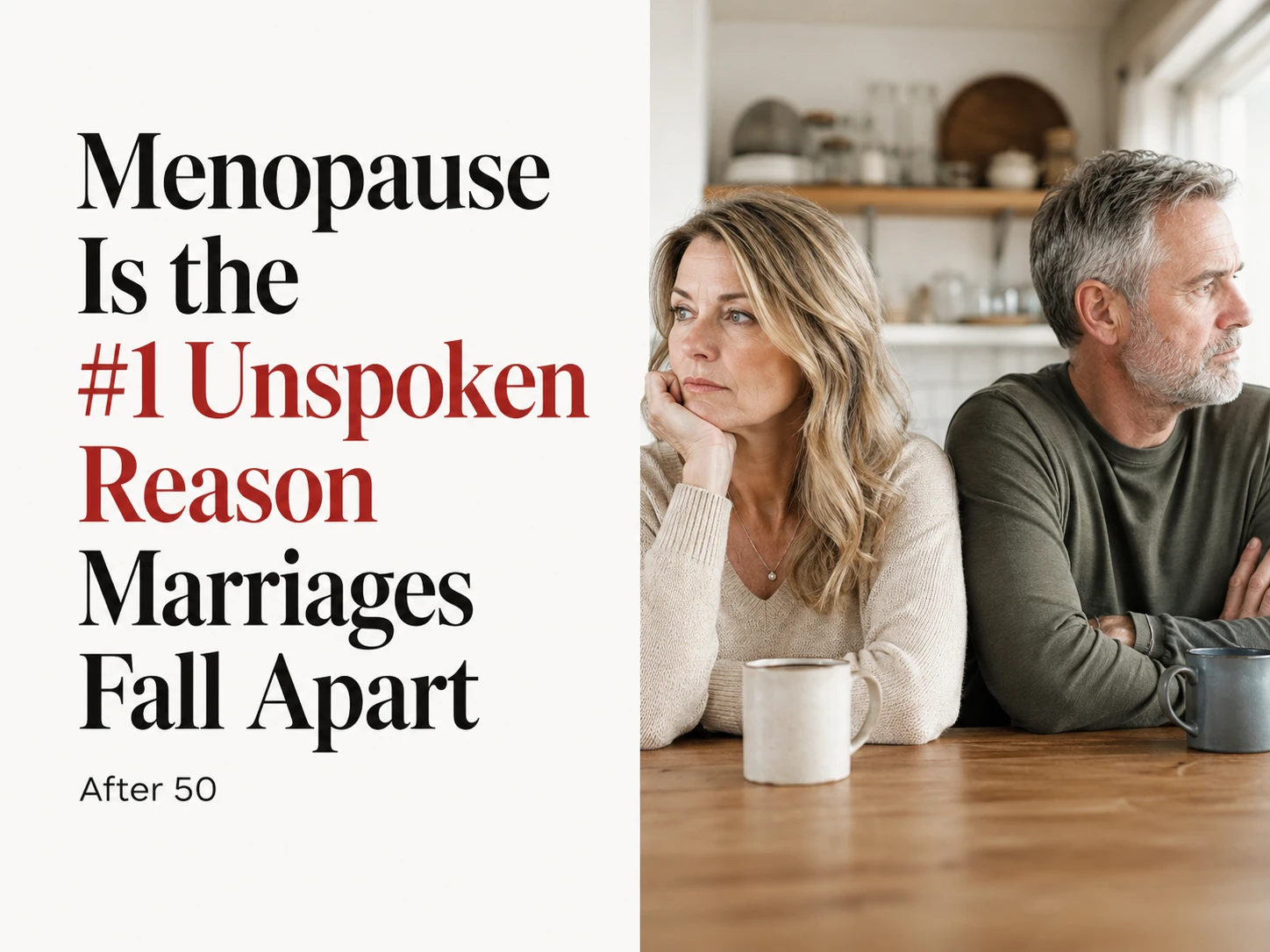
The Silent Intimacy Crisis
Destroying Marriages in Menopause
—And Why Most Women Are Too Late When They Finally Act
"What happens below the surface during menopause is far more serious than hot flashes. I've watched marriages unravel, depression deepen, and bodies change in ways that could have been prevented — all because no one was honest about what’s really happening."
Board-Certified OB/GYN
Menopause Specialist
22 Years Clinical Practice
"In over two decades of practice, the conversation I have the most — and the one that comes far too late — is about what menopause does to a woman’s intimate life. Not just her body. Her relationships. Her sense of self. Her marriage."
I am writing this because I am tired of watching my patients suffer in silence. I am tired of watching women patch over the problem with lubricants and hope, while the underlying changes progress unchecked. And I am tired of how little honest, clinical information exists outside the walls of a gynecologist’s office.
What you are about to read is uncomfortable. It is also essential. Because what you don’t address during menopause doesn’t simply wait for you — it compounds.
What Menopause Is Actually Doing to Your Body — and Your Relationship
The cultural conversation around menopause is focused almost entirely on hot flashes and mood swings. This is a critical misdirection. The most damaging changes — the ones that quietly dismantle intimacy, erode relationships, and create lasting physiological harm — are happening in silence.
Estrogen is the primary architect of vaginal tissue health, elasticity, lubrication, and nerve sensitivity. When it declines, the tissue begins to thin, dry out, and become increasingly fragile. Clinically, we call this Genitourinary Syndrome of Menopause (GSM). The tissue isn’t just uncomfortable — it’s changing at a cellular level. Each month of inaction accelerates the progression.
Significantly higher rates of dissatisfaction and divorce in their 50s and 60s — a period that should be the most liberated years together.
The shame and disconnection from intimacy creates a mental health spiral that research shows persists long into post-menopause and does not self-resolve.
Progressive vaginal atrophy becomes increasingly difficult — and in advanced cases, impossible — to fully reverse the longer it is left untreated.
Nerve pathways and arousal mechanisms that go unstimulated during the menopausal window can permanently reorganize. Changes that were preventable become structural.
Increased anxiety tied to intimacy avoidance doesn’t fade after menopause ends. Clinical evidence shows it deepens without targeted intervention.
The most common emotion post-menopausal women report is not embarrassment or anger — it is deep, lasting regret about the years lost to silence.
Menopause Has Three Stages — Each One Changes What’s Possible
This is not a single event. It is a multi-year physiological shift, and what you do in each stage determines the terrain of the next.
- Irregular periods, early estrogen fluctuation
- First signs of vaginal dryness
- Changes in arousal timing and intensity
- Beginning of tissue thinning (often unfelt)
- Subtle relationship friction over intimacy
- Significant vaginal atrophy and fragility
- Painful or impossible intercourse
- Avoidance behaviors deeply entrenched
- Emotional disconnection accelerating
- pH imbalance creating recurrent infections
- Severe GSM with structural tissue changes
- Chronic urinary symptoms and infections
- Complete loss of natural lubrication reflex
- Persistent depression tied to intimacy loss
- Irreversible sexual response changes
What 20 Years of Research Is Telling Us
of postmenopausal women report that sexual dysfunction significantly affected their romantic relationship, with 41% directly attributing relationship breakdown to unaddressed intimacy decline.
— Journal of Women’s Health, 2023more likely to experience clinical depression when genitourinary symptoms go untreated for 12+ months — severity increasing the longer symptoms are unaddressed.
— Menopause Journal (NAMS), 2024of women using only topical lubricants reported no improvement in underlying tissue health at 6-month follow-up. Surface solutions do not address the systemic root cause.
— International Menopause Society, 2022“A lubricant treats dryness the way a bandage treats a broken bone. It addresses the surface while the real injury — the tissue, the nerve pathways, the hormonal cascade — continues unchecked underneath.”
Lubricants, Creams & Quick Fixes Were Never Designed for This Problem
Women trying to address menopause-related intimacy issues are met with a marketplace of temporary, surface-level solutions that offer relief without restoration.
What Lubricants, OTC Creams & “Comfort” Products Do
- Provide momentary moisture that evaporates within hours
- Do not penetrate or restore thinning vaginal tissue
- Do not address the hormonal root cause of atrophy
- Cannot rebuild collagen or restore tissue elasticity
- Do not support vaginal microbiome or pH balance
- Offer no support for nervous system or arousal pathways
- Must be applied every time — zero cumulative benefit
- Do nothing for the relational dimension of intimacy
The Approach That Works from the Inside
- Supports natural estrogen activity at a cellular level
- Promotes tissue restoration and vaginal wall thickness over time
- Restores natural lubrication mechanisms — not just adds moisture
- Supports collagen production and tissue elasticity
- Maintains healthy vaginal pH and microbiome balance
- Supports nerve sensitivity and arousal response pathways
- Builds cumulative benefit with consistent use
- Addresses the full system — physical, hormonal, and relational
The single most important shift any menopausal woman can make is moving from treating symptoms to supporting the system. The body’s ability to restore intimate tissue health is remarkable — but only when given the right internal support.
The Stories That Never Make It to the Doctor’s Office
“For three years I convinced myself the dryness was just ‘normal aging.’ By the time my doctor said the words ‘vaginal atrophy,’ my husband and I hadn’t been intimate in 14 months. That silence cost us two years of our marriage.”
“I tried every gel, every lubricant. Nothing lasted. The disconnection was deeper than physical — I felt like my body had betrayed me and taken my marriage with it. The depression I fell into was the hardest thing I’ve ever experienced.”
“My doctor told me about tissue changes but I was too embarrassed to follow through. Two years later she told me the changes were now severe. I think about how different things might have been if I’d acted. That regret doesn’t fade.”
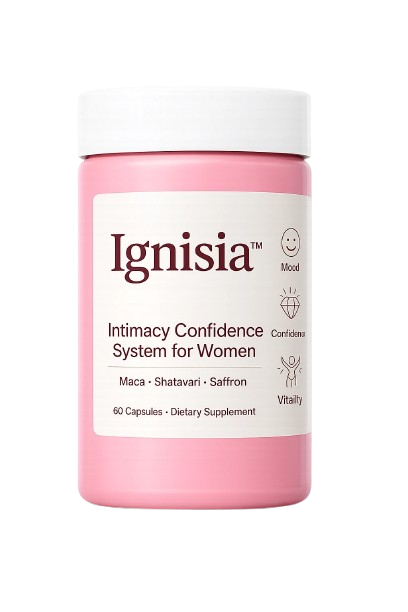
That Works From Within
Ignisia is not a lubricant. Not a cream. Not a hormonal patch. It is a daily botanical supplement formulated specifically around the inside-out science of menopausal intimacy restoration — working at the tissue, hormonal, and neurological level simultaneously.
- Restores natural vaginal tissue moisture from within
- Supports hormonal balance without synthetic estrogen
- Improves nerve sensitivity and physical response
- Reduces intimacy-related anxiety and emotional avoidance
- Rebuilds tissue elasticity and mucosal membrane health
- Supports mood stability and confidence in intimacy
- Works cumulatively — lasting benefit, not temporary relief
- 100% botanical — no pharmaceuticals, no prescriptions
🛡 30-Day Return Policy · Discreet Shipping · No Prescription Required
6 Botanicals. One Integrated System.
Most supplements address one symptom. Ignisia is formulated around the full biological picture of menopausal intimacy decline — three primary actives and three precision support compounds working in concert.
Primary Actives
Adaptogenic maca supports the endocrine system’s natural balance, addressing the hormonal root of menopausal intimacy decline without synthetic estrogen. Maca has been studied in sexual wellness contexts and supports vitality from within — not as a stimulant, but as a systemic regulator.
Revered in Ayurvedic medicine for female reproductive health, Shatavari directly supports vaginal tissue moisture, elasticity, and mucosal membrane integrity from within. Traditionally used across women’s wellness transitions, it holds emerging research interest in menopause-related tissue support.
Clinically studied saffron supports serotonin pathways, directly addressing the emotional and psychological dimensions of intimacy that no lubricant can touch. When emotional steadiness is part of the challenge — anxiety, avoidance, disconnection — saffron works at the neurological root.
Precision Support Compounds
Ginkgo has been studied for blood circulation. Healthy blood flow plays a critical role in physical sensitivity and arousal — a pathway that quietly declines during menopause. Ginkgo supports the vascular dimension of intimacy that most supplements ignore entirely.
Vitamin B6 supports neurotransmitter activity and hormone-related metabolic pathways. Commonly used to support emotional steadiness and energy as hormones shift — it acts as a critical cofactor that helps the primary actives work more effectively within the body’s existing chemistry.
L-Theanine is studied for supporting relaxation and stress response. When tension, anxiety, and mental load interfere with comfort and intimacy — as they frequently do during menopause — L-Theanine supports the nervous system environment that makes connection possible.
What Women Are Saying After Using the System
“Within six weeks I noticed something I hadn’t felt in years — actual, natural response. My husband didn’t know what I’d started doing differently. He just noticed the difference in me.”
“The discomfort I’d had for three years began to ease around week four. By week ten, I felt like I was in my body again. My gynecologist commented the tissue looked healthier than at my previous visit.”
“The intimacy came back. The closeness we’d been missing for two years — the willingness, the warmth — started returning. I’m not overstating when I say this may have saved my marriage.”
“I started Ignisia at 47 on my gynecologist’s recommendation. Three months in, the perimenopausal symptoms that were beginning to affect my marriage haven’t progressed the way she said they would without support. The botanical approach felt right — I didn’t want synthetic hormones. I wanted something that worked from inside and built over time. That’s exactly what this has been.”
“I’m 64. I waited too long. I know that. After 16 weeks, the changes are real — not dramatic, not overnight — but real, steady, and consistent. The discomfort that made intimacy impossible is significantly reduced. My husband and I are finding our way back after years of distance. I wish I had done this sooner. But I’m grateful I did it now.”
What Women Ask Before Starting Ignisia
Ignisia is a 100% botanical dietary supplement — not a pharmaceutical. If you are on hormonal medications, consult your physician before starting. The botanical actives contain no synthetic hormones, but individual health contexts vary. We recommend disclosing it to your gynecologist, who can monitor your progress.
A lubricant adds temporary surface moisture that evaporates within hours with zero effect on tissue health. Ignisia works systemically through botanical compounds that act on the cellular and tissue level over time. Think of it as restoring the irrigation system, not just watering a drought-stricken plant.
It is never too late, though earlier action produces faster results. Women in post-menopause do see meaningful improvement in lubrication, comfort, and sensitivity — the timeline is simply longer. What we consistently see is real, steady progress even in women several years post-menopausal.
Most women report first changes between weeks 4–6, with significant restoration visible at 10–12 weeks. Ignisia works cumulatively — botanical compounds build in your system over time. We recommend a minimum of 90 days to experience the full benefit.
Entirely your choice. Many women use Ignisia privately. Because it works from within, there is nothing to apply before intimacy, no scent, no texture. The only thing your partner notices is the difference in you.
Ignisia comes with a 30-day return policy. If it’s not right for you — for any reason — you can return it without complications. No questionnaire, no justification required. If it’s not for you, simply return it.
All six botanical actives in Ignisia are generally well-tolerated. Because there are no synthetic hormones, there is no hormonal adjustment period. Some women note a mild increase in energy during the first two weeks as maca adapts to their system. Women with hormone-sensitive conditions should consult their physician before starting.
Many women use Ignisia as a complement to HRT or as an alternative to it. Because Ignisia contains no synthetic hormones, it does not duplicate HRT — it supports different pathways (tissue, circulation, mood). Always disclose new supplements to your prescribing physician when on hormone therapy.
The Window for Action
Is Right Now
Every month without support is another month of tissue change, relational distance, and compounding loss. The woman who acts today gives her body the support it deserves — and her relationship the future it can still have.
Availability is limited · Ships discreetly to your door · No subscription required
30-Day No-Question Return Policy
Ignisia is for you — or it isn’t. If you try it and it’s not what you needed, simply return it within 30 days for a full refund. No questionnaires, no hoops, no judgment. We want you supported, not obligated.
The Silent Intimacy Crisis Destroying Marriages
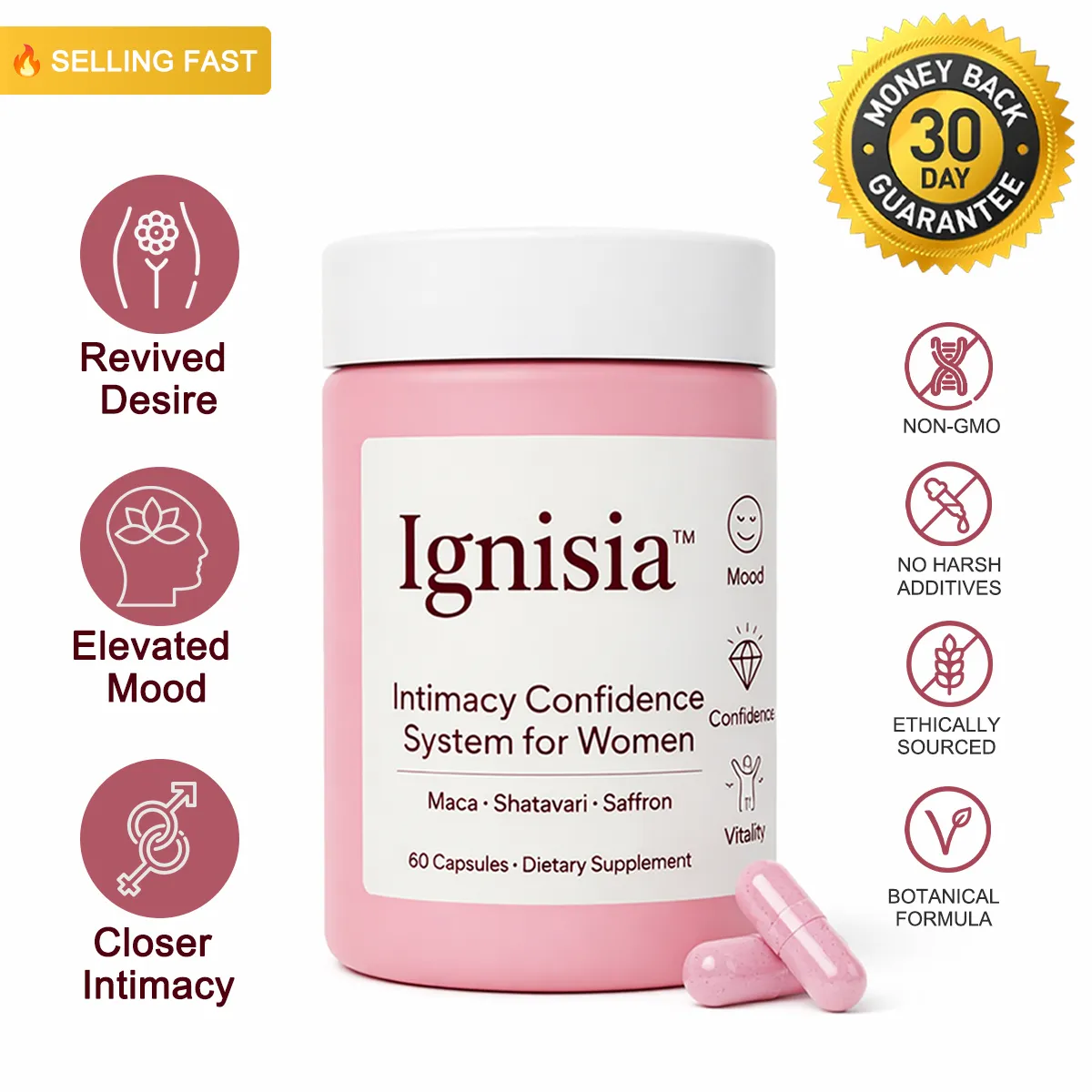
The Silent Intimacy Crisis
Destroying Marriages in Menopause
—And Why Most Women Are Too Late When They Finally Act
"What happens below the surface during menopause is far more serious than hot flashes. I've watched marriages unravel, depression deepen, and bodies change in ways that could have been prevented — all because no one was honest about what’s really happening."
Board-Certified OB/GYN
Menopause Specialist
22 Years Clinical Practice
"In over two decades of practice, the conversation I have the most — and the one that comes far too late — is about what menopause does to a woman’s intimate life. Not just her body. Her relationships. Her sense of self. Her marriage."
I am writing this because I am tired of watching my patients suffer in silence. I am tired of watching women patch over the problem with lubricants and hope, while the underlying changes progress unchecked. And I am tired of how little honest, clinical information exists outside the walls of a gynecologist’s office.
What you are about to read is uncomfortable. It is also essential. Because what you don’t address during menopause doesn’t simply wait for you — it compounds.
What Menopause Is Actually Doing to Your Body — and Your Relationship
The cultural conversation around menopause is focused almost entirely on hot flashes and mood swings. This is a critical misdirection. The most damaging changes — the ones that quietly dismantle intimacy, erode relationships, and create lasting physiological harm — are happening in silence.
Estrogen is the primary architect of vaginal tissue health, elasticity, lubrication, and nerve sensitivity. When it declines, the tissue begins to thin, dry out, and become increasingly fragile. Clinically, we call this Genitourinary Syndrome of Menopause (GSM). The tissue isn’t just uncomfortable — it’s changing at a cellular level. Each month of inaction accelerates the progression.
Significantly higher rates of dissatisfaction and divorce in their 50s and 60s — a period that should be the most liberated years together.
The shame and disconnection from intimacy creates a mental health spiral that research shows persists long into post-menopause and does not self-resolve.
Progressive vaginal atrophy becomes increasingly difficult — and in advanced cases, impossible — to fully reverse the longer it is left untreated.
Nerve pathways and arousal mechanisms that go unstimulated during the menopausal window can permanently reorganize. Changes that were preventable become structural.
Increased anxiety tied to intimacy avoidance doesn’t fade after menopause ends. Clinical evidence shows it deepens without targeted intervention.
The most common emotion post-menopausal women report is not embarrassment or anger — it is deep, lasting regret about the years lost to silence.
Menopause Has Three Stages — Each One Changes What’s Possible
This is not a single event. It is a multi-year physiological shift, and what you do in each stage determines the terrain of the next.
- Irregular periods, early estrogen fluctuation
- First signs of vaginal dryness
- Changes in arousal timing and intensity
- Beginning of tissue thinning (often unfelt)
- Subtle relationship friction over intimacy
- Significant vaginal atrophy and fragility
- Painful or impossible intercourse
- Avoidance behaviors deeply entrenched
- Emotional disconnection accelerating
- pH imbalance creating recurrent infections
- Severe GSM with structural tissue changes
- Chronic urinary symptoms and infections
- Complete loss of natural lubrication reflex
- Persistent depression tied to intimacy loss
- Irreversible sexual response changes
What 20 Years of Research Is Telling Us
of postmenopausal women report that sexual dysfunction significantly affected their romantic relationship, with 41% directly attributing relationship breakdown to unaddressed intimacy decline.
— Journal of Women’s Health, 2023more likely to experience clinical depression when genitourinary symptoms go untreated for 12+ months — severity increasing the longer symptoms are unaddressed.
— Menopause Journal (NAMS), 2024of women using only topical lubricants reported no improvement in underlying tissue health at 6-month follow-up. Surface solutions do not address the systemic root cause.
— International Menopause Society, 2022“A lubricant treats dryness the way a bandage treats a broken bone. It addresses the surface while the real injury — the tissue, the nerve pathways, the hormonal cascade — continues unchecked underneath.”
Lubricants, Creams & Quick Fixes Were Never Designed for This Problem
Women trying to address menopause-related intimacy issues are met with a marketplace of temporary, surface-level solutions that offer relief without restoration.
What Lubricants, OTC Creams & “Comfort” Products Do
- Provide momentary moisture that evaporates within hours
- Do not penetrate or restore thinning vaginal tissue
- Do not address the hormonal root cause of atrophy
- Cannot rebuild collagen or restore tissue elasticity
- Do not support vaginal microbiome or pH balance
- Offer no support for nervous system or arousal pathways
- Must be applied every time — zero cumulative benefit
- Do nothing for the relational dimension of intimacy
The Approach That Works from the Inside
- Supports natural estrogen activity at a cellular level
- Promotes tissue restoration and vaginal wall thickness over time
- Restores natural lubrication mechanisms — not just adds moisture
- Supports collagen production and tissue elasticity
- Maintains healthy vaginal pH and microbiome balance
- Supports nerve sensitivity and arousal response pathways
- Builds cumulative benefit with consistent use
- Addresses the full system — physical, hormonal, and relational
The single most important shift any menopausal woman can make is moving from treating symptoms to supporting the system. The body’s ability to restore intimate tissue health is remarkable — but only when given the right internal support.
The Stories That Never Make It to the Doctor’s Office
“For three years I convinced myself the dryness was just ‘normal aging.’ By the time my doctor said the words ‘vaginal atrophy,’ my husband and I hadn’t been intimate in 14 months. That silence cost us two years of our marriage.”
“I tried every gel, every lubricant. Nothing lasted. The disconnection was deeper than physical — I felt like my body had betrayed me and taken my marriage with it. The depression I fell into was the hardest thing I’ve ever experienced.”
“My doctor told me about tissue changes but I was too embarrassed to follow through. Two years later she told me the changes were now severe. I think about how different things might have been if I’d acted. That regret doesn’t fade.”
That Works From Within
Ignisia is not a lubricant. Not a cream. Not a hormonal patch. It is a daily botanical supplement formulated specifically around the inside-out science of menopausal intimacy restoration — working at the tissue, hormonal, and neurological level simultaneously.
- Restores natural vaginal tissue moisture from within
- Supports hormonal balance without synthetic estrogen
- Improves nerve sensitivity and physical response
- Reduces intimacy-related anxiety and emotional avoidance
- Rebuilds tissue elasticity and mucosal membrane health
- Supports mood stability and confidence in intimacy
- Works cumulatively — lasting benefit, not temporary relief
- 100% botanical — no pharmaceuticals, no prescriptions
🛡 30-Day Return Policy · Discreet Shipping · No Prescription Required
6 Botanicals. One Integrated System.
Most supplements address one symptom. Ignisia is formulated around the full biological picture of menopausal intimacy decline — three primary actives and three precision support compounds working in concert.
Primary Actives
Adaptogenic maca supports the endocrine system’s natural balance, addressing the hormonal root of menopausal intimacy decline without synthetic estrogen. Maca has been studied in sexual wellness contexts and supports vitality from within — not as a stimulant, but as a systemic regulator.
Revered in Ayurvedic medicine for female reproductive health, Shatavari directly supports vaginal tissue moisture, elasticity, and mucosal membrane integrity from within. Traditionally used across women’s wellness transitions, it holds emerging research interest in menopause-related tissue support.
Clinically studied saffron supports serotonin pathways, directly addressing the emotional and psychological dimensions of intimacy that no lubricant can touch. When emotional steadiness is part of the challenge — anxiety, avoidance, disconnection — saffron works at the neurological root.
Precision Support Compounds
Ginkgo has been studied for blood circulation. Healthy blood flow plays a critical role in physical sensitivity and arousal — a pathway that quietly declines during menopause. Ginkgo supports the vascular dimension of intimacy that most supplements ignore entirely.
Vitamin B6 supports neurotransmitter activity and hormone-related metabolic pathways. Commonly used to support emotional steadiness and energy as hormones shift — it acts as a critical cofactor that helps the primary actives work more effectively within the body’s existing chemistry.
L-Theanine is studied for supporting relaxation and stress response. When tension, anxiety, and mental load interfere with comfort and intimacy — as they frequently do during menopause — L-Theanine supports the nervous system environment that makes connection possible.
What Women Are Saying After Using the System
“Within six weeks I noticed something I hadn’t felt in years — actual, natural response. My husband didn’t know what I’d started doing differently. He just noticed the difference in me.”
“The discomfort I’d had for three years began to ease around week four. By week ten, I felt like I was in my body again. My gynecologist commented the tissue looked healthier than at my previous visit.”
“The intimacy came back. The closeness we’d been missing for two years — the willingness, the warmth — started returning. I’m not overstating when I say this may have saved my marriage.”
“I started Ignisia at 47 on my gynecologist’s recommendation. Three months in, the perimenopausal symptoms that were beginning to affect my marriage haven’t progressed the way she said they would without support. The botanical approach felt right — I didn’t want synthetic hormones. I wanted something that worked from inside and built over time. That’s exactly what this has been.”
“I’m 64. I waited too long. I know that. After 16 weeks, the changes are real — not dramatic, not overnight — but real, steady, and consistent. The discomfort that made intimacy impossible is significantly reduced. My husband and I are finding our way back after years of distance. I wish I had done this sooner. But I’m grateful I did it now.”
What Women Ask Before Starting Ignisia
Ignisia is a 100% botanical dietary supplement — not a pharmaceutical. If you are on hormonal medications, consult your physician before starting. The botanical actives contain no synthetic hormones, but individual health contexts vary. We recommend disclosing it to your gynecologist, who can monitor your progress.
A lubricant adds temporary surface moisture that evaporates within hours with zero effect on tissue health. Ignisia works systemically through botanical compounds that act on the cellular and tissue level over time. Think of it as restoring the irrigation system, not just watering a drought-stricken plant.
It is never too late, though earlier action produces faster results. Women in post-menopause do see meaningful improvement in lubrication, comfort, and sensitivity — the timeline is simply longer. What we consistently see is real, steady progress even in women several years post-menopausal.
Most women report first changes between weeks 4–6, with significant restoration visible at 10–12 weeks. Ignisia works cumulatively — botanical compounds build in your system over time. We recommend a minimum of 90 days to experience the full benefit.
Entirely your choice. Many women use Ignisia privately. Because it works from within, there is nothing to apply before intimacy, no scent, no texture. The only thing your partner notices is the difference in you.
Ignisia comes with a 30-day return policy. If it’s not right for you — for any reason — you can return it without complications. No questionnaire, no justification required. If it’s not for you, simply return it.
All six botanical actives in Ignisia are generally well-tolerated. Because there are no synthetic hormones, there is no hormonal adjustment period. Some women note a mild increase in energy during the first two weeks as maca adapts to their system. Women with hormone-sensitive conditions should consult their physician before starting.
Many women use Ignisia as a complement to HRT or as an alternative to it. Because Ignisia contains no synthetic hormones, it does not duplicate HRT — it supports different pathways (tissue, circulation, mood). Always disclose new supplements to your prescribing physician when on hormone therapy.
The Window for Action
Is Right Now
Every month without support is another month of tissue change, relational distance, and compounding loss. The woman who acts today gives her body the support it deserves — and her relationship the future it can still have.
Availability is limited · Ships discreetly to your door · No subscription required
30-Day No-Question Return Policy
Ignisia is for you — or it isn’t. If you try it and it’s not what you needed, simply return it within 30 days for a full refund. No questionnaires, no hoops, no judgment. We want you supported, not obligated.