

The Relation Between Perimenopause and Aching Joints – Everything Explained

The Relation Between Perimenopause and Aching Joints – Everything Explained
You woke up today feeling like your knees belonged to someone twenty years older. Or maybe your shoulders are tight, your hips feel bruised for no reason, and your fingers are so stiff that opening a jar of coffee feels like a full workout.
If you are in your late 30s or 40s, your mind might instantly jump to arthritis, an old workout injury, or just getting older. But if these aches came out of nowhere alongside mood shifts, brain fog, or erratic periods, there is a very good chance your hormones are calling the shots.
The connection between perimenopause body aches and changing hormones is real, but it is rarely talked about in doctors’ offices. Researchers even have a name for this whole-body response: musculoskeletal syndrome of menopause.
In this guide, we will break down what is actually happening in your body, why your joints feel sore, and the practical steps you can take to get moving comfortably again.
What Is Really Happening to Your Joints?
To understand why your body feels bruised and rigid, you have to look at the relationship between estrogen and joints.
Most of us think of estrogen strictly as a fertility hormone. In reality, estrogen receptors are scattered all over your body, including inside your cartilage, tendons, ligaments, and the lining of your joint capsules. Estrogen does a few vital jobs to keep your frame moving smoothly:
- It keeps systemic inflammation low. Estrogen acts as a natural dampener for inflammatory signals in your bloodstream.
- It preserves cartilage. Estrogen signals your cartilage cells to rebuild and stay spongy.
- It maintains fluid hydration. Estrogen helps produce synovial fluid, the clear, thick gel that lubricates your joints so bones do not rub together.
During perimenopause, your estrogen levels do not just drop smoothly. They spike and plummet unpredictably.
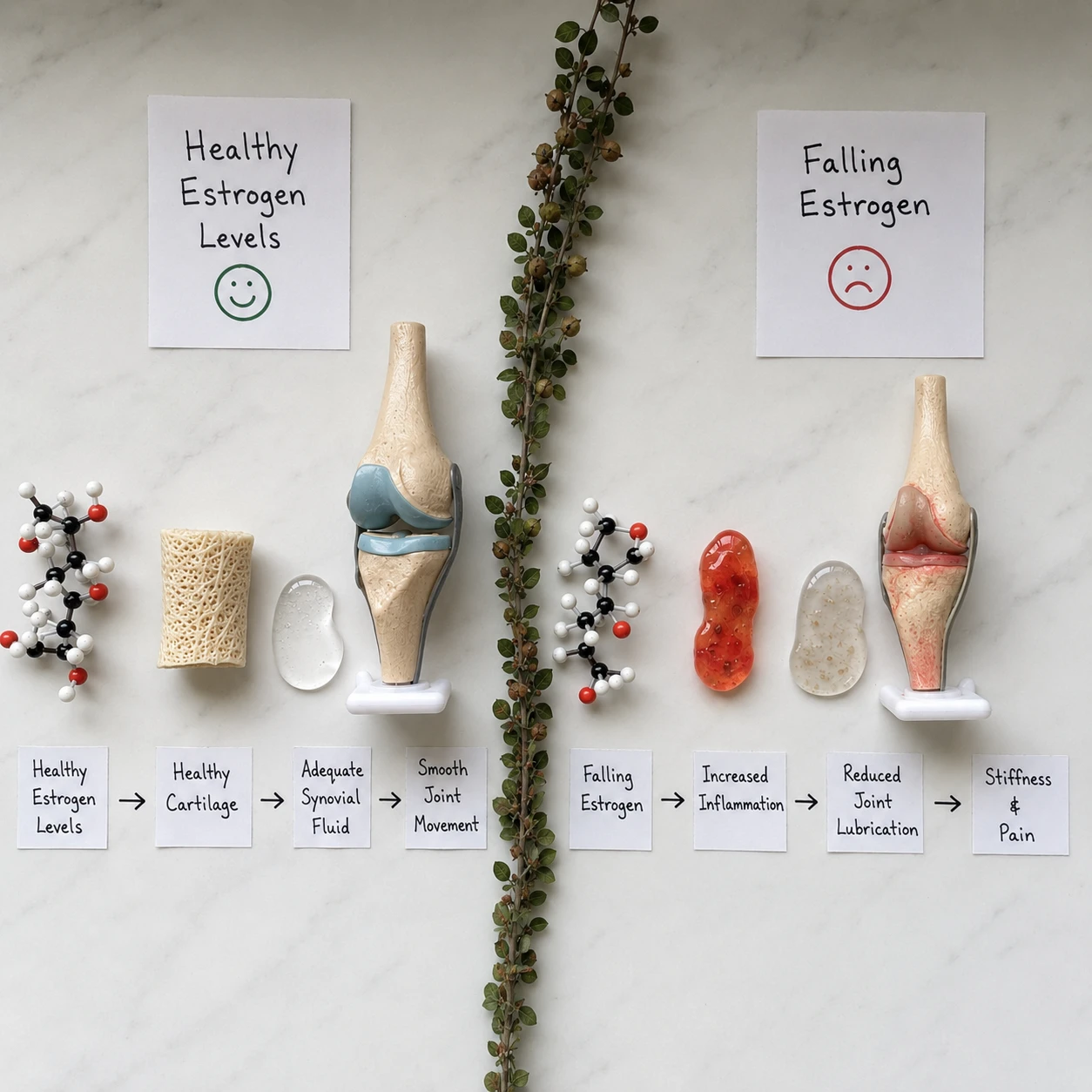
When estrogen dips sharply, your body produces more pro-inflammatory proteins. At the same time, your joints lose some of their natural lubrication, and cartilage becomes less elastic. The result is increased friction, localized swelling, and widespread menopause stiffness that seems to shift from one body part to another without warning.
What Does Menopause Joint Pain Feel Like?
Joint discomfort in perimenopause does not always feel like a sharp injury. Women describe it in a few distinct ways:
- Symmetrical morning stiffness: Waking up with tight hands, feet, or knees that take 30 to 45 minutes of walking around to loosen up.
- Deep, dull aches: A persistent soreness in large joints like hips, shoulders, and lower back that feels similar to post-workout soreness, even when you have not exercised.
- Loss of grip strength: Feeling clumsy, dropping items, or struggling to turn door handles because finger joints feel swollen or weak.
- Shifting pain: Feeling knee soreness on Monday, shoulder tightness on Wednesday, and wrist pain by the weekend.
- Tenderness around joints: Discomfort where tendons attach to bones, which can feel like tennis elbow or plantar fasciitis in your feet.
Unlike structural wear-and-tear that stays isolated in one specific spot, perimenopause body aches often affect multiple areas at once because the hormonal shift is systemic.
How Do I Know If My Joint Pain Is From Menopause?
It is easy to second-guess yourself, especially if your doctor run tests and tells you that your X-rays look normal. Here are a few signs that your joint discomfort is linked to perimenopause:
1. Timing
The aches began or noticeably worsened in your late 30s, 40s, or early 50s, right around the time your menstrual cycle began changing in length, flow, or frequency.
2. Accompanying Symptoms
Your joint stiffness occurs alongside classic perimenopausal cues such as hot flashes, night sweats, sudden anxiety, brain fog, or changes in sleep patterns.
3. Normal X-Ray Results
Standard X-rays show hard bone structures, but perimenopausal joint pain is usually rooted in soft tissue inflammation, tendon changes, and thinning synovial fluid. Your bones might look completely fine on paper while your soft tissues feel inflamed.
4. It Improves With Movement
Hormonal stiffness is usually worst after sitting still or sleeping. Gentle movement helps pump remaining fluid across the joint, easing the ache as the day goes on.
Note: If you notice severe localized swelling, visible redness, joints that feel hot to the touch, or pain accompanied by a fever, consult your doctor. These signs can point to autoimmune conditions like rheumatoid arthritis or acute infections that require medical evaluation.
How Long Does Menopause Joint Pain Last?
One of the most common questions women ask is how long they have to deal with this discomfort.
Because perimenopause itself is a transition phase that can span anywhere from 4 to 10 years, joint aches can ebb and flow throughout that entire window. For many women, joint symptoms peak during late perimenopause, when estrogen fluctuations are most extreme.
Once your body adapts to post-menopausal hormone levels, systemic inflammation often settles down, and joint pain can lessen. However, because low estrogen remains permanent after menopause, your cartilage and joint fluids still need proactive, long-term support to prevent lasting stiffness or accelerated wear.
What to Take for Menopause Joint Pain
Managing hormonal joint issues requires targeted support that goes beyond basic pain relievers. Over-the-counter pain medications might dull the ache temporarily, but they do not help nourish the joint capsule or calm systemic inflammatory pathways.
To get long-term relief, a multi-layered approach works best.
1. Targeted Anti-Inflammatories & Joint Support
When searching for the best supplements for menopause joint pain, single-ingredient pills like basic glucosamine often fall short because they only address cartilage, ignoring hormone-driven inflammation.
To support joints through midlife, look for key compounds that work together:
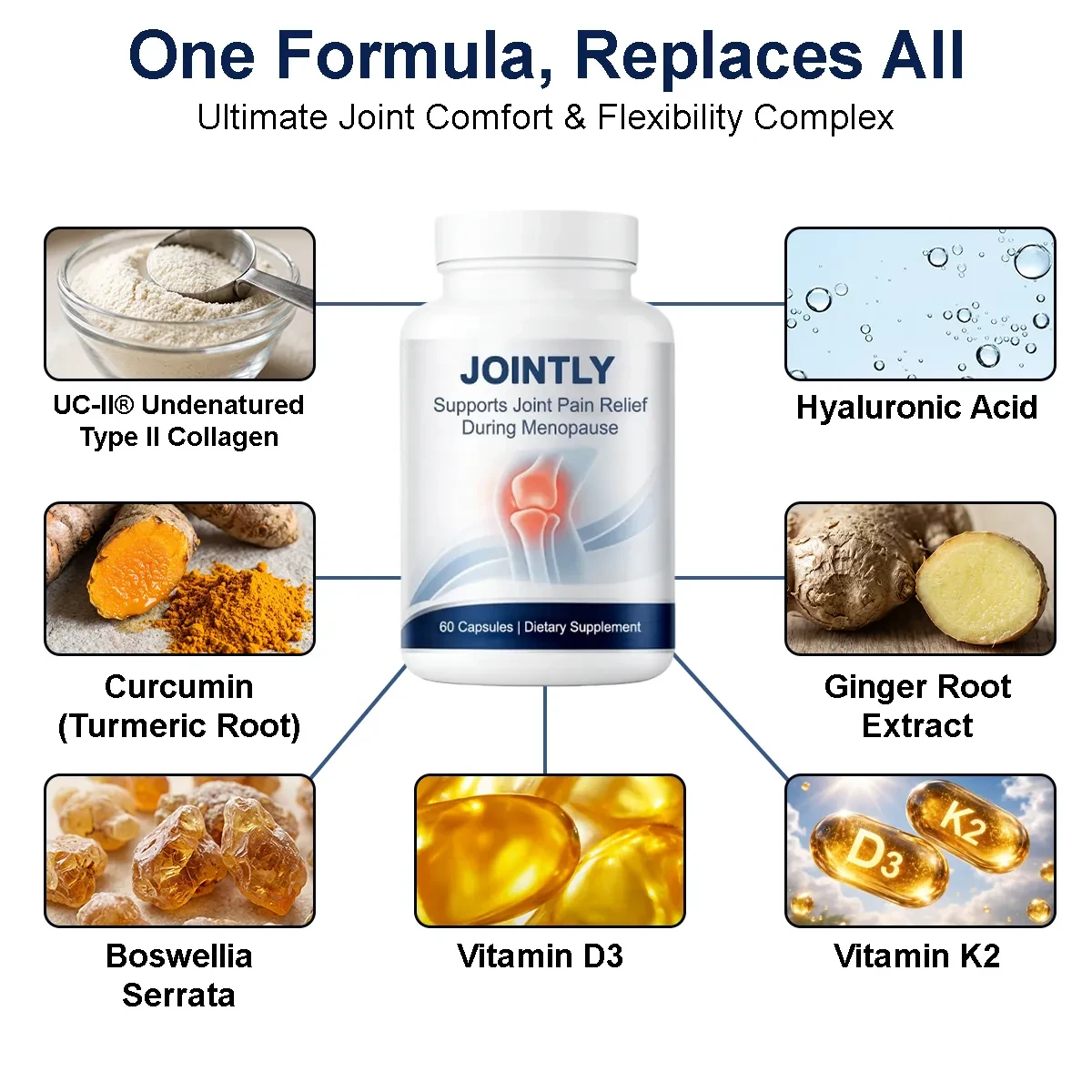
- Boswellia Serrata (5-LOXIN®): A plant extract that targets the 5-LOX enzyme, helping ease joint tightness and improve flexibility quickly.
- Curcumin Extract: Derived from turmeric, curcumin helps neutralize free radicals and calm deep tissue irritation across the whole body.
- Hyaluronic Acid: Acts like internal moisture for your joint capsules, helping restore the cushioning quality of your natural joint fluid.
- Type II Collagen & MSM: Provide essential structural building blocks to maintain strong tendons, ligaments, and cartilage.
- Vitamins D3 & K2: Work together to support overall bone health and make sure calcium goes into your bones rather than soft tissue.
Targeted Support with One Solution
Instead of taking multiple separate bottles every morning,
Revised Bio created Jointly — 7-in-1 Full Spectrum Menopause Joint Comfort & Flexibility Complex.
Jointly was formulated specifically to address the unique way midlife hormone changes affect female joints.
What Makes Jointly Different:
- 7-in-1 Complete Formula: Combines 5-LOXIN® Boswellia, Curcumin, MSM, Hyaluronic Acid, Type II Collagen, and Vitamins D3/K2 in precise amounts.
- Addresses the Root Cause: Works on cellular inflammation, connective tissue health, and joint fluid hydration at the same time.
- Clean & Transparent: Made without artificial fillers or hidden additives, produced in certified quality-controlled facilities.
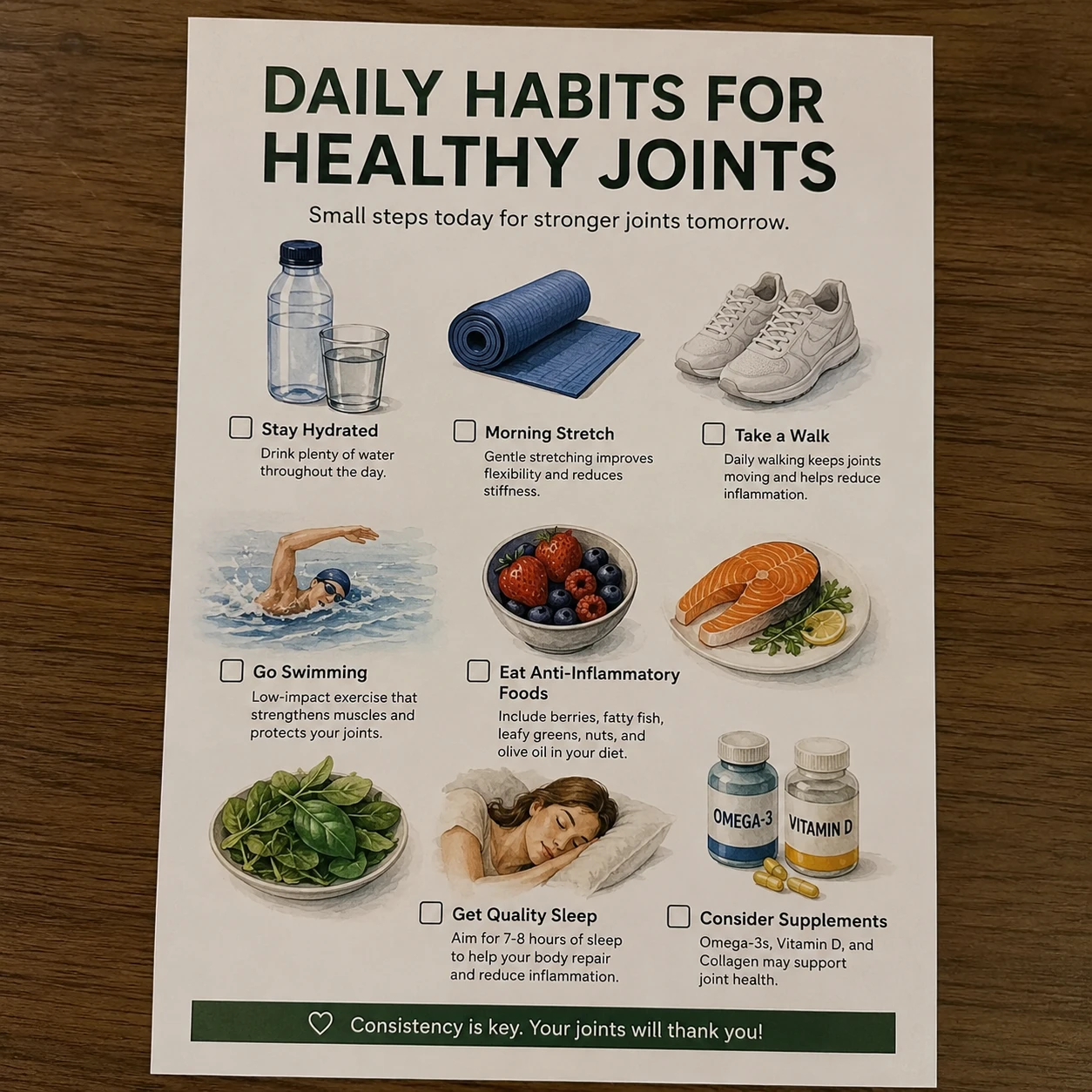
2. Simple Daily Habits for Joint Relief
Along with nutritional support, small changes to your daily routine can help keep stiffness at bay:
- Hydrate first thing in the morning: Drink a large glass of water as soon as you wake up. Your cartilage is mostly water, and rehydrating helps restore cushioning after a night’s sleep.
- Gentle morning movement: Before jumping out of bed, spend two minutes circling your ankles, bending your knees, and opening and closing your hands to get fluid moving.
- Eat anti-inflammatory foods: Focus on wild fish, berries, leafy greens, walnuts, and olive oil while reducing refined sugars that fuel systemic flares.
- Prioritize low-impact exercise: Activities like walking, swimming, pilates, and cycling keep joints mobile and build supporting muscle without pounding your joints.
Scientific References & Further Reading
The ingredients and mechanisms discussed in this article are supported by medical research:
- Estrogen and Musculoskeletal Health: Research indexed in PubMed highlights how estrogen receptors in human cartilage and tendons regulate tissue repair and inflammatory responses during midlife transitions.
- Boswellia Serrata Clinical Findings: Clinical studies published in Phytomedicine show that high-potency Boswellia extract helps improve joint comfort and physical function within days by targeting specific inflammatory enzymes.
- Oral Hyaluronic Acid for Joint Health: Trials monitored by the National Institutes of Health (NIH) confirm that bioavailable hyaluronic acid helps support synovial fluid hydration and joint comfort.
Frequently Asked Questions
What does menopause joint pain feel like?
It usually feels like a combination of morning stiffness in your hands, feet, or knees, deep aching in large joints like hips and shoulders, and a feeling of tight or weak muscles around your joints. It often moves around your body and feels worse after periods of rest.
How long does menopause joint pain last?
It varies for everyone. Joint symptoms can last throughout perimenopause, which typically lasts several years. While discomfort often improves once hormone levels stabilize post-menopause, keeping up with proper nutrition and joint support helps protect your mobility long-term.
How do I know if my joint pain is from menopause?
If your aches started in your late 30s or 40s alongside irregular periods, hot flashes, or sleep changes, hormones are likely a key factor. Unlike standard wear-and-tear, perimenopausal joint pain often affects multiple joints at once and may not show up on routine X-rays.
What to take for menopause joint pain?
A combination of targeted plant extracts and nutrient building blocks works best. Formulas containing Boswellia serrata, Curcumin, Hyaluronic Acid, Type II Collagen, MSM, and Vitamin D3/K2 help calm inflammation while supporting joint fluid and tissue strength.
Can perimenopause cause muscle aches as well as joint pain?
Yes. Falling estrogen affects connective tissues, tendons, and muscle tone. This can cause generalized muscle tightness, cramps, and physical fatigue alongside joint stiffness.
Does heat or ice work better for hormonal joint stiffness?
Moist heat (like a warm shower or heating pad) works best for morning stiffness because it increases circulation and relaxes tight tissue. Ice is better for acute, localized swelling after heavy activity.
Conclusion
Feeling stiff and achy every morning is not something you simply have to accept as part of growing older. Perimenopause body aches are a clear signal that your body’s hormonal shifts are affecting your joint health and inflammation levels.
By giving your connective tissues the nutrients they need to stay hydrated and calm, you can protect your joints and keep moving comfortably through perimenopause and beyond.
Take the next step in supporting your joint health. Learn more about Jointly — 7-in-1 Full Spectrum Menopause Joint Comfort Complex today.
Written by: Sophia BrownMedically Reviewed by: Dr. Alan Mercer, Board-Certified Orthopedic SurgeonLast Updated: July 28, 2026Reading Time: 12 minutes